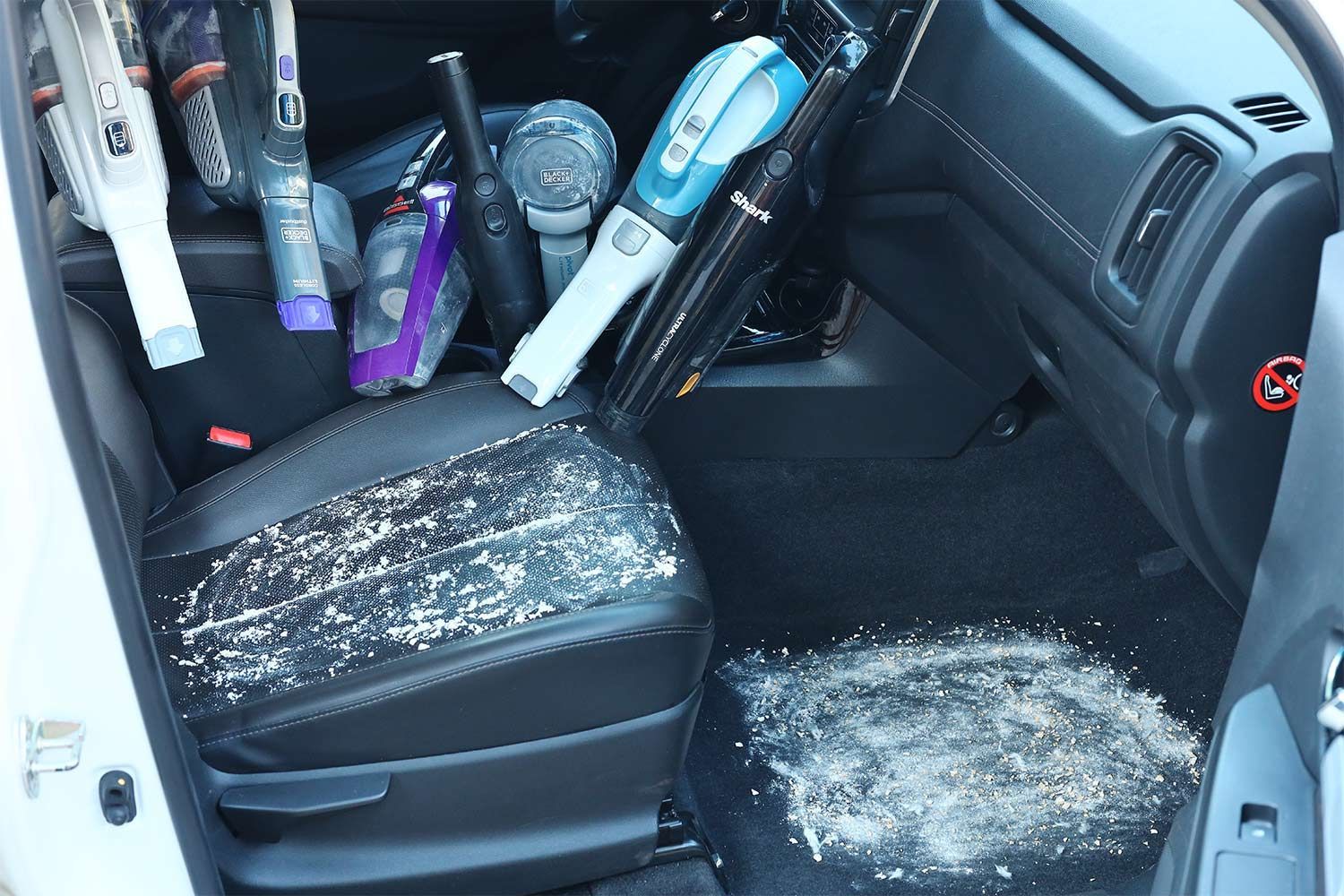
Fabric Chair Cleaning Test for Handheld Vacuums
If a handheld vacuum can’t suck up the dirt and dust that is embedded in the cushions of our chairs and sofas, you don’t want it. Check out how ShouldIT puts popular products to the test to reveal their true capabilities.
This test is part of How ShouldIT Tests Handheld Vacuum Cleaners v1.0
Testing handheld vacuums is one thing; putting them through a "worst-case scenario" on a piece of furniture you actually sit on is another. To find out which vacuums are worth their spot in your home, we subjected them to a variety of rigorous tests, one of which is this two-stage stress test on a fabric cushion office chair.
The goal isn't just a clean surface; it is a clean surface with minimal effort. Here is exactly how we categorize the strong and the weak.
Why This Test Matters
A test involving flour, crushed cornflakes, and pet hair on fabric isn't just a "mess", it’s a high-stress benchmark for handheld vacuums. It forces a vacuum to prove its worth across three entirely different physical dimensions of cleaning at the same time.
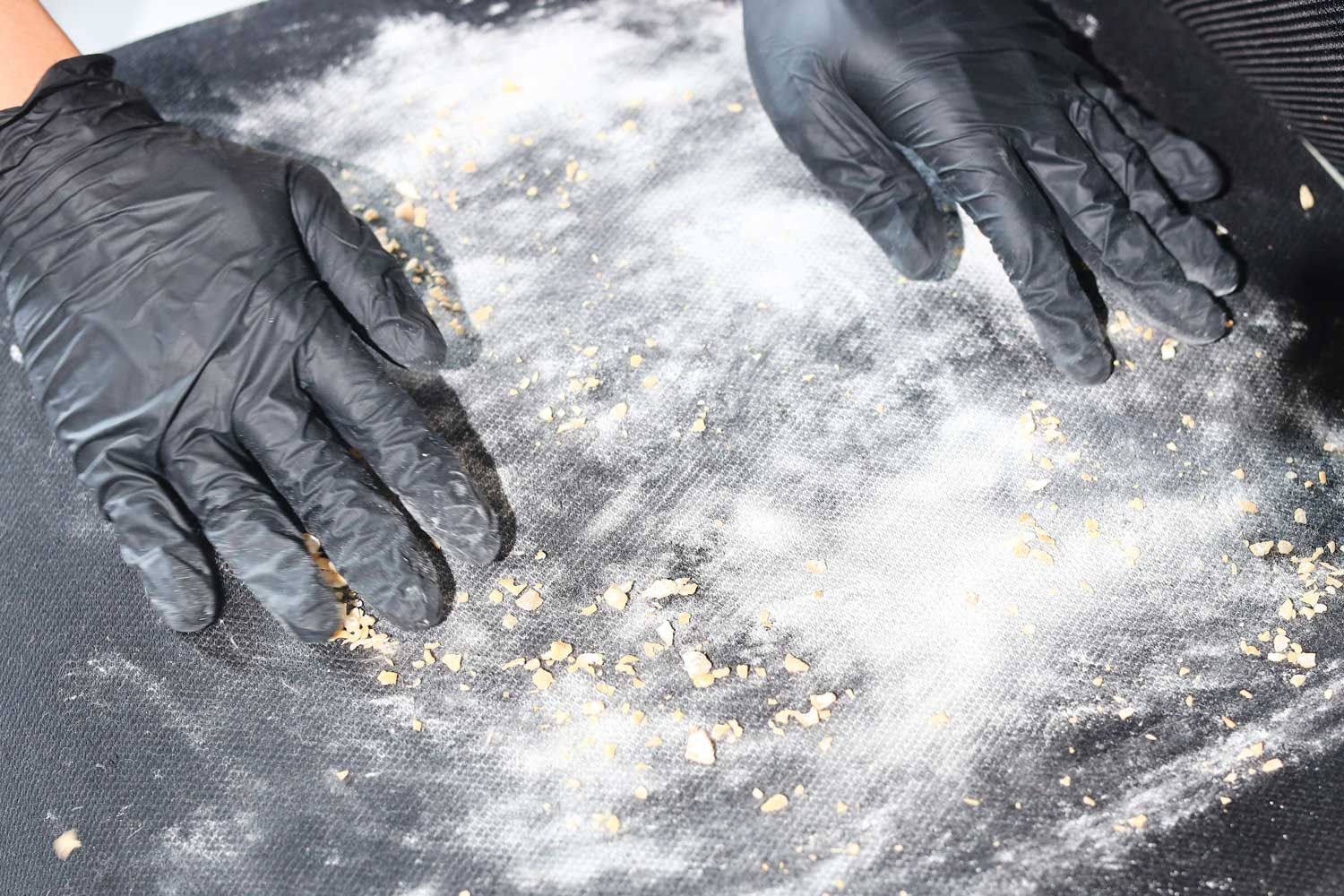
Most vacuums can pick up one type of debris well, but struggle when the size varies wildly. If a vacuum has poor suction or a leaky exhaust, the flour will either stay trapped in the fabric or be blown back into the room. Large flakes can easily clog narrow nozzles or lose momentum before reaching the bin. Flour and dust is also notorious for "blinding" filters—coating them so quickly that suction drops within seconds. When mixed, the flour coats the cornflakes, making them slippery and harder for brush rolls to grab, while the flakes provide "armor" for the flour, preventing the vacuum from getting a direct seal on the fine dust. Moreover, the combination of fabric and pet hair creates further challenges with static charge.
And “why fabric seats”, you asked? It’s because fabric surfaces are porous and flexible, which affects the physics of the clean. Pet hair doesn't just sit on fabric; it weaves into it. Dust is just as problematic as it loves getting between the pores, deep into the cushion. Unlike a hardwood floor or a leather seat—where you could simply wipe the mess away—woven upholstery is a 3D environment. Every time the fabric flexes, it opens up the weave, allowing the flour and fine corn dust to settle into the internal foam. It becomes nearly impossible to extract without professional-grade deep cleaning tools that are vacuum cleaners.
This test is a mechanical audit. It asks: Can the motor handle the drag of pet hair? Can the filters handle the microscopic flour? And can the airflow handle the bulky cornflakes? If a vacuum passes this with no hassle, it can handle almost anything a standard household can throw at it.
Mess Recipe
Each run, the chair is treated with a stubborn cocktail of debris designed to test suction, agitation, and filtration. We choose materials commonly found at home to accurately simulate the real-world messes you deal with every day:
- Flour (smeared into the weave, resembling fine dust).
- Crushed cornflake (resembling snack crumbs).
- Cat hair (resembling pet hair).
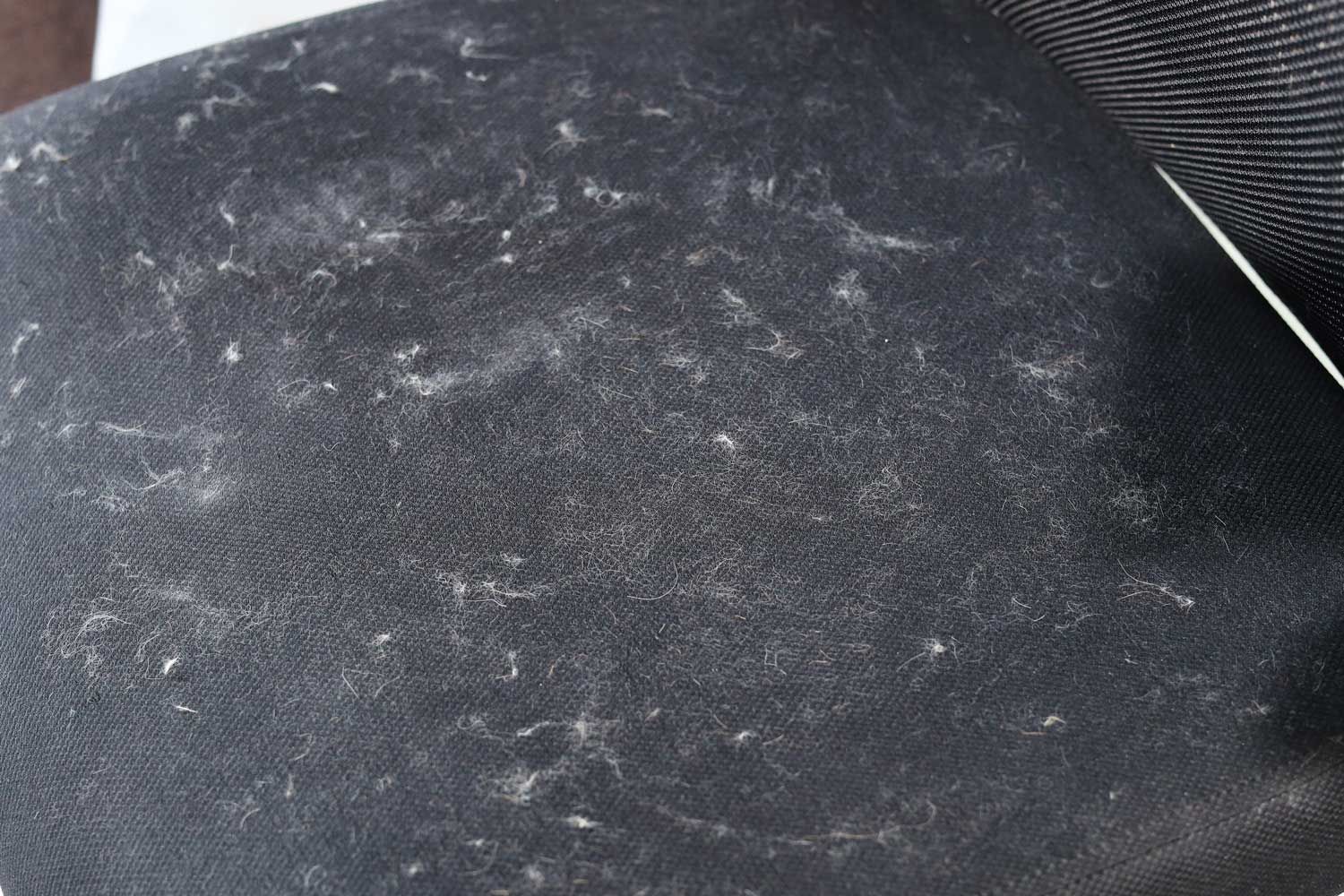
We first cover up the entire seat with a healthy amount of cat hair, really trying to get it to stick to the fabric. Then, we mix flour and crushed cornflakes together following a 1:1 ratio and spread roughly 1 tablespoon of that mixture all over the seat as well. Preparing “the mess” this way allows us to standardize the initial conditions throughout the process.
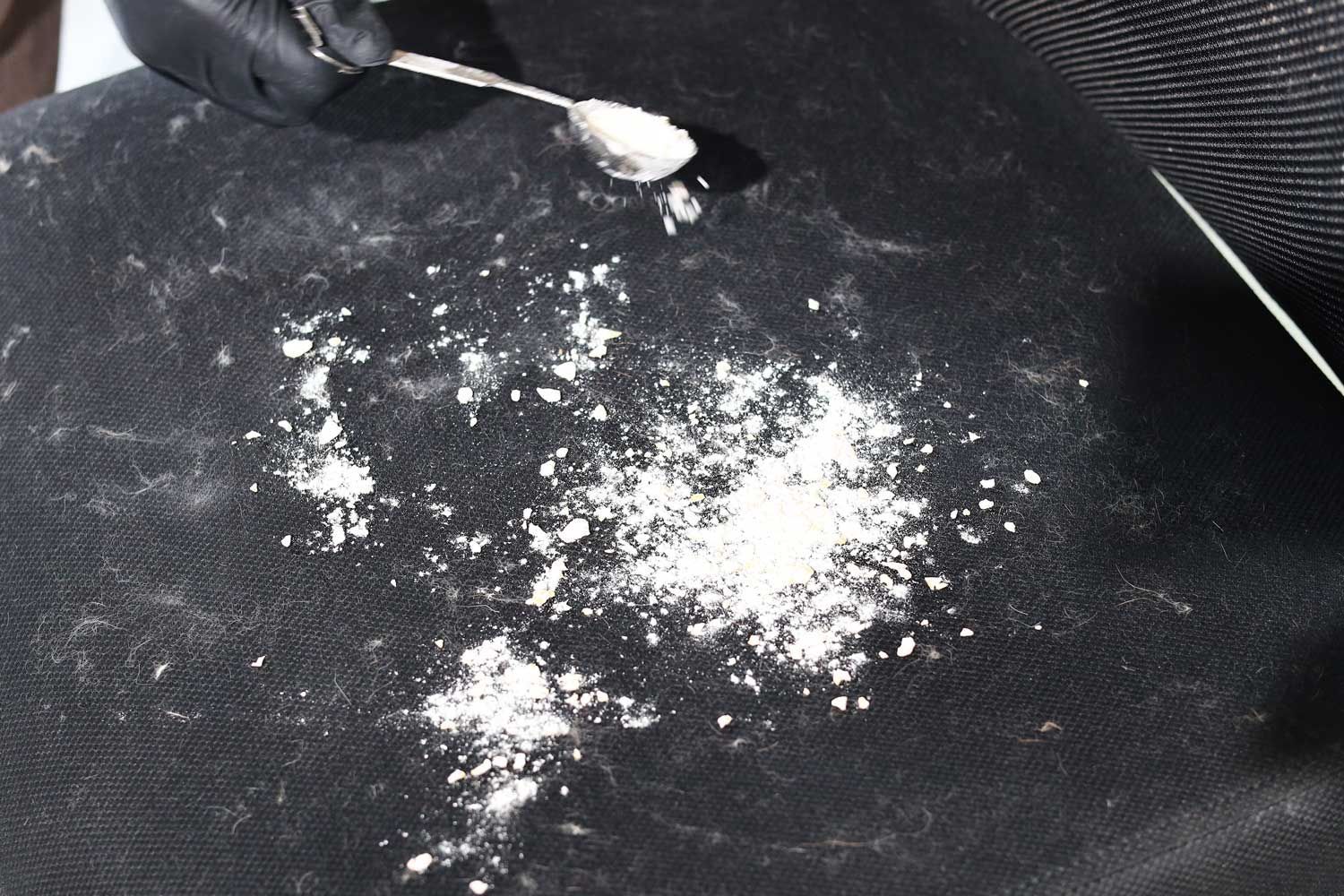
Similarly to dust, flour doesn't just sit on top of a sofa cushion; it occupies the interstitial spaces between the woven threads. If the fabric is even slightly damp, or if you try to use a wet cloth, it turns into a paste, effectively "gluing" the other debris to the fibers.
Crushed cornflakes bring texture and oil to the party. Unlike smooth beads, cornflake or snack crumbs have irregular, jagged edges that hook into the nap of the fabric. As you try to brush them away, the sharp edges of the flakes can actually help grind the flour and pet hair further into the material.
And finally, pet hair that belongs to your cats or dogs also weaves itself in. Each individual strand of hair has microscopic scales that act like barbs, allowing it to lock onto fabric loops even without static charge.
The Two-Minute Drill
Each vacuum is given a total of two minutes to perform, but we split that time to see how much "human help" the machine actually requires.
Minute 1: The "Lazy" Test
For the first 60 seconds, we let the vacuum do all the work. We glide the nozzle over the surface without applying any downward pressure. This reveals the raw suction power and the efficiency of the brush head (if it had one). If the chair is spotless before the minute is up, we stop the clock and record the time.
Minute 2: The "Labor" Test
If the chair isn't clean after the first minute, we spend the next 60 seconds pressing the vacuum firmly into the fabric. This helps determine whether a weaker motor may compensate for its lack of power with a little elbow grease, or if the "stronger" vacuums are truly in a league of their own.
Scoring & Evaluation
If a vacuum cleans the chair in under 1 minute without any major hassle, it’s a winner. If we have to spend the full 2 minutes just to get it to "mostly clean," it loses points for inefficiency. We score each unit based on the time they each take to reach a satisfactory extent of cleanliness.
Over 95% Cleanliness:
Time | Points |
|---|---|
1 min | 10 |
1 min 15 sec | 9 |
1 min 30 sec | 8 |
1 min 45 sec | 7 |
2 min | 6 |
Under 95% Cleanliness:
At the 2-minute mark, with only 6 points remaining, the test is finished and scoring now takes into account the extent of cleanliness:
- Under 95%, the product loses 1 more point.
- Under 80%, the product loses 2 more points.
- Under 70%, the product fails the test.
Examples
Let's check out some examples to better understand our process:
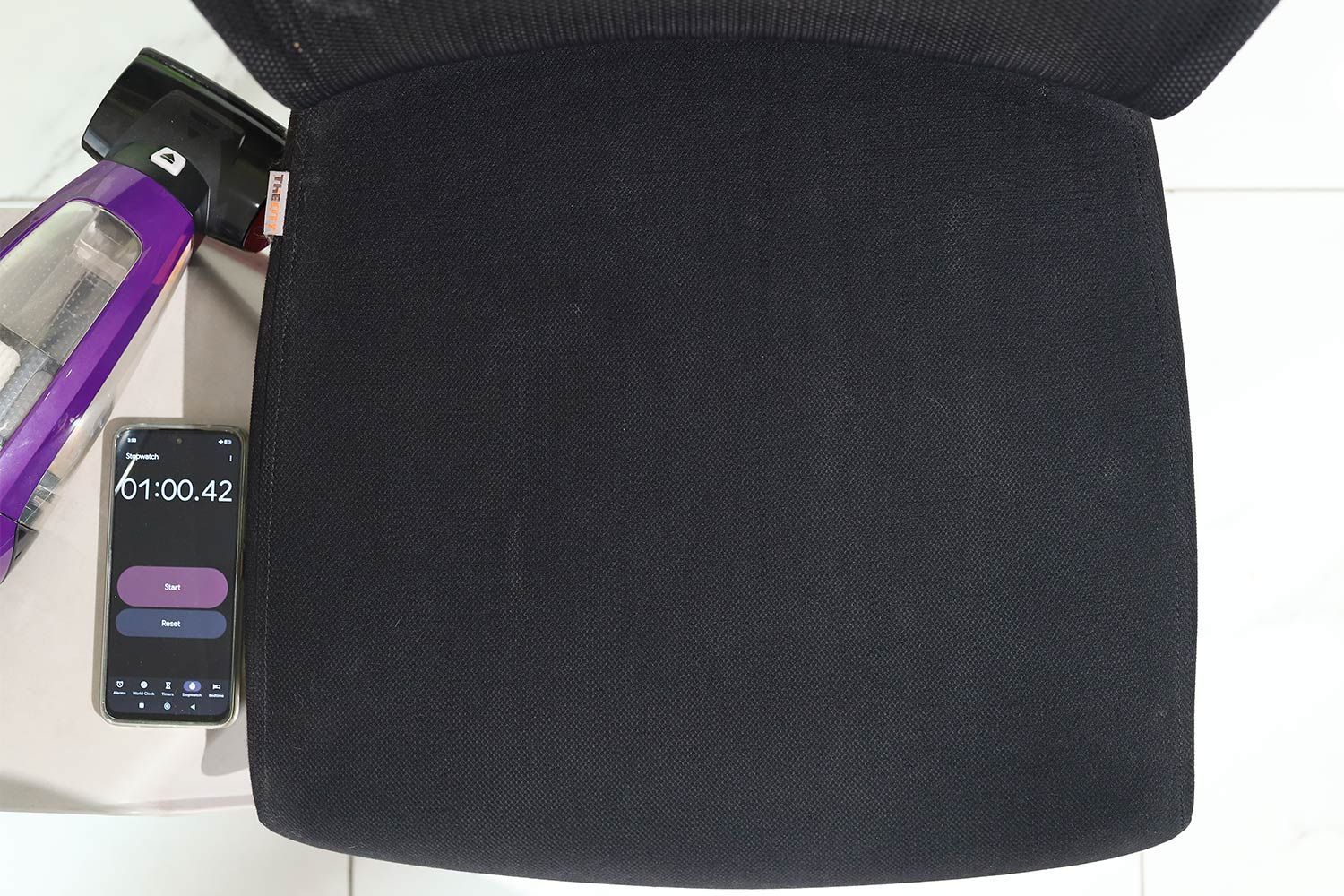
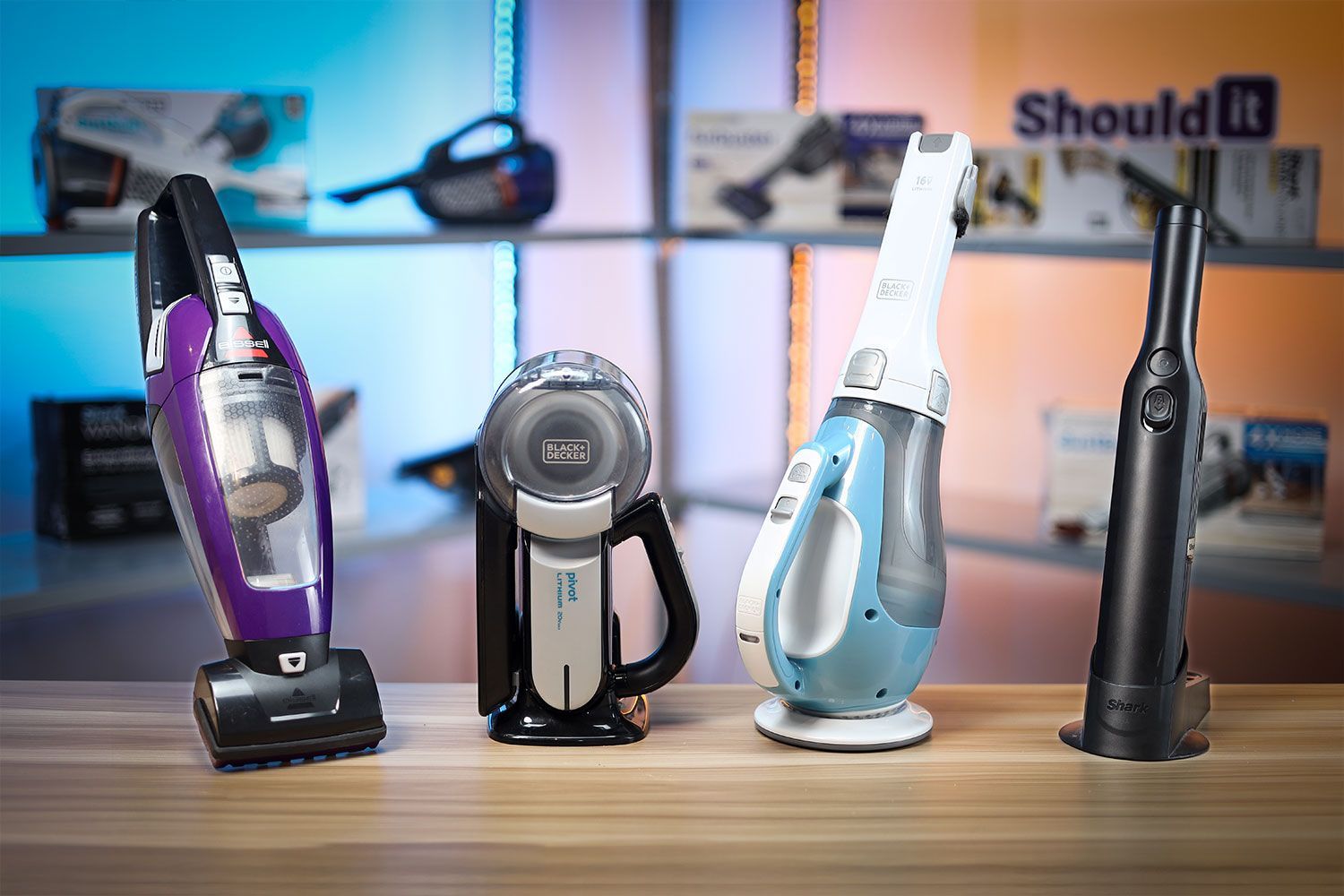
- The Bissell Pet is a very powerful cleaner, delivering effective cleaning in very little time. It casually reached 95% cleanliness in 1 minute, scoring a perfect 10 for the test.
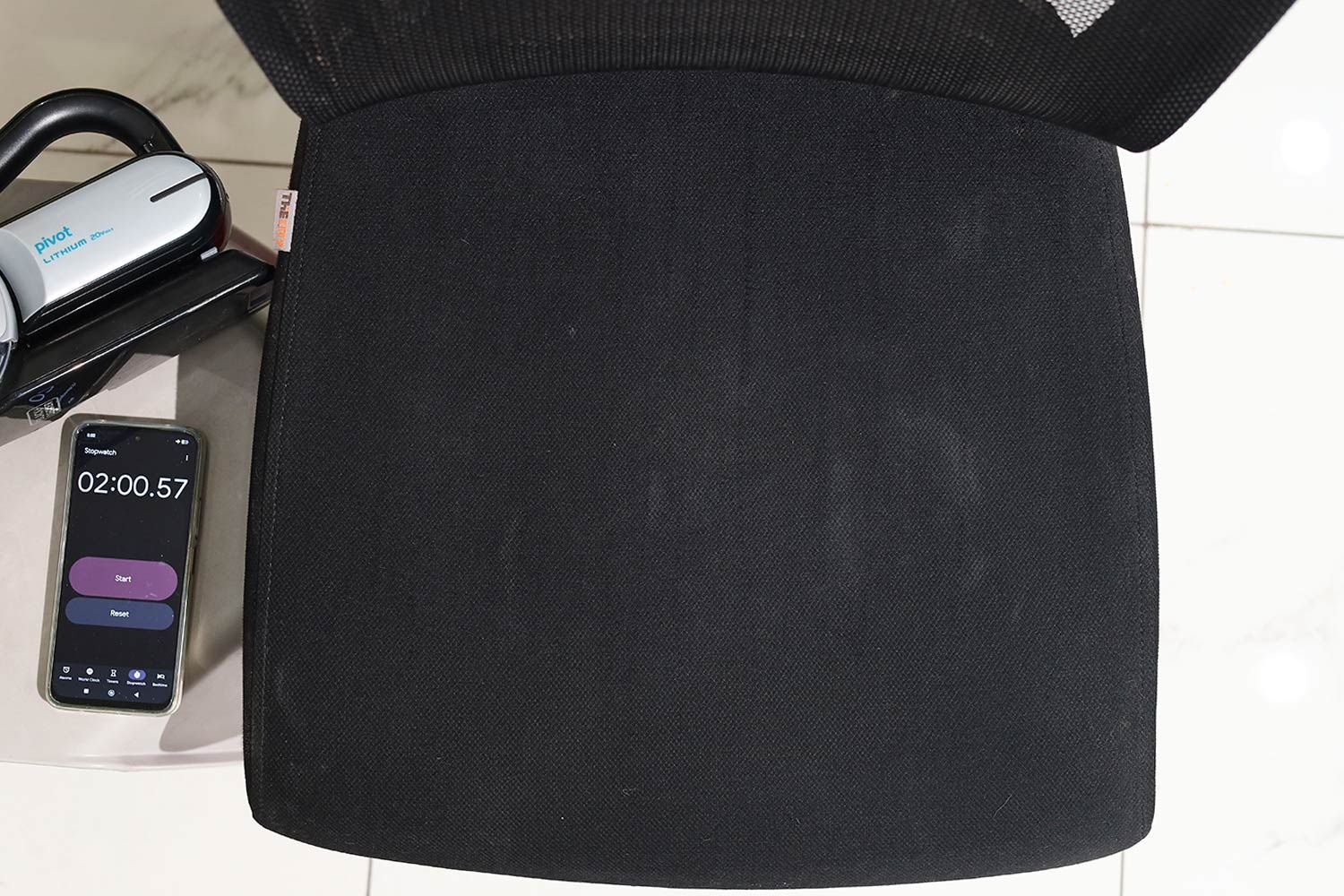
- The Black&Decker PivotVac is somewhere in between. It did a great job cleaning up the surface but couldn't keep the time under 1 minute. It ultimately scored 8 points for the test.
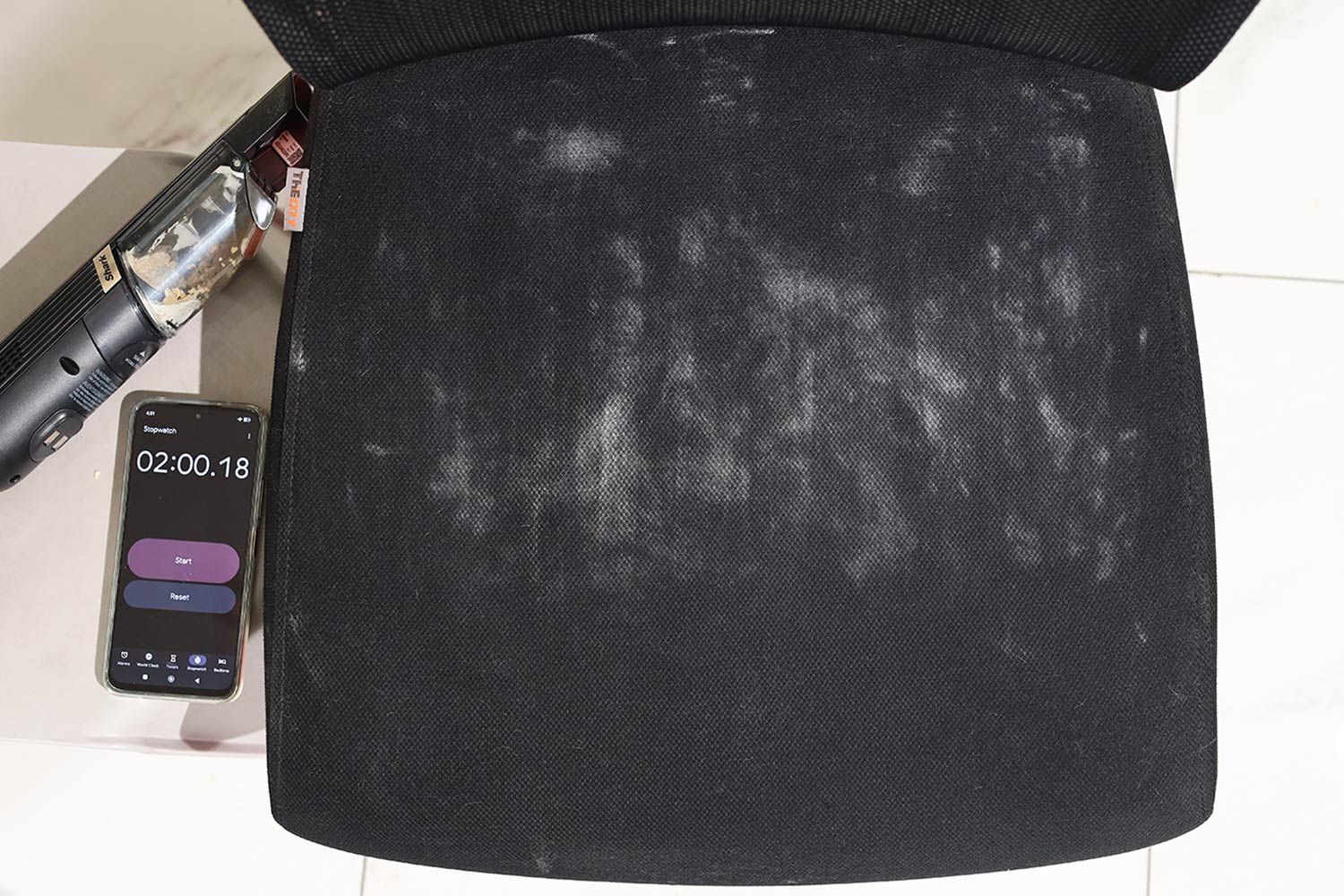
- The Shark WandVac is a much less capable hand vacuum, which is kind of a giveaway by its humble size. It took much longer to clean the chair, yet achieving only 70% cleanliness and taking as long as 2 minutes. As a result, it scored 4 points for this section.