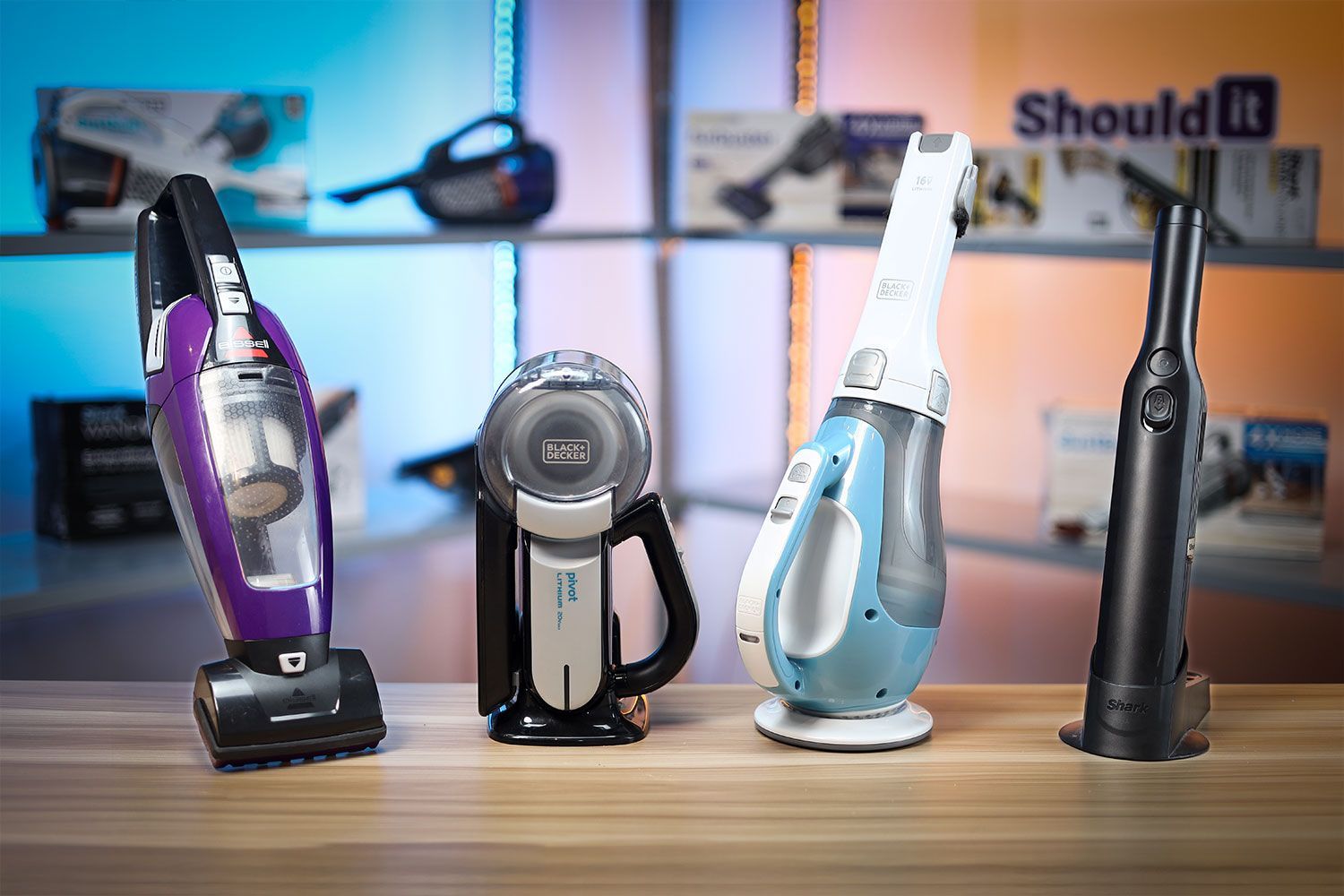
Car Cleaning Test for Handheld Vacuums
If a handheld vacuum can’t clear the air pockets in a leather car seat and stubborn foot carpet, it’s not for you. Discover how ShouldIT tests popular products to reveal their true capabilities.
This test is part of How ShouldIT Tests Handheld Vacuum Cleaners v1.0
To find out more on which handheld vacuums are actually worth keeping in the car, we headed straight for the driveway for more performance testing. Car interiors are notorious for tight corners and stubborn carpets, making them the ultimate proving ground for portable suction. Top-performing models are not only helpful in the house or office, they’re handy when you’re on the move as well.
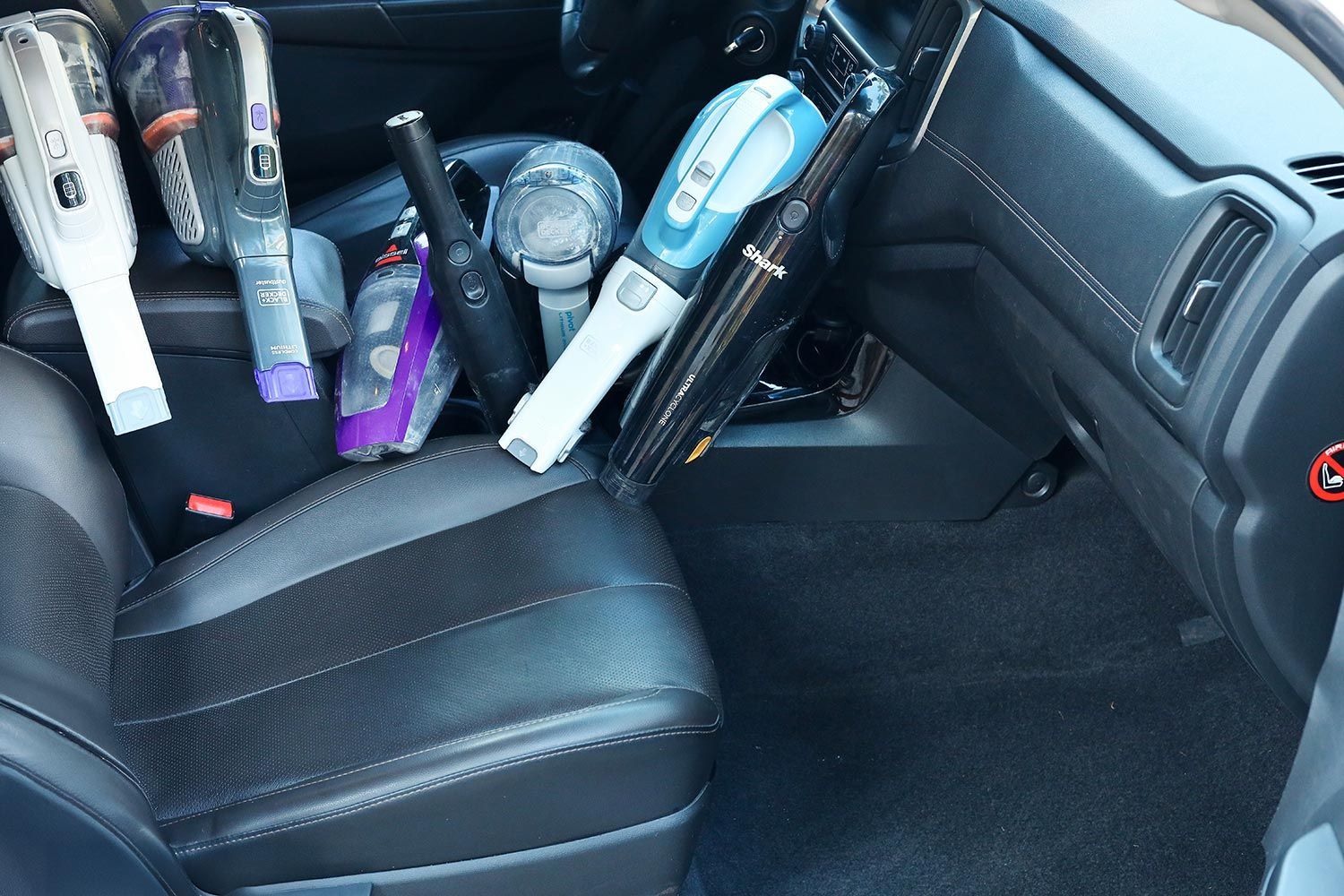
Here is exactly how we put these vacuums to the test.
Why This Matter
Testing a handheld vacuum in a car is the ultimate "stress test" for portability and suction efficiency. While laboratory surface tests provide a baseline, the car interior represents a chaotic, real-world environment where variables like surface tension, fiber density, and cramped ergonomics dictate a tool's actual utility.
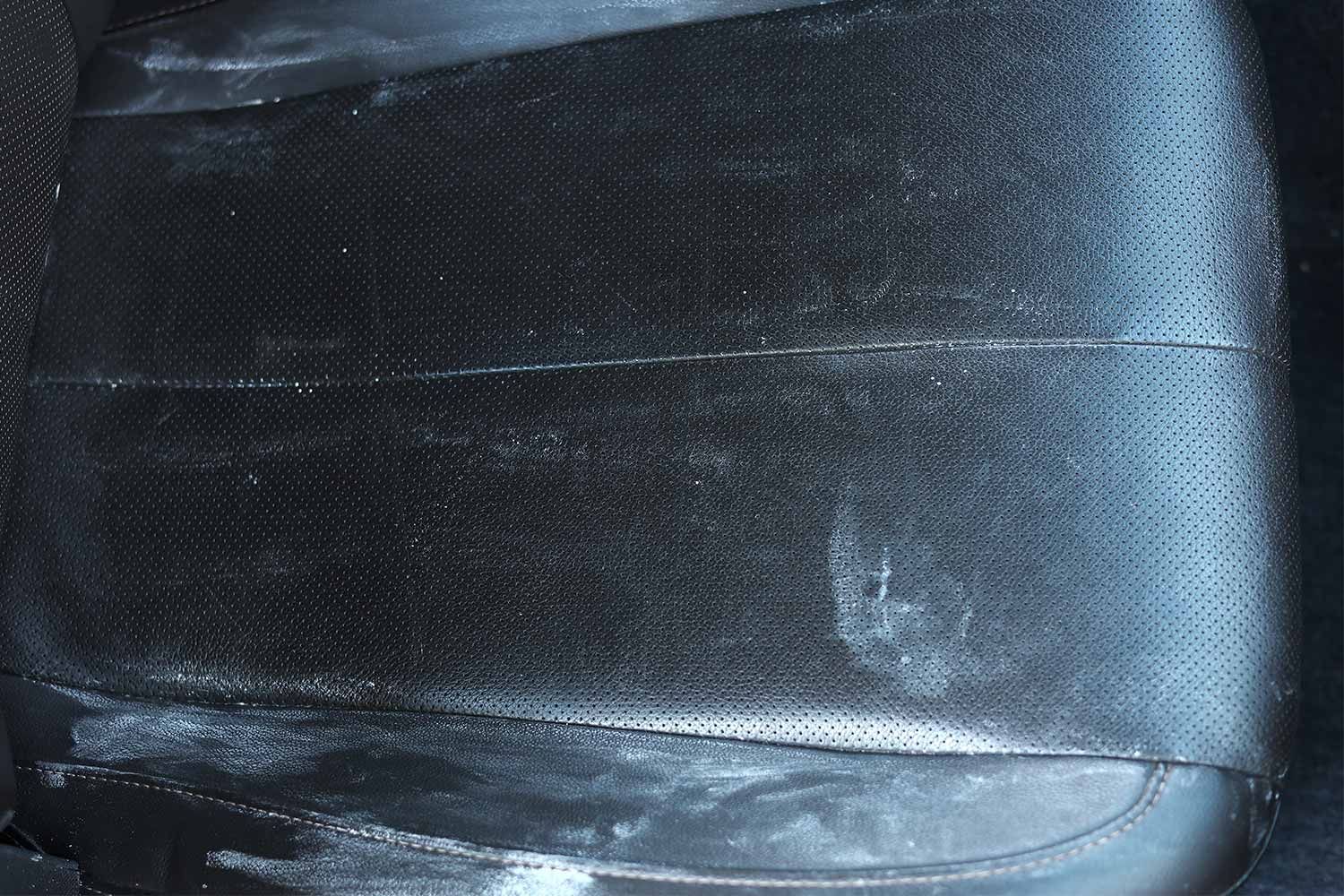
Car leather seats with "air pockets" present a unique mechanical hurdle. Unlike a flat hardwood floor, these pores act as microscopic traps for fine dust, skin cells, and crumbs. A vacuum needs a good balance of static suction and airflow to pull debris out of a pore. If the nozzle seals too tightly against the leather, the vacuum may "choke," stopping the airflow needed to lift the debris. Testing here evaluates whether the vacuum has the right nozzle geometry to agitate and lift without damaging the material.
Moving downward to the footwell area (the carpeted space where your feet go), car carpets can be even more demanding than household rugs. They are typically "automotive grade," meaning they are denser, shorter, and designed to trap dirt deep within the weave to keep the surface looking clean. Because car carpets are often stiff, it really reveals if the vacuum’s motor is powerful enough to overcome the frictional hold the fibers have on the dirt, or if it requires a specialized brush tool to "flick" the debris into the air stream.
How we standardize
To ensure our handheld vacuum evaluations are both rigorous and repeatable, we follow a standardized protocol designed to eliminate variables that could skew the results.
We reset the testing surface before every run by wiping the seat with a slightly dampened cloth to remove any microscopic residue from previous attempts without adding excessive moisture. To maintain a “level playing field”, we also use a consistently messy debris cocktail with flour and crushed cornflakes sprinkled over pet hair to simulate real-world stubbornness.
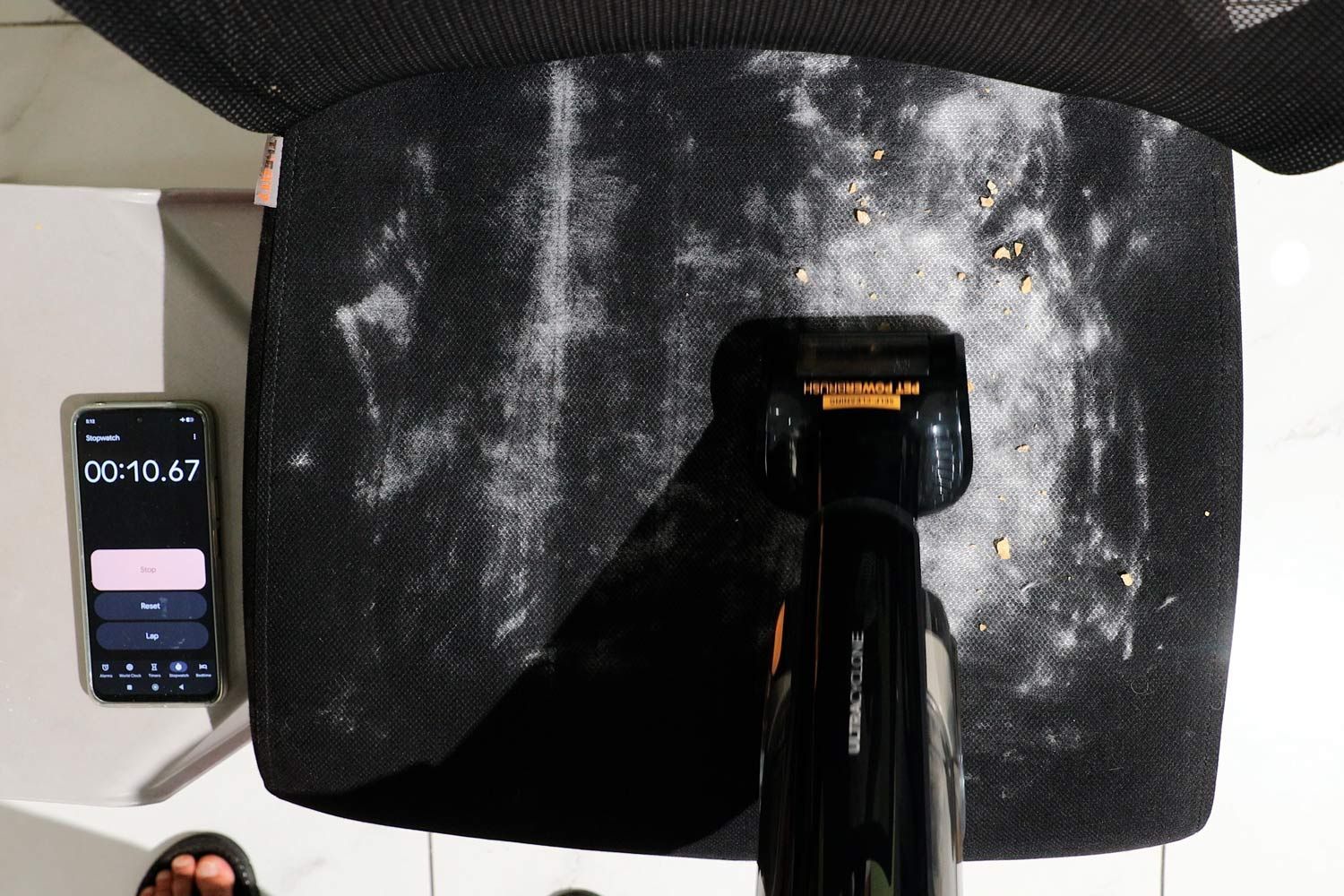
During the test, each device is pushed to its limit at maximum speed, utilizing the included crevice tool as the primary attachment. This acknowledges the reality of car detailing, where the battle is won or lost in the tight gaps and deep seams that define automotive interiors. Additionally, no force is allowed. Meaning, we let the vacuums glide over the surfaces without pressing down or scrubbing. This "hands-off" approach reveals which machines have the raw suction power to pull dirt out of fibers on their own, versus those that require a certain extent of heavy lifting.
This systematic approach ensures that when we declare a winner, it’s based on actual performance rather than an accidental advantage in surface prep or debris distribution. Plus, there is something weirdly satisfying about being that precise with crushed cereal!
Variable | Standardization Method |
|---|---|
Mess Mixture | 1 tbsp of 1:1 flour/cornflakes + cat hair |
Test Zones | Seat space and footwell (identical amounts) |
Surface Prep | Wiped with cloth before each run |
Power Level | Maximum speed/suction setting |
Attachment | Included crevice tool (to address car geometry) |
Mess Protocol
We treated both the car seat and the footwell with a trio of household terrors designed to test different aspects of a vacuum’s performance:
- Flour (smeared into the weave, resembling fine dust).
- Crushed cornflake (resembling snack crumbs).
- Cat hair (resembling pet hair).
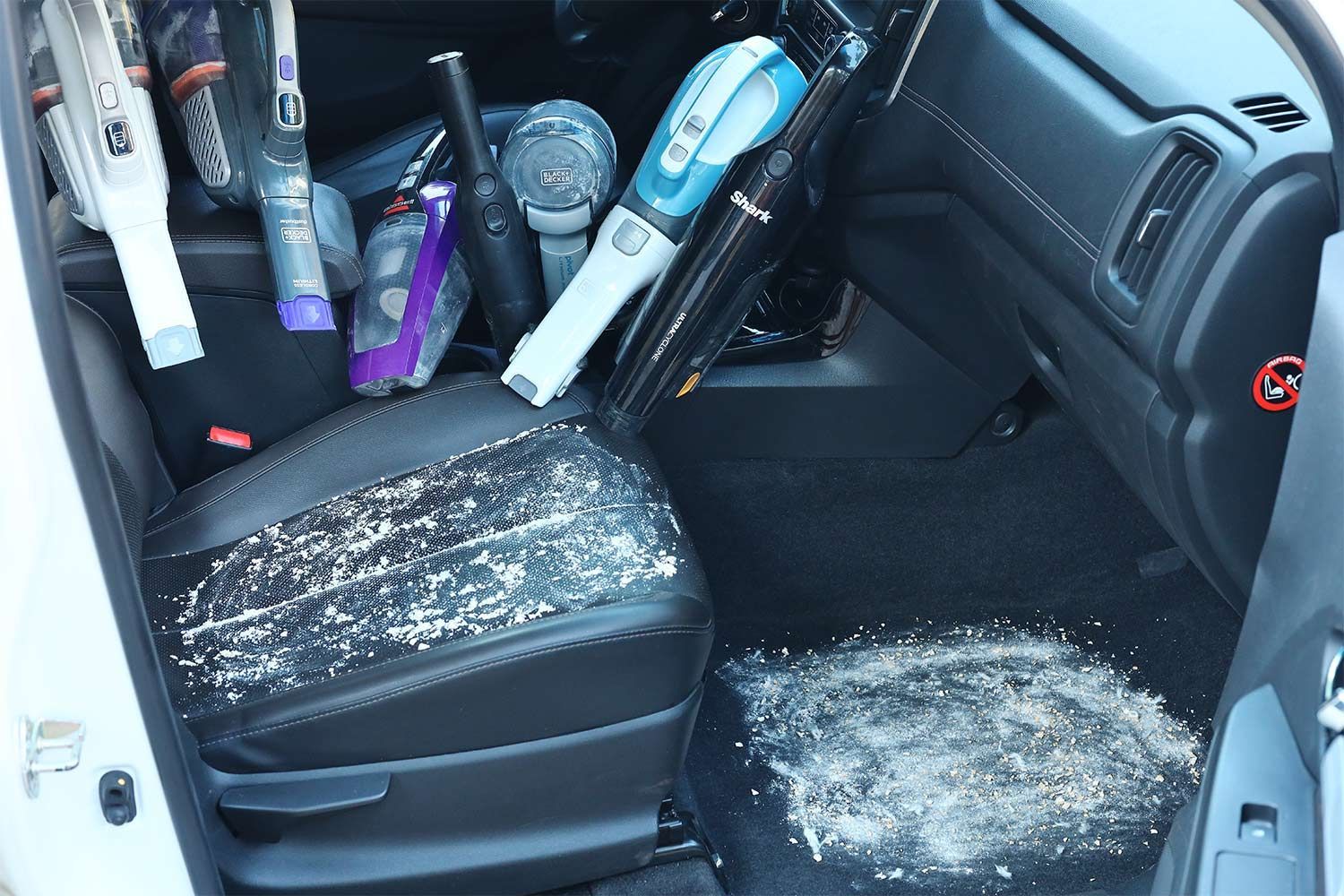
We first cover up the entire carpet with a healthy amount of cat hair, really trying to get it to stick to the fabric. Then, we mix flour and crushed cornflakes together following a 1:1 ratio and spread roughly 1 tablespoon of that mixture on top of the cat hair onto the carpet and another tablespoon all over the seat. Preparing “the mess” this way allows us to standardize the initial conditions throughout the process.
Similarly to household dust, flour doesn't just sit on the surface of the seat but migrates directly into the microscopic ventilation pores and air pockets of the leather. If the seat is even slightly damp from humidity or leather conditioner, the dust or flour hydrates into a tacky paste that "plugs" these perforations, effectively sealing other micro-debris inside the seat’s cooling structure. In the footwell, flour behaves like a dry lubricant, sinking past the surface fibers and settling at the very base of the dense automotive carpet weave where standard suction struggle to reach.
Crushed cornflakes introduce an abrasive, oily element to the environment. In the foot carpet, the jagged, irregular edges of the flakes act like mechanical anchors, hooking into the stiff, looped fibers designed for durability. On the leather seat, these same sharp edges can micro-scratch the protective finish, while the oils from the grain easily create a localized bond that grinds the flour and hair deeper into the material and each other.
Finally, pet hair from cats or dogs presents a structural locking mechanism. Each individual strand is covered in microscopic, scale-like barbs that allow the hair to "weave" itself into the carpet’s fiber matrix, making it nearly impossible to remove without high-frequency agitation.
Scoring
Seat Cleanliness (70% of total score)
This is the most telltale, therefore most important metric. We inspected the surfaces after the timer stopped to see how much of the flour, flakes, and hair remained.
- 100% = 10 points
- 99% = 9.9 points
- 98% = 9.8 points
- 97% = 9.7 points
- …
- 50% = 5 points
- Under 50% = 0 points
Footwell Cleanliness (30% of total score)
The majority of the products have little issue with this particular space, specifically the carpet. We assign this section a smaller percentage as there is virtually no difference in outcomes. We inspected the surfaces after the timer stopped to see how much of the flour, flakes, and hair remained:
- 100% = 10 points
- 99% = 9.9 points
- 98% = 9.8 points
- 97% = 9.7 points
- …
- 50% = 5 points
- Under 50% = 0 points
The goal is simple—the cleaner the space, the higher the score. We’re looking for the vacuum that leaves the interior looking like it just came off the showroom floor with the least amount of hassle.
Time
To evaluate the speed of each vacuum, we use a timer and record the time of every run. However, it turns out the products are similar in terms of how fast they can clean and speed isn’t going to help differentiate strengths or weaknesses of the products. We decided to include the recorded time for the sake of referencing instead of scoring.
Examples
Let’s take a look at a few examples and how we score each product for this section:
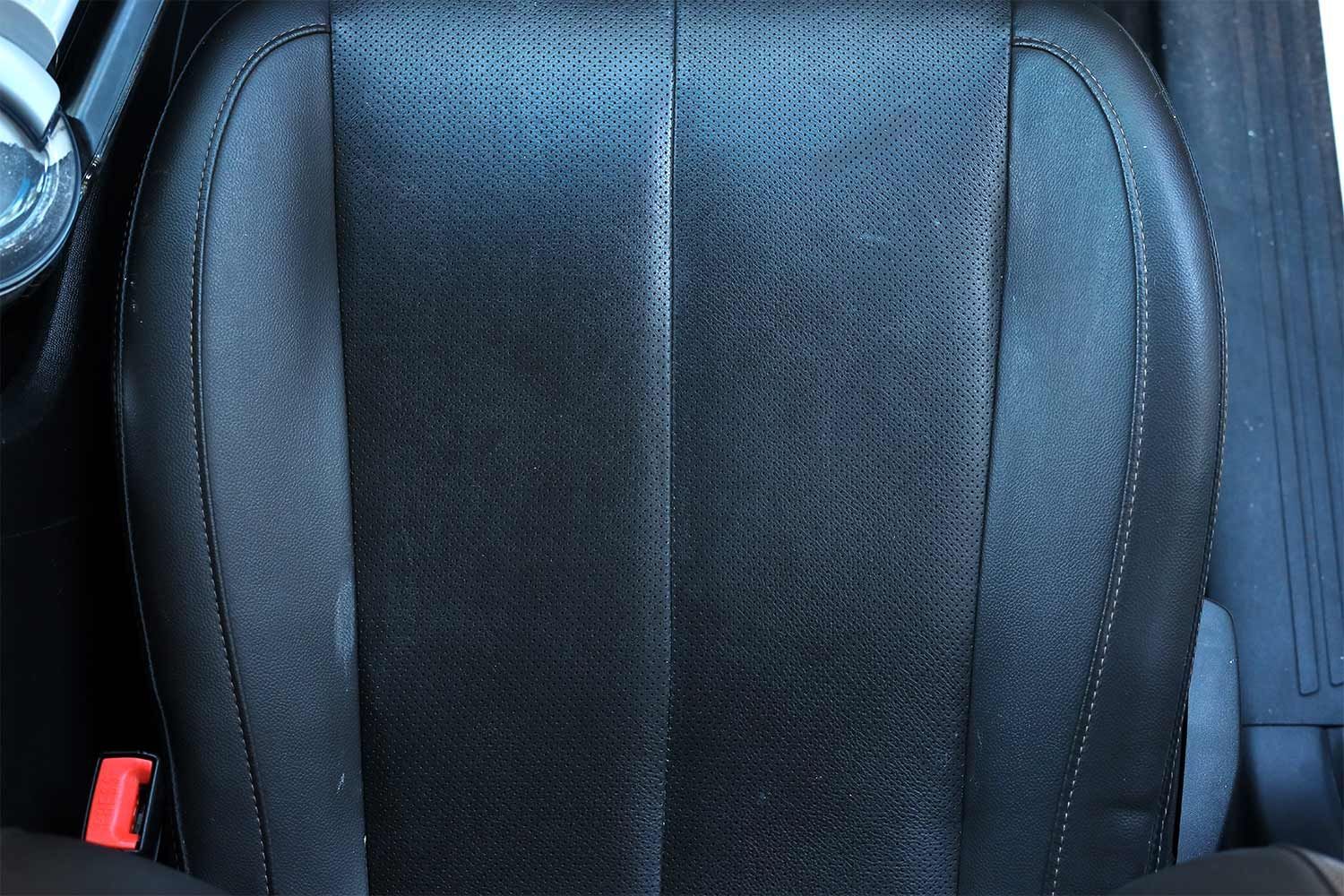
The Pivot Vac dig deep into the pores of the leather seat.
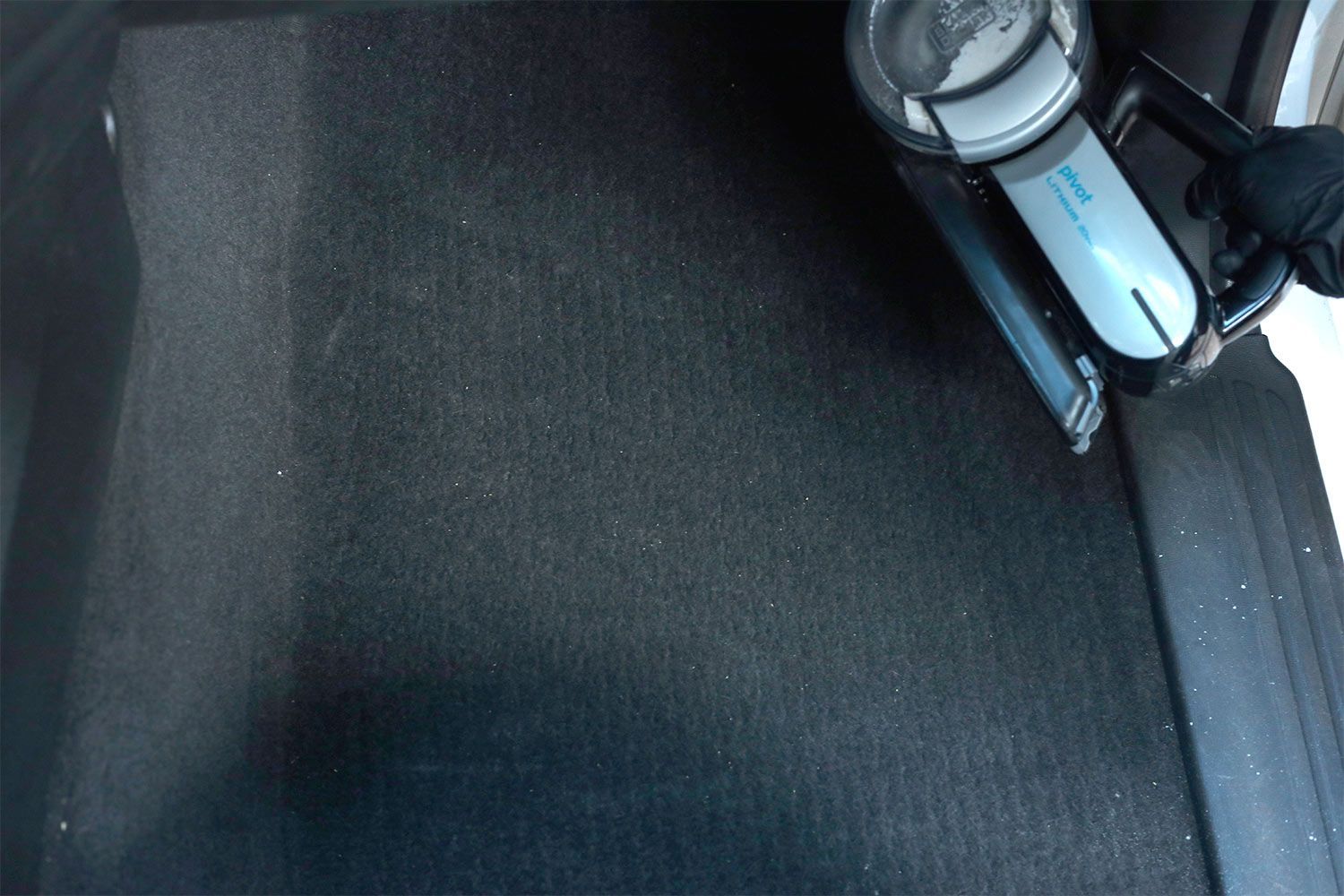
Even the thick weaves of the carpet can't make it struggle.
- The Black&Decker Pivot did an outstanding job cleaning up the seat and the footwell with a 95% and 90% cleanliness respectively. It scored 9.2 for the car cleaning test.
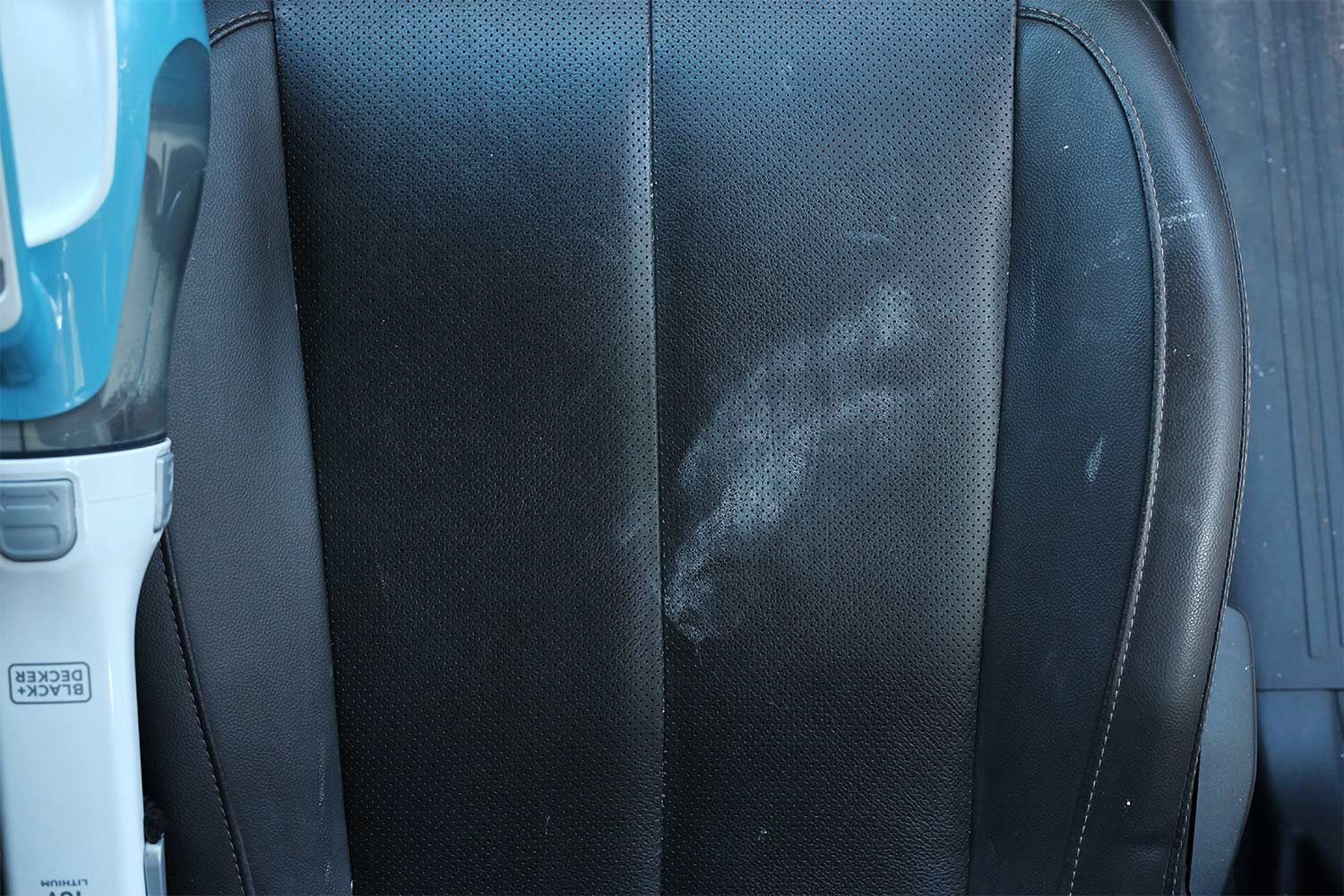
The Swivel's lackluster suction leaves noticeable streaks of flour dust.
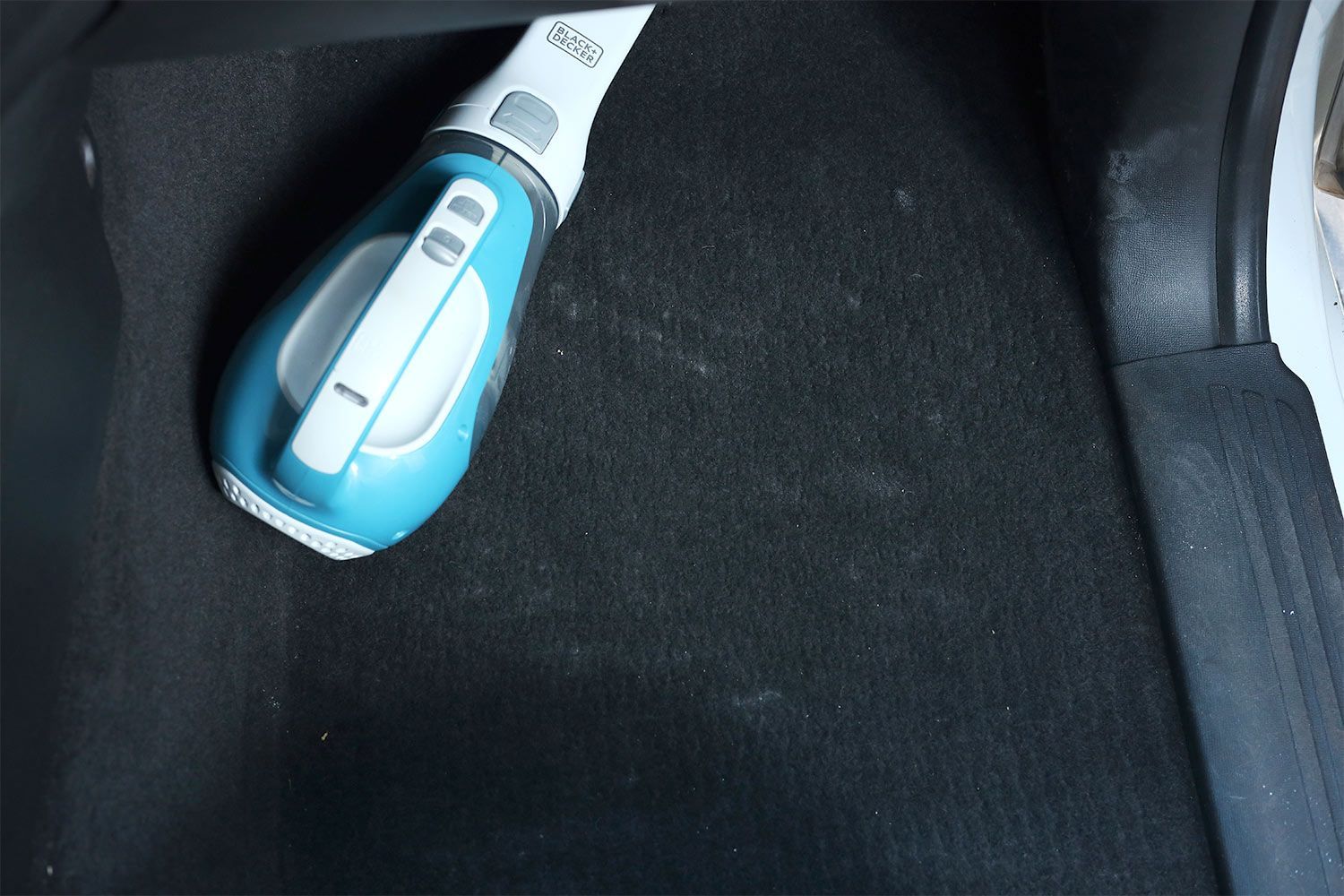
The footwell is where the white streaks are most noticeable.
- The Black&Decker Swivel wasn’t particularly impressive, cleaning up about 60% of the seat and 80% of the footwell. As a result, it scored only 6.6 for this test.