Our recommendations are made independently. We may receive commissions from purchases made via our links.
Max Suction Strength Test for Vacuum Sealers
As part of our search for the best vacuum sealer, we evaluate a range of top-performing models by vacuum-packing rice grains in this test.
This test is part of How Shouldit Tests Vacuum Sealers v1.1
If you want to preserve your food for longer and reduce wastage, there aren’t any better ways than vacuum sealing. Pack up the food in a plastic bag and put it in the fridge. The airtight environment, combined with the coolness of the fridge, will significantly improve the shelf-life of the food (by days, even weeks!)
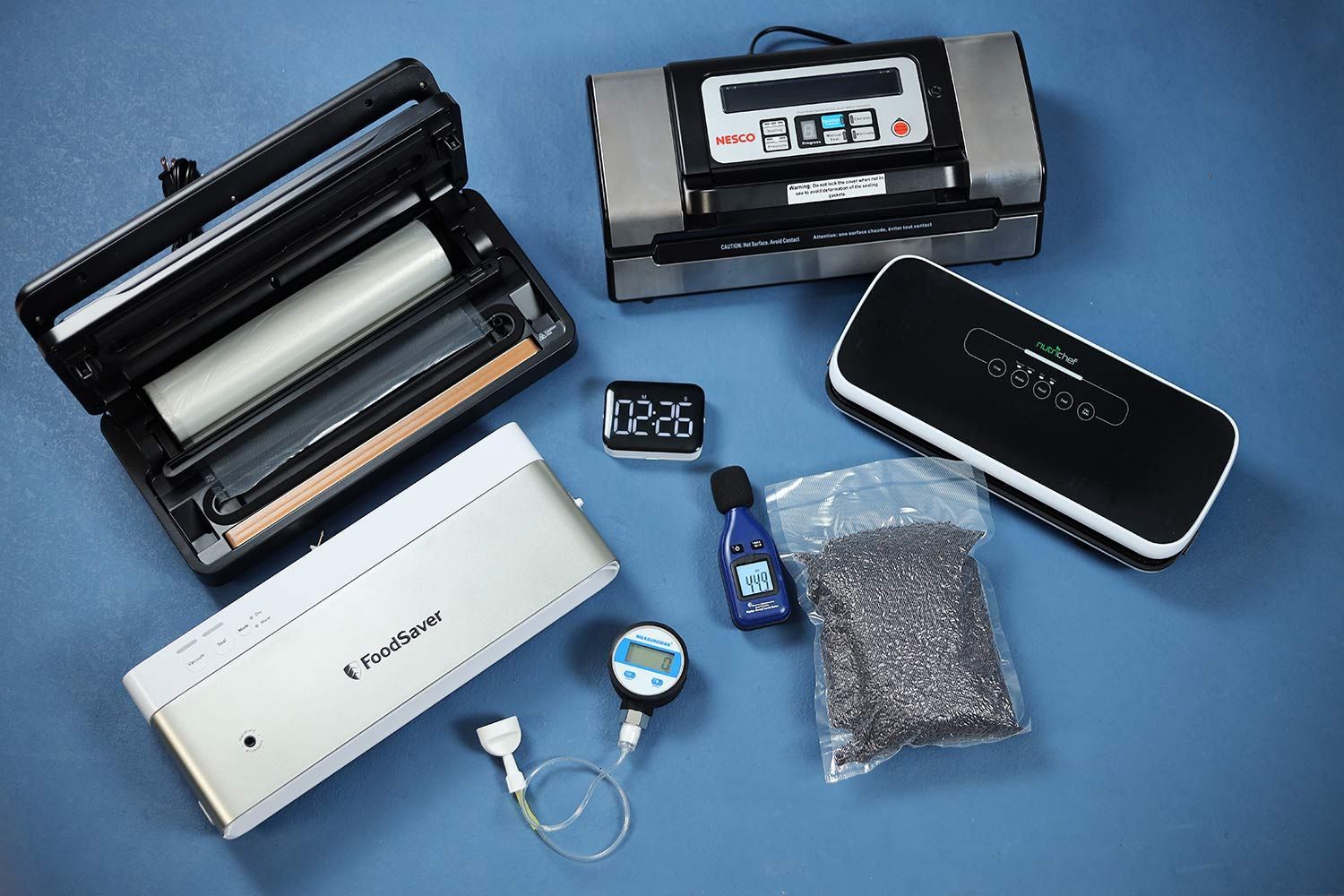
We've gathered a selection of top-rated vacuum sealers from Amazon and put them to the test in our laboratory. For our initial performance assessment, we chose to work with dry food, specifically black rice grains. Dry foods, especially grains like rice, can be trickier to vacuum seal compared to moist foods like raw meat. This is because tiny air gaps between the grains can pose a challenge for the sealer to eliminate completely. As a result, this experiment is the ideal opportunity to gauge the vacuum sealer's capabilities.
Testing Procedure
We will begin by filling a bag with 35.2 ounces (1 kilogram) of rice, vacuuming it, and sealing it. The bag will be connected to a vacuum pressure gauge, which measures the pressure in kPA. Additionally, we will time how long each sealing session takes using a timer.
It's important to note that a lower pressure reading on the gauge indicates that more air has been successfully removed from the bag. The gauge will display this result as a negative number to indicate a vacuum. On the other hand, the time it takes to complete the vacuum and seal the bag reflects the efficiency of the vacuum sealer, with shorter times being preferable.
Scoring Metrics
The sealer's total score in Max Strength test is based on two sub-scores: Suction strength (weighted at 70%) and Cycle time (30%).
We perform the test two times for each model and record the data. Since there’s little to no difference in readings between the evaluated attempts (and many unofficial, rehearsal runs) across all products, we decided to mark the final score based on the better result of the two.
Suction Strength
Suction strength is measured by the vacuum pressure gauge in kPA.
- Above 70 kPA - 10 points
- 65-70 kPA - 9 points
- 60-64 kPA - 8 points
- 55-59 kPA - 7 points
- 50-54 kPA - 6 points
- 45-49 kPA - 5 points
- 40-44 kPA - 4 points
- 35-39 kPA - 3 points
- 30-34 kPA - 2 points
- 25-29 kPA - 1 point
- Below 25 kPA - 0 point
Cycle Time
Sealing time is measured by the timer that starts from when the sealer’s vacuum activates to when it turns off and the bag is sealed.
- Under 10 seconds - 10 points
- 10-14 seconds - 9 points
- 15-19 seconds - 8 points
- 20-24 seconds - 7 points
- 25-29 seconds - 6 points
- 30-34 seconds - 5 points
- Above 35 seconds - 0 point
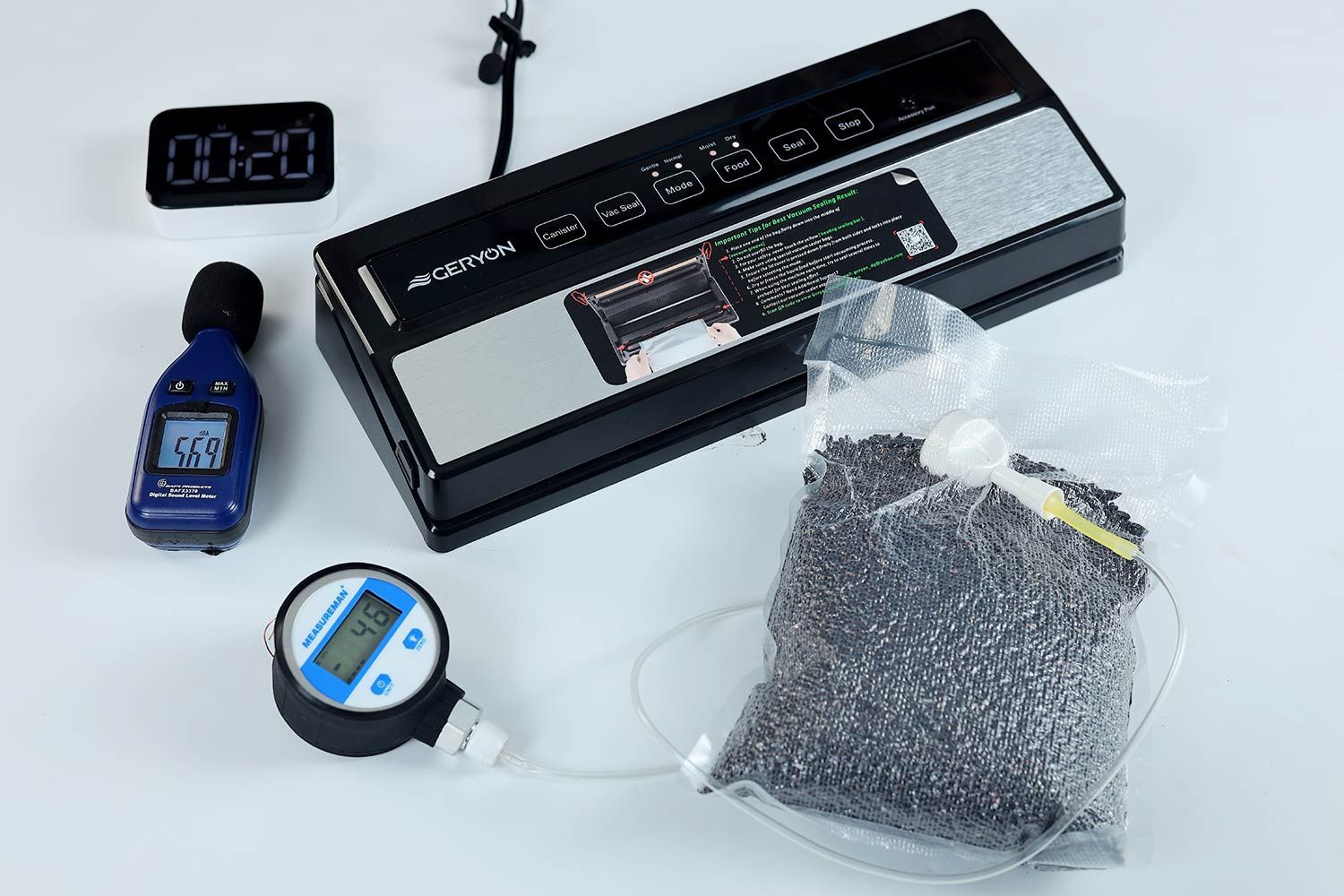
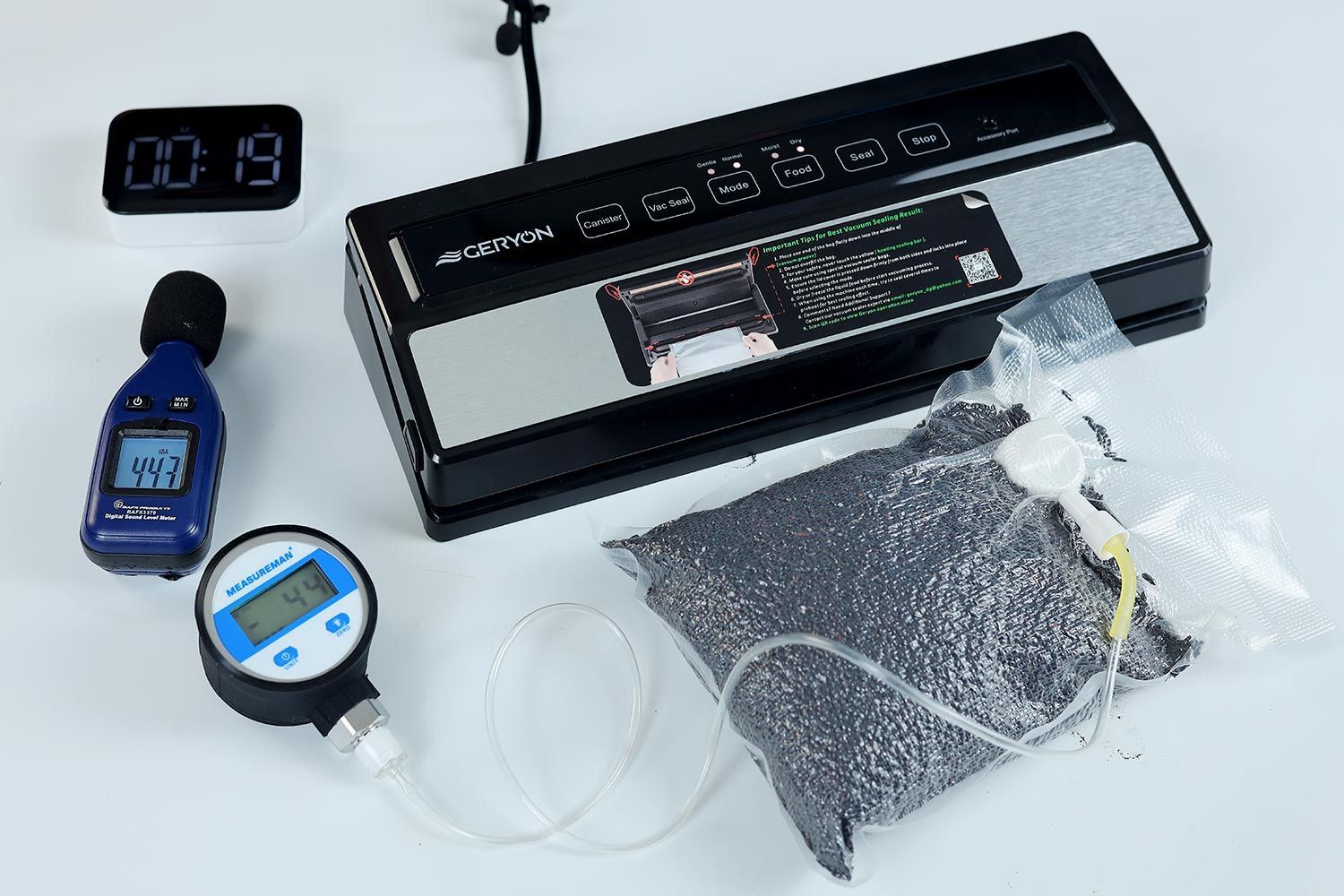
Take, for example, the Geryon E2900-MS. Out of the two attempts, the first one yields 5 points for Suction strength and 8 points for Cycle time, which equate to 5.9 after applying the formula. This is the better one of the two and is determined as the product’s final score for this test.
References
https://ask.usda.gov/s/article/How-long-can-you-store-fruits-and-vegetables - How long can you store fruits and vegetables? - USDA