Our recommendations are made independently. We may receive commissions from purchases made via our links.
How Shouldit Tests Vacuum Sealers v1.1
We’ve tested and scored over a dozen vacuum sealers in our lab. This article detailed the process we used to score and assess each model!
A vacuum sealer is a valuable tool for meal planning. When you vacuum-pack your food and store it in the fridge, it can stay fresh for 10-15 days, compared to only 8-10 days without vacuum sealing under the same storage conditions. It does depend on the type of food, but killing moisture is a proven practice for preserving foods.
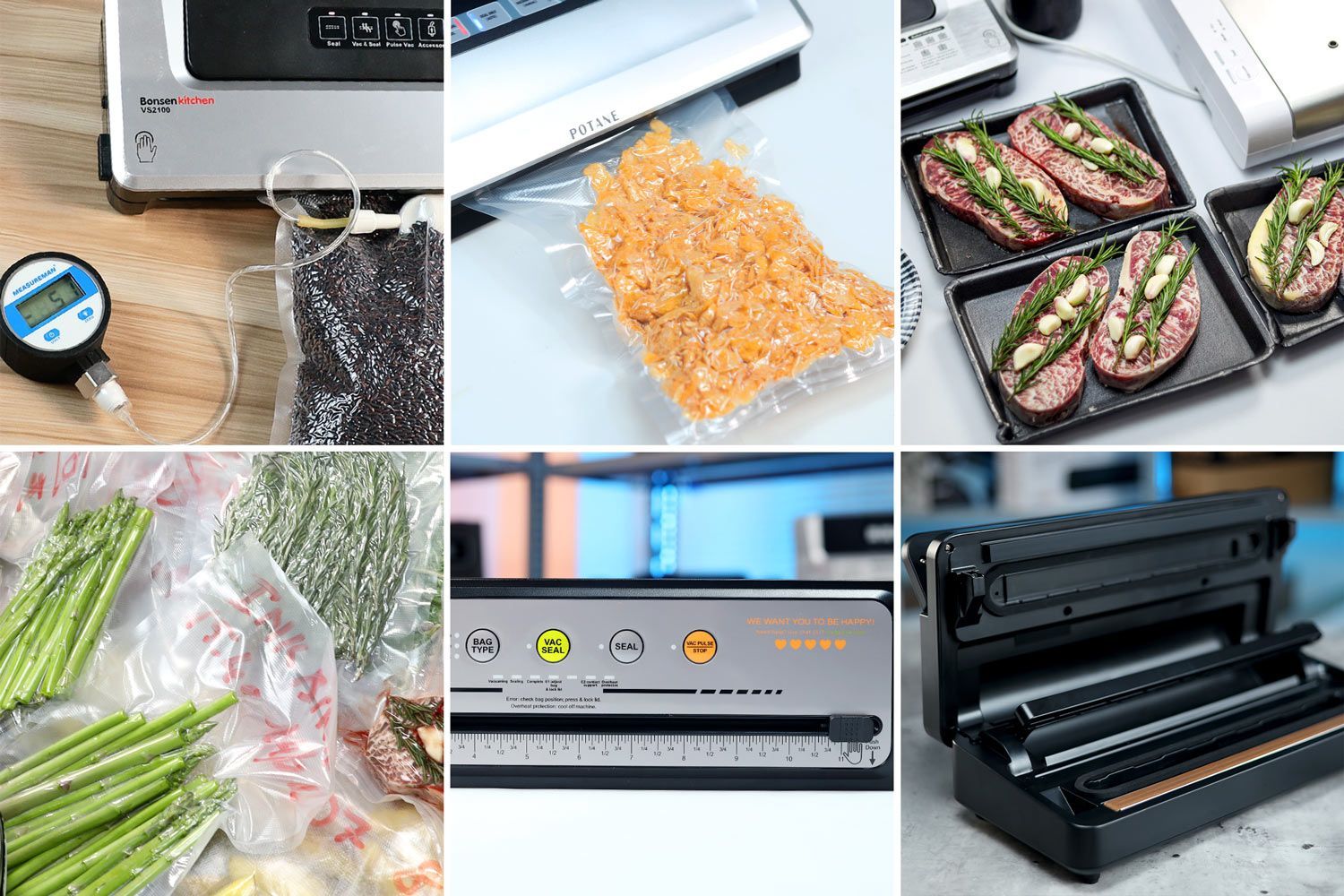
Our team at Shouldit has been testing and scoring the best vacuum sealers on the market. If you're curious how we assigned scores to each model and the specific criteria we considered during our evaluation, you can find all the specifics in this article!
Overall Ratings
The overall rating for each model is the ultimate score that best reflects their value. This score is based on collected results across all three major test categories, weighted based on how important we consider them to be in evaluating the value of a vacuum sealer.
We evaluate each model's overall rating by considering three main test categories: Performance (50%), Design (20%), and Usability (30%). Within each category, there are specific sub-categories that contribute to the overall score of that particular segment. We'll explain these sub-categories in more detail below!
Performance (50%)
The performance of a vacuum sealer is closely linked to the strength of its suction motor. A stronger motor is preferable as it can effectively remove more air from the bag, resulting in a tighter seal.
Max Suction Strength (50%):
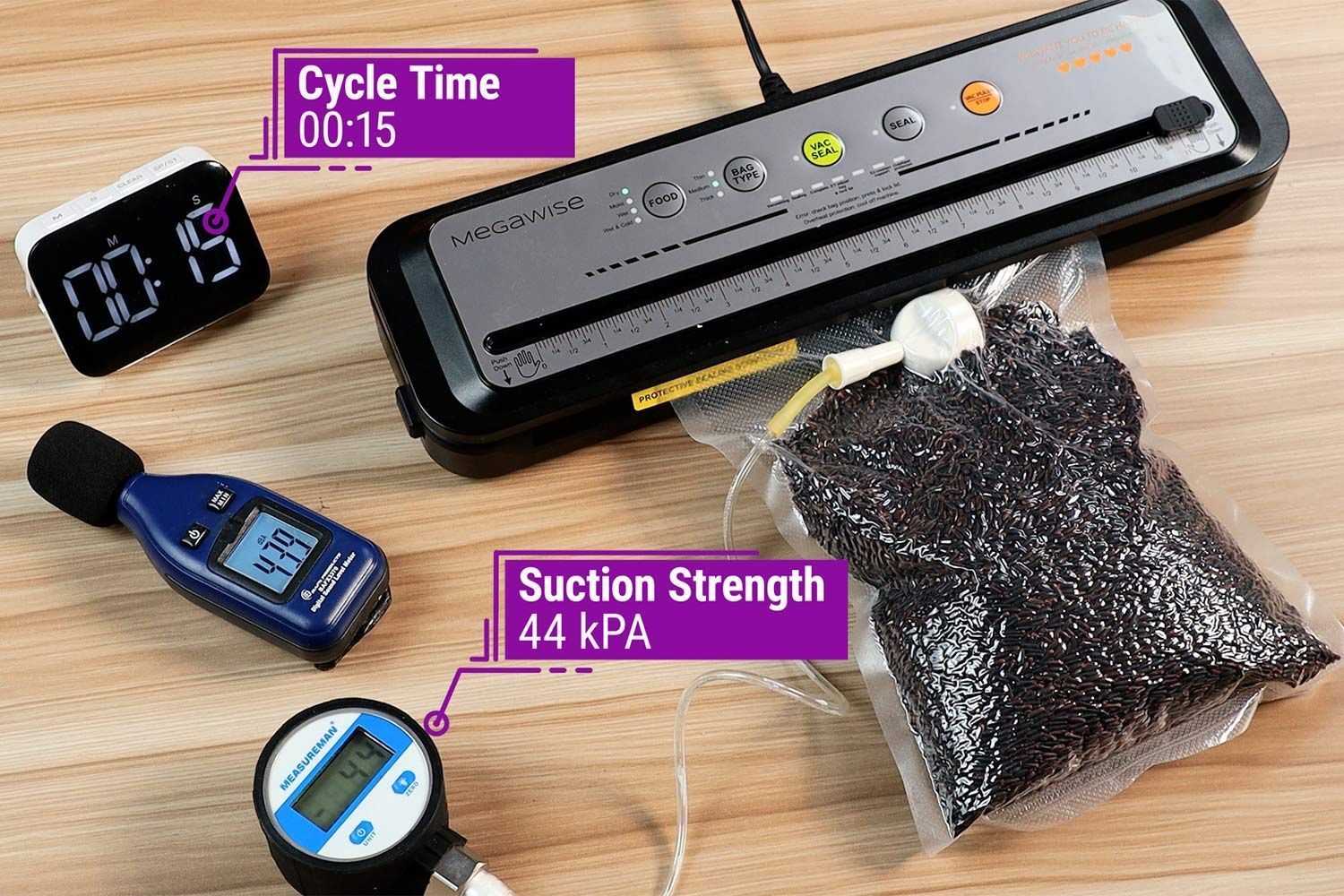
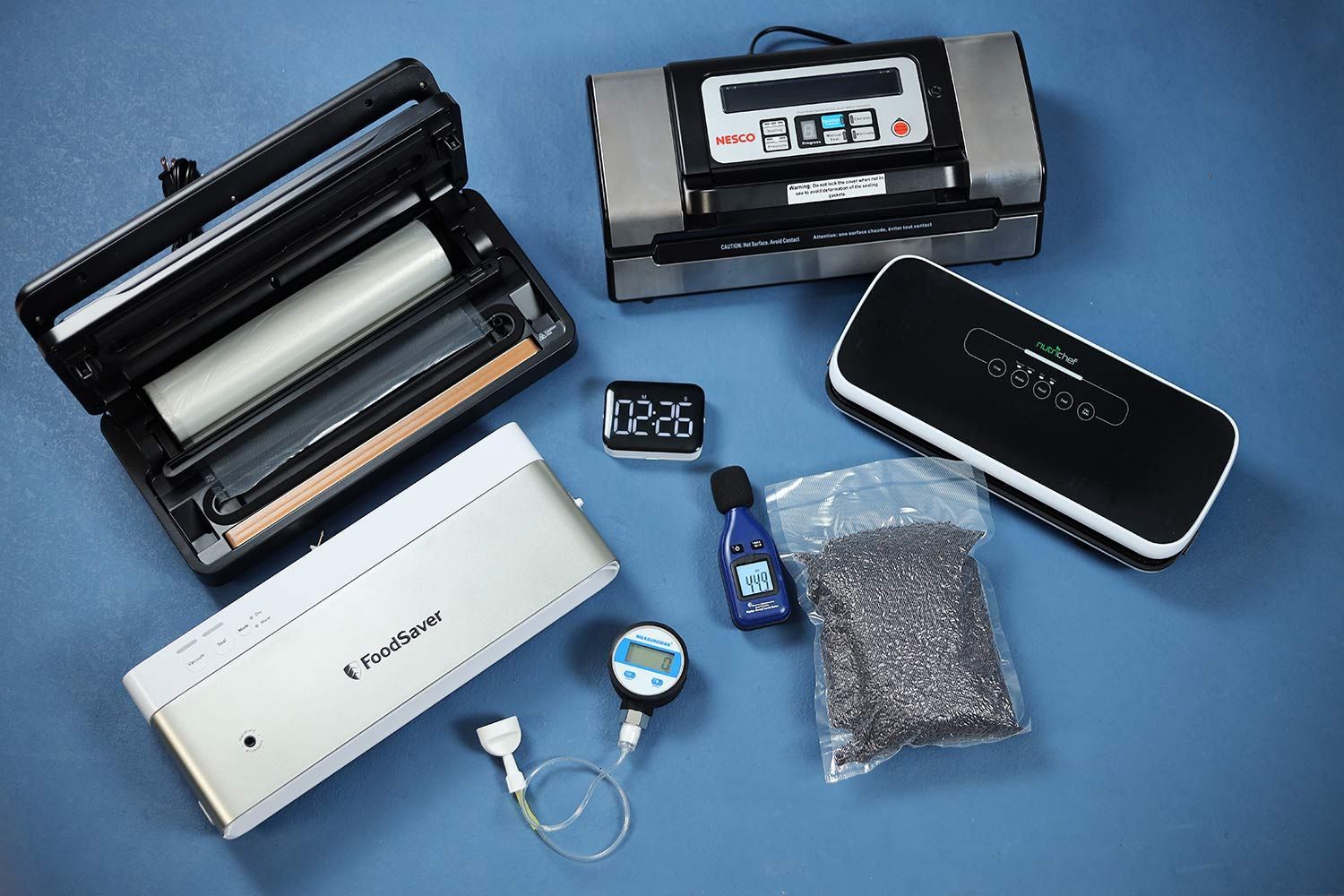
We dry food items for this test, specifically black rice grains. We load a bag with 2.2 pounds of rice, vacuum it, and seal it. The bag is connected to a vacuum pressure gauge, which measures the pressure in kPA. We also time how quickly each sealing session is completed.
We repeat this process twice for each model for the sake of collecting data then score the best run out of the two. A more detailed version of the test can be viewed here.
Crunchy Food Breakage (20%):
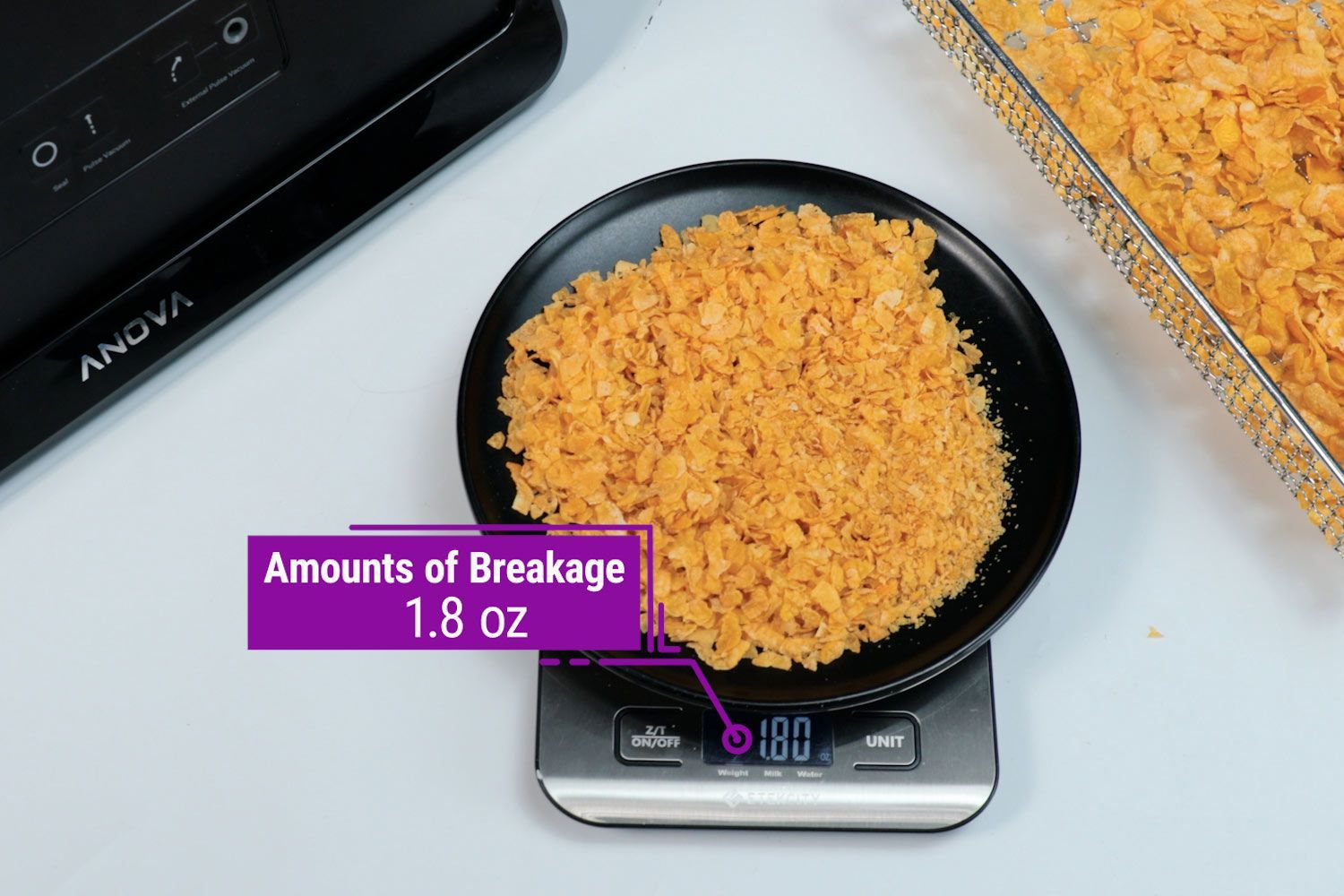
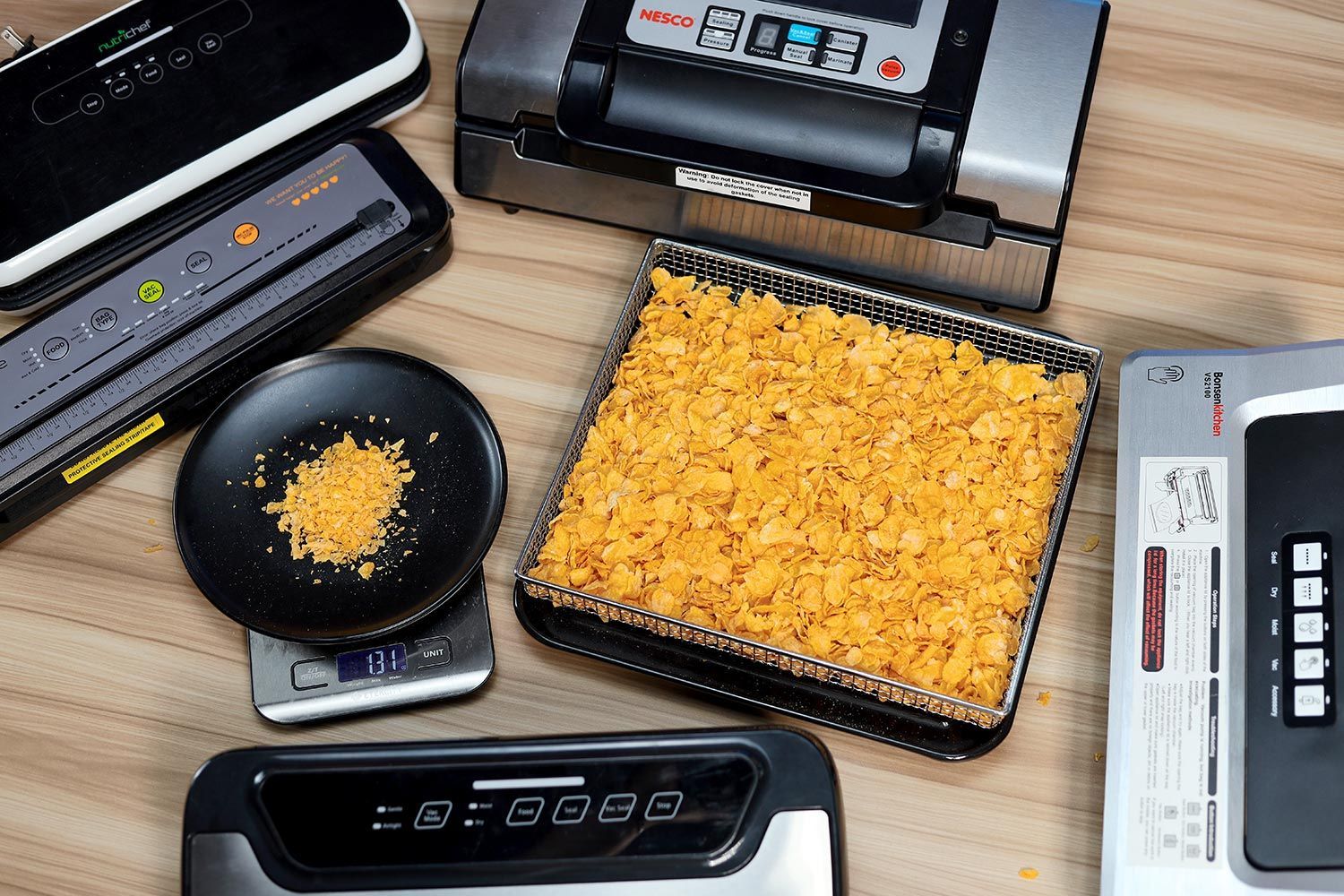
We sift and vacuum seal 4.5 ounces of appropriate-sized cornflakes, then we cut open the bag and evaluate the amount of breakage in the after product. If a product has a Gentle preset with a less forceful vacuum, we run that product using said preset.
The test's score is calculated on the percentage of breakage that happens in the process. Check out the fully written article here.
Beef Sous Vide (30%):
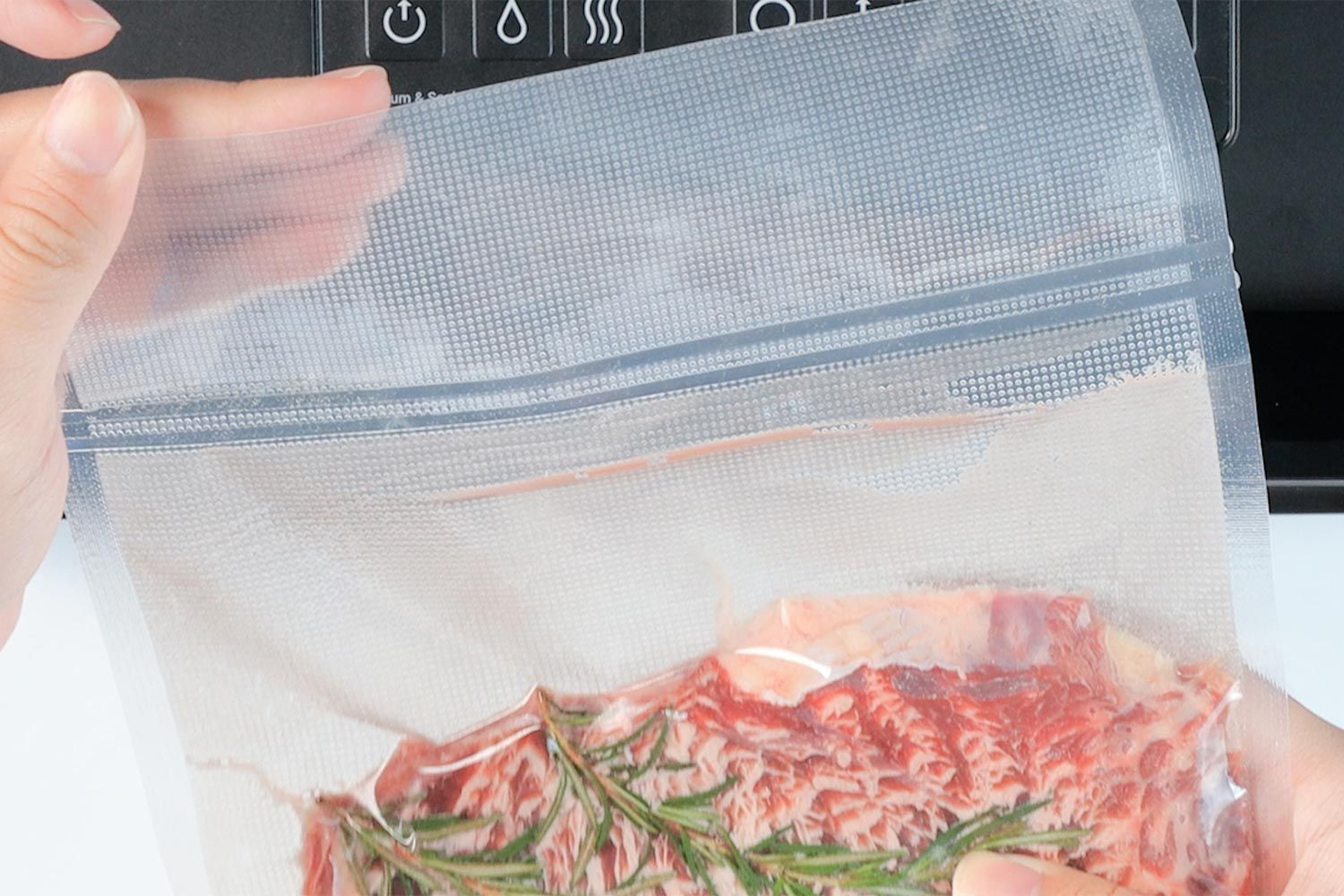
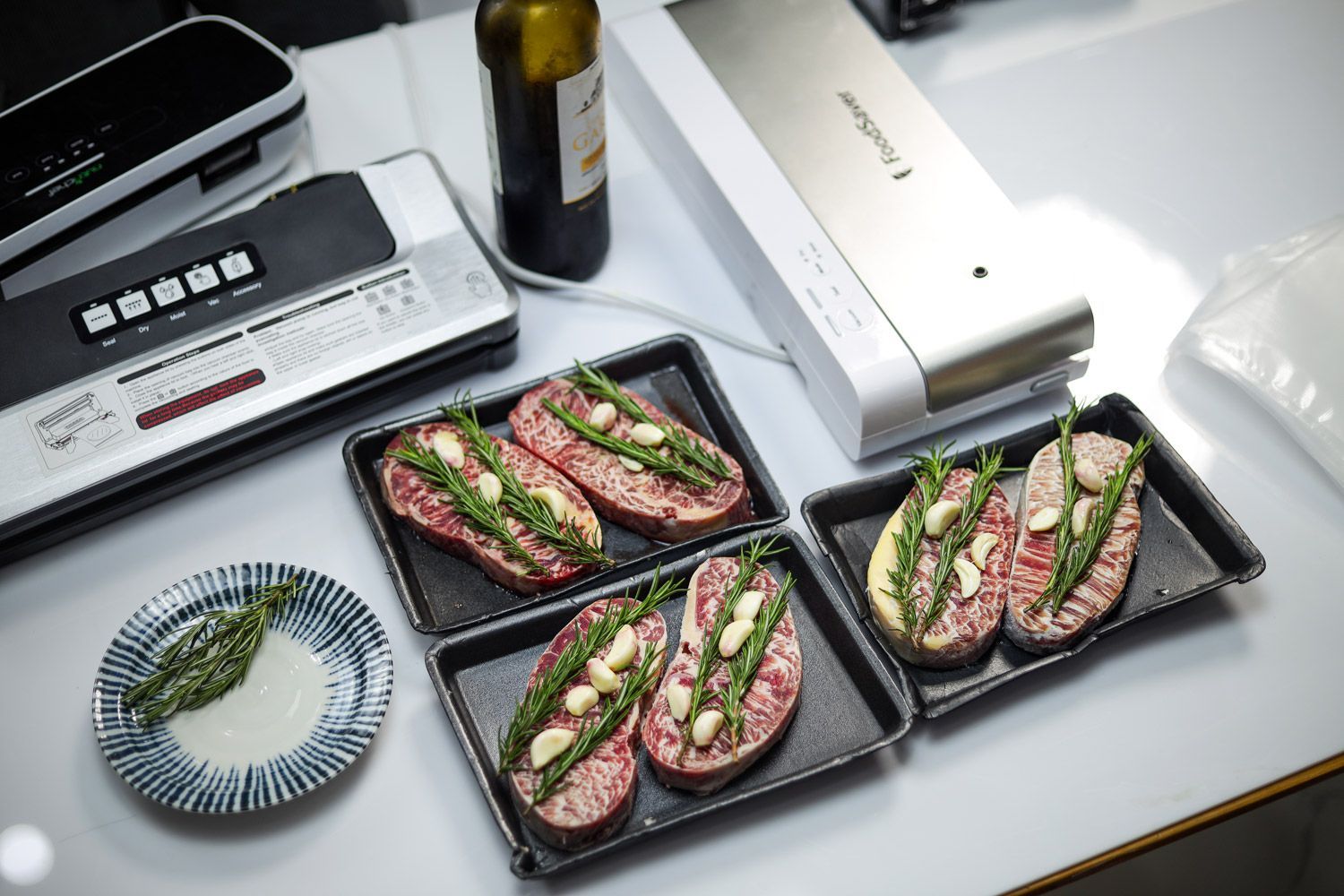
In this test, we allow each product a total of three tries to vacuum seal a medium cut of juicy, marble beef until they succeed (producing unbroken sealing, safe for sous vide cooking). If a model fails the first two times, which we run using Moist Food mode, we switch to doing it manually in the final attempt and monitor the vacuuming and sealing ourselves.
The fewer attempts a product takes, the better it scores. More detail on the test can be found here.
Design (20%)
Following the evaluation of sealing performance, our team of reviewers thoroughly examines each model's construction. This includes scrutinizing the housing, heating bar design, vacuum channel, and other elements. The build quality of a vacuum sealer is critical for its durability and user-friendliness.
We focus on assessing four key components:
1. Build Quality (50%)
We evaluate the overall construction and design of the sealer, looking for any design-related issues that could potentially impact its long-term durability.
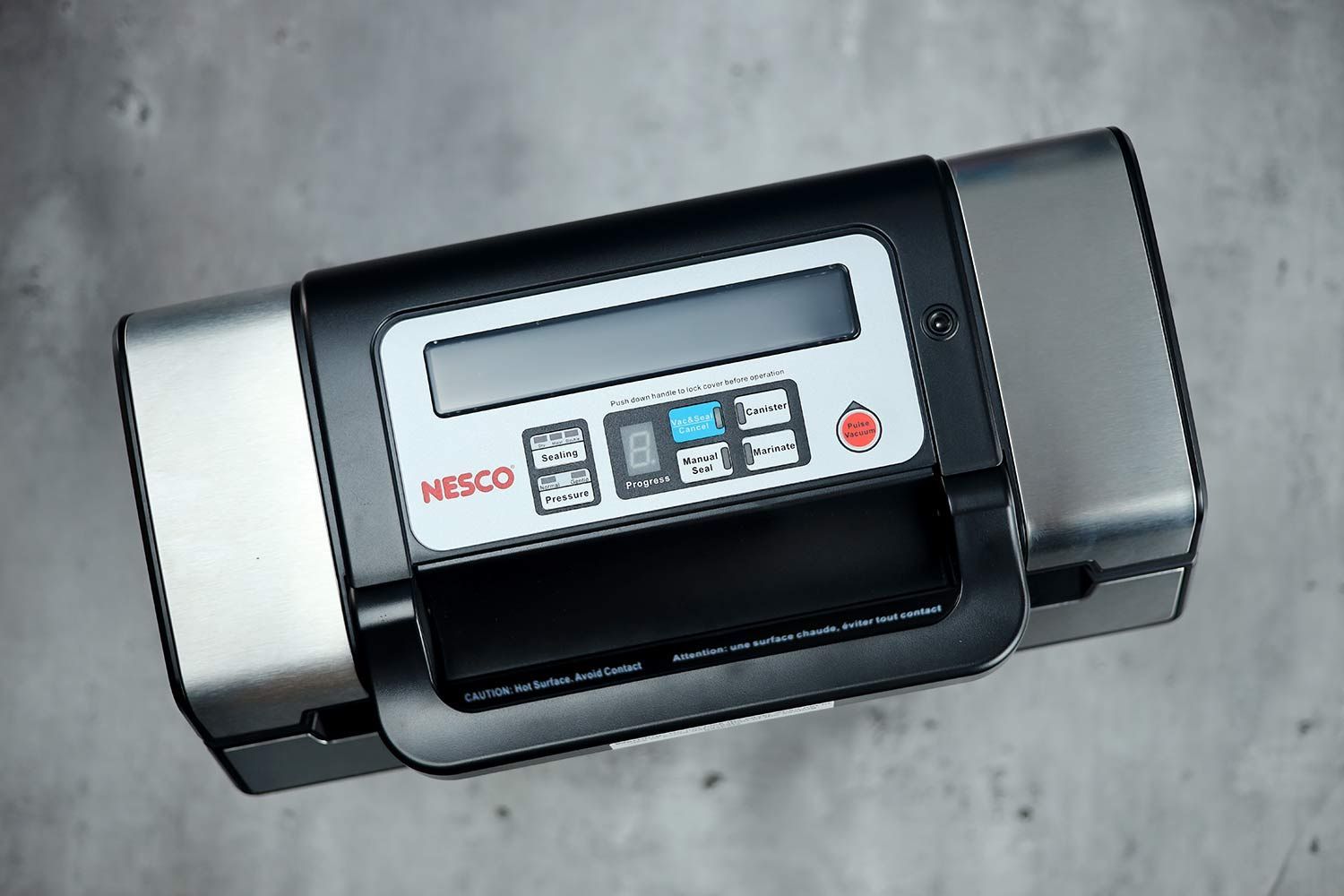
2. Control Panel (20%)
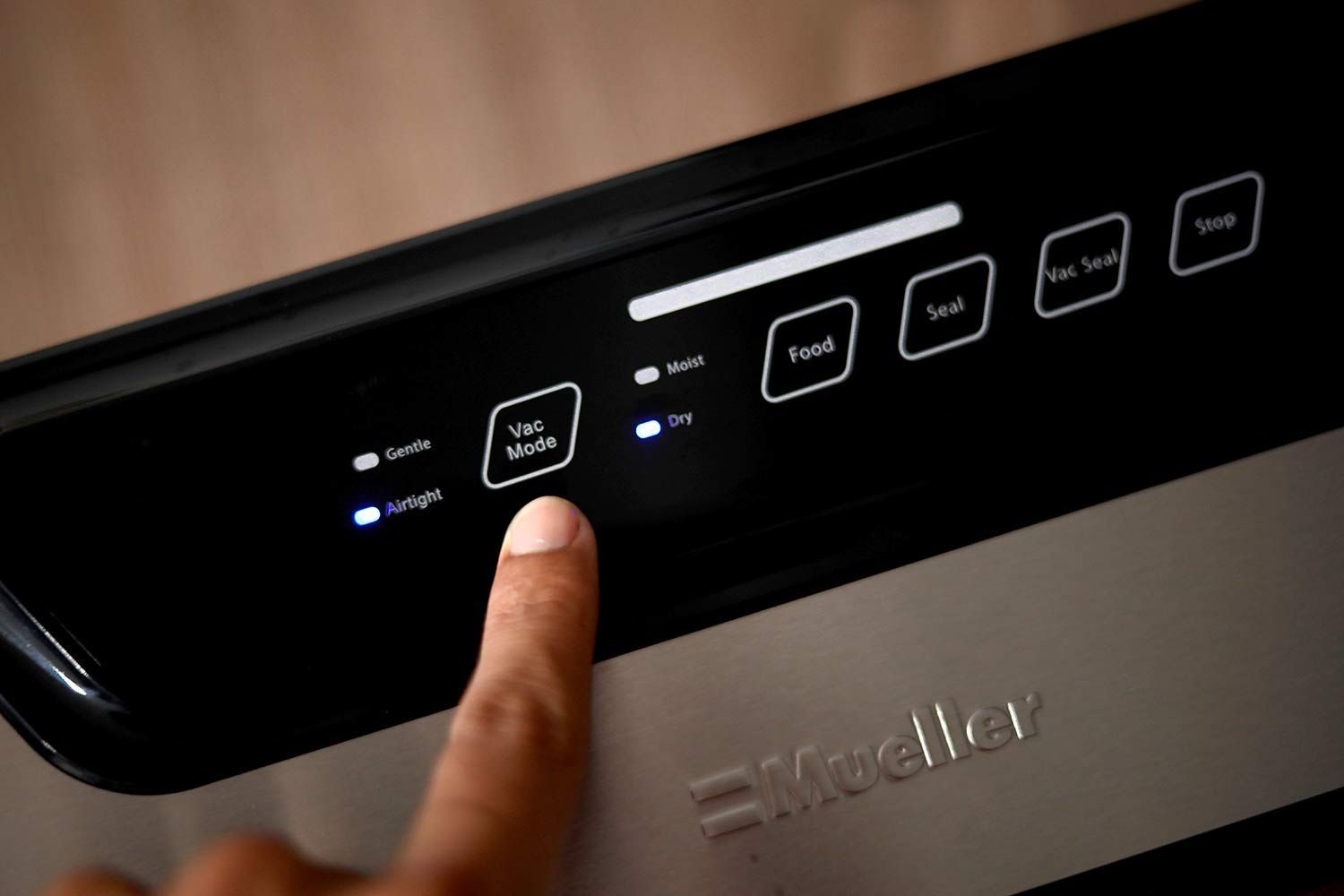
The control panel of the sealer, including buttons and indicator lights, is carefully assessed. We consider the layout's intuitiveness and ease of use.
3. Lid (20%)
The lid is a crucial part of the sealer's functionality. Our reviewers examine its construction and the effectiveness of the locking mechanism.
4. Extra Features (10%)
For mid-to-high-end models, extra features can enhance usability. If a model includes such features, our reviewers take them into account during the evaluation.
Usability (30%)
Vacuum sealers are generally easy to use, but some models are more user-friendly than others. In this evaluation, we focus on assessing their ease of use.
Ease of Use (70%)
Our reviewers gauge how easy and convenient it is to operate the vacuum sealer during testing.
Safety & Noise (15%)
While vacuum sealers are generally safe, some components, like the heating bar, can become hot enough to cause minor injuries. We examine whether the design incorporates safety features and signals to make it safer for users. Additionally, we measure the noise level generated by the unit during operation.
Indicator Lights and Chime (15%)
Our reviewers evaluate the brightness of indicator lights while the sealer is in use. We also consider other signaling systems, such as chimes, that aid users in monitoring the sealing process without requiring constant attention.
Change Logs
Version 1.1
- Dry Food Test (60% of final rating) is now Max Suction Strength Test (50% of final rating) with modification to the scoring formula.
- Moist Food Test (40% of final rating) due to impractical application, is replaced with different tests.
- Introducing Crunchy Food Breakage Test (20% of final rating) and Beef Sous Vide Test (30% of final rating).
References
https://www.researchgate.net/publication/311982505_Effect_of_Vacuum_Packaging_Method_on_Shelf_Life_of_Chicken - Mathew, R., Jaganathan, D., & Anandakumar, S. (2016). Effect of Vacuum Packaging Method on Shelf Life of Chicken. Imperial Journal of Interdisciplinary Research (IJIR), 2.