Our recommendations are made independently. We may receive commissions from purchases made via our links.
Beef Sous Vide Test for Vacuum Sealers
With vacuum sealing technology widely available, cooking restaurant quality steaks at home is easier than ever. But sometimes, getting a perfect seal can be a challenge.
This test is part of How Shouldit Tests Vacuum Sealers v1.1
Sous vide cooking is undoubtedly one of the best if not the best way to cook steaks. In fact, we’re betting good money that’s the exact reason why some of us want a vacuum sealer in their kitchen. If you're unfamiliar, it's a method that can be used to prepare/cook multiple steaks at once using vacuum sealed bags, and it's incredibly easy to do. That said, it 100% depends on the sealer you're using.
As it turns out, sealing juicy foods such as beef is a daunting task that even decent sealers easily screw up because the liquid content interferes with the sealing. This test is designed specifically to highlight and evaluate such capacity of our product line up: how well they vacuum seal juicy cuts of marble beef.
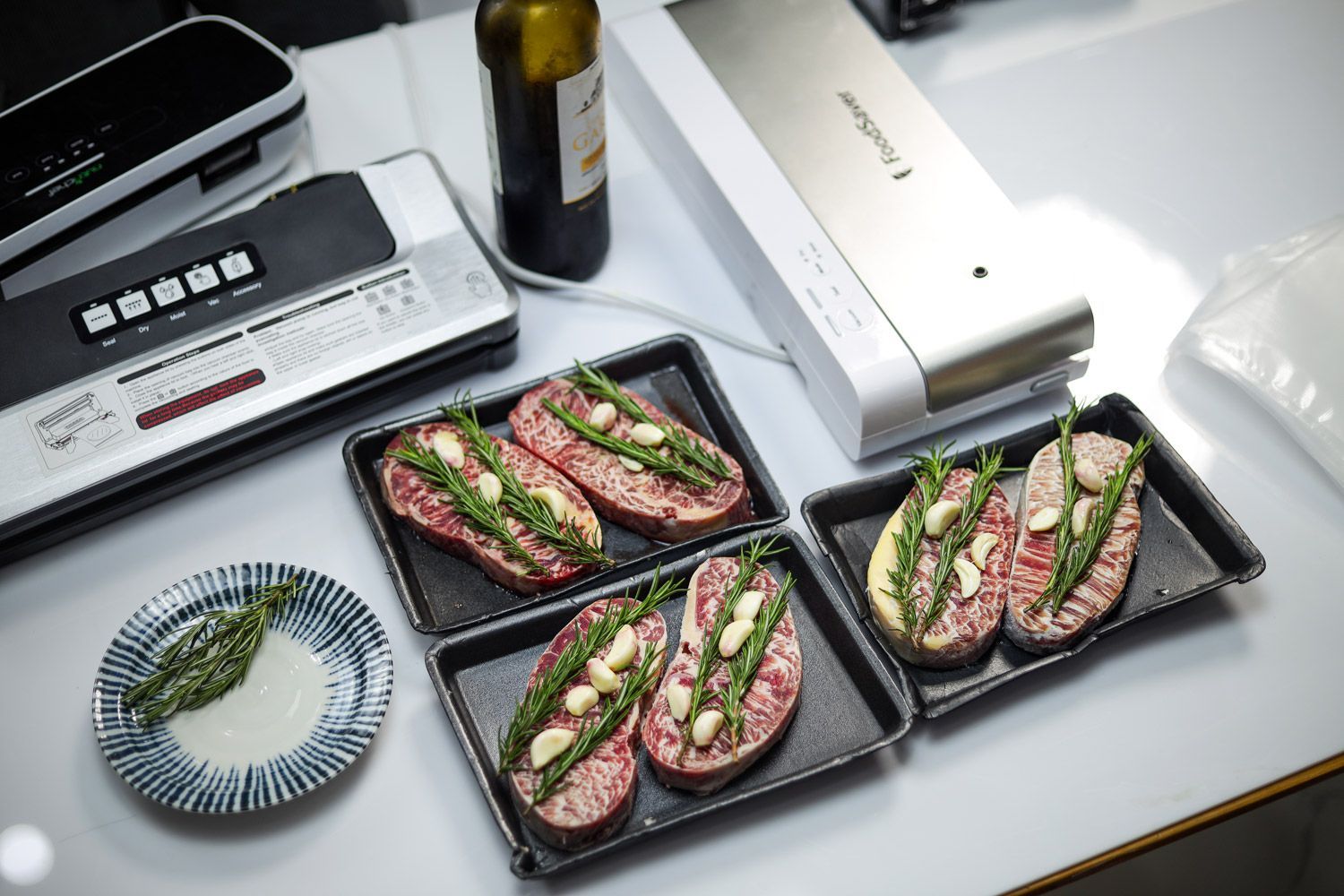
Testing procedure
To put it concisely, in this Beef Sous Vide test, we allow each product a total of three tries to vacuum seal a medium cut (1 standard serving) of tender loin in a 8x8-inch bag until they succeed. A successful attempt is determined by an effective and unbroken seal, safe for sous vide cooking.
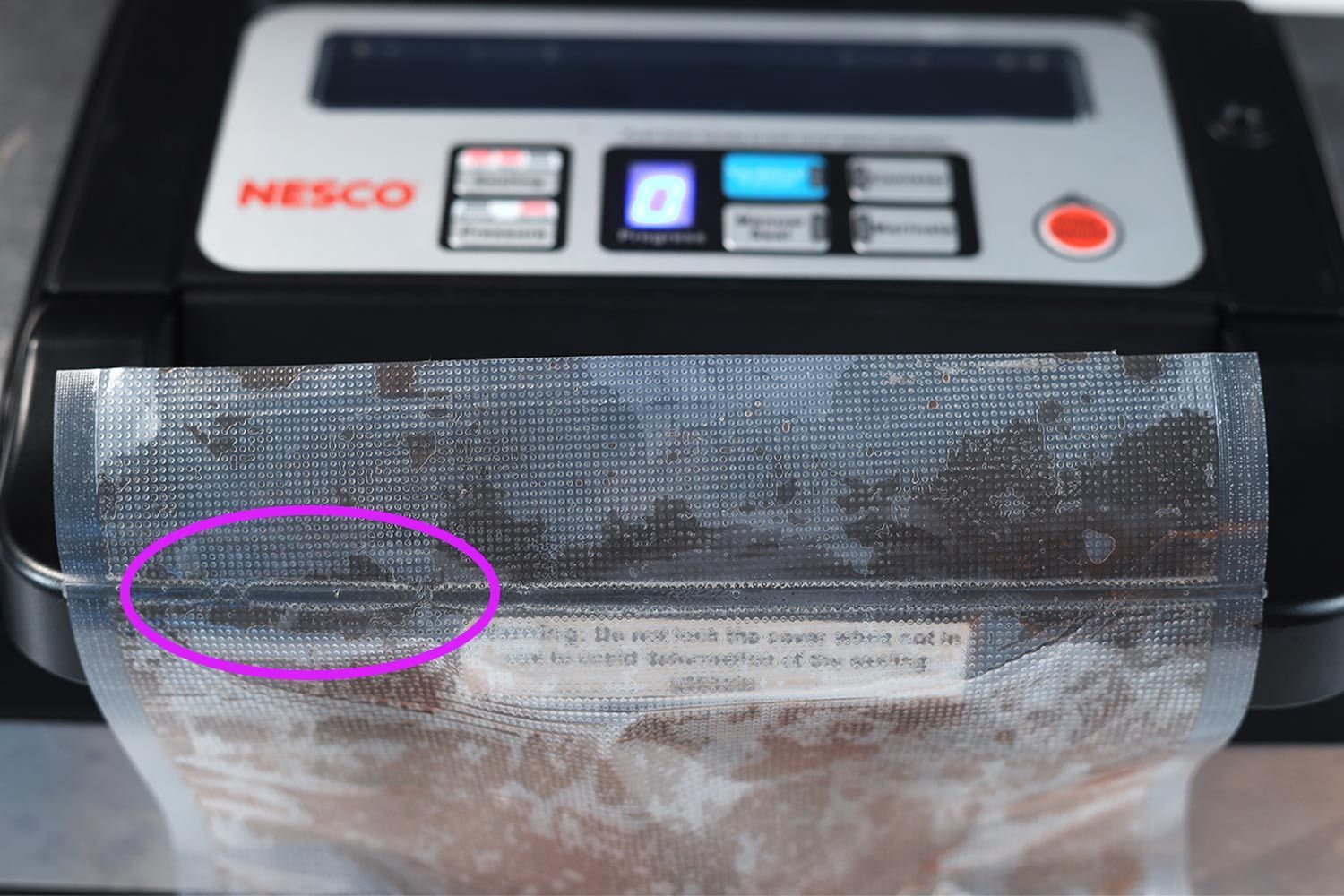
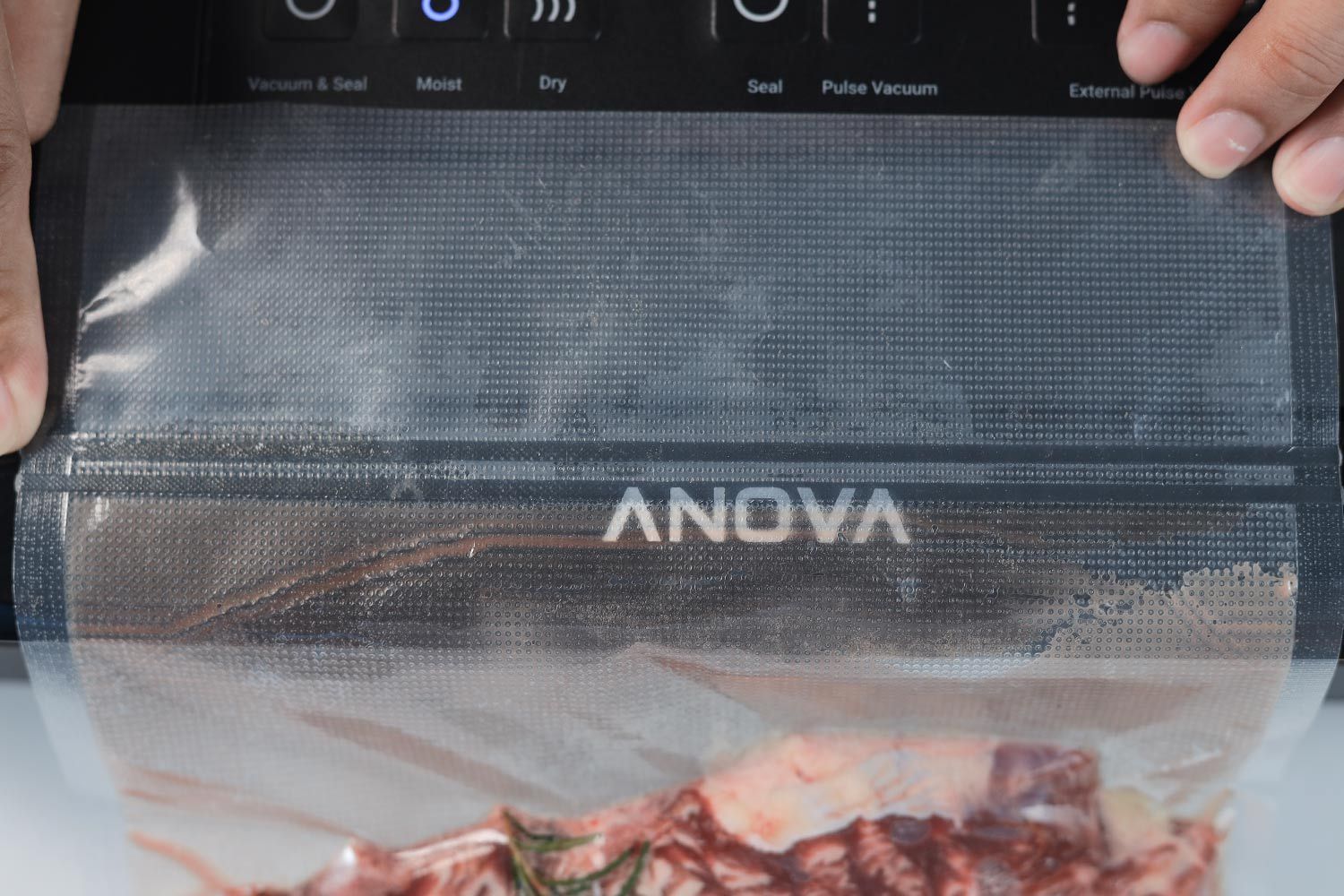
In the first and second try, we use the standard/normal setting on the sealers and let them proceed automatically. If a model fails the first two times, we switch to manual controls in the final attempt and monitor the vacuuming and sealing ourselves.
An interesting side note here is that for this particular task, manually controlling the suction and sealing almost guarantees success.
Scoring Metric
Each product is scored on a scale of 10.
If a vacuum sealer successfully seals the beef on the first try, it scores a perfect 10. However, if it fails the first but succeeds on the second, it may score only 7 points, suffering a 3-point penalty. By the same logic, if a model succeeds on the final “manual” try, it may only receive 5 points. Finally, if a model fails the three attempts, it fails the test.
Let’s take some examples!
One of our absolute favorites is the InkBird INK-VS01 and its performance across the board. Despite having ample suction that often proves catastrophic to the other models, this sealer completes the task decisively in the first official try, earning a deserving 10.
The Inkbird Plus INK-VS01 completes the task beautifully on the first try with remarkably fast cycle.
By contrast, something powerful like the Nesco VS-12, more specifically its standard automatic setting, fails the first two tries. As expected, doing things manually finishes the task more effectively. The product consequently scores only 5 points.
The Nesco VS-12 has a hard time with this particular task as it fails to give an effective seal on the first and second tries. Manual operation turns out to be the better method with content as juicy as marble beef.
Let’s try another example with the Bonsenkitchen VS2100 to highlight the fact that most vacuum sealers with less forceful suction and a slower seal tend to handle juicy content more competently. This Bonsenkitchen, with only medium suction strength comparatively, aces the test with a perfect 10 effortlessly.
The Bonsenkitchen VS2100 completes the task beautifully on the first try.