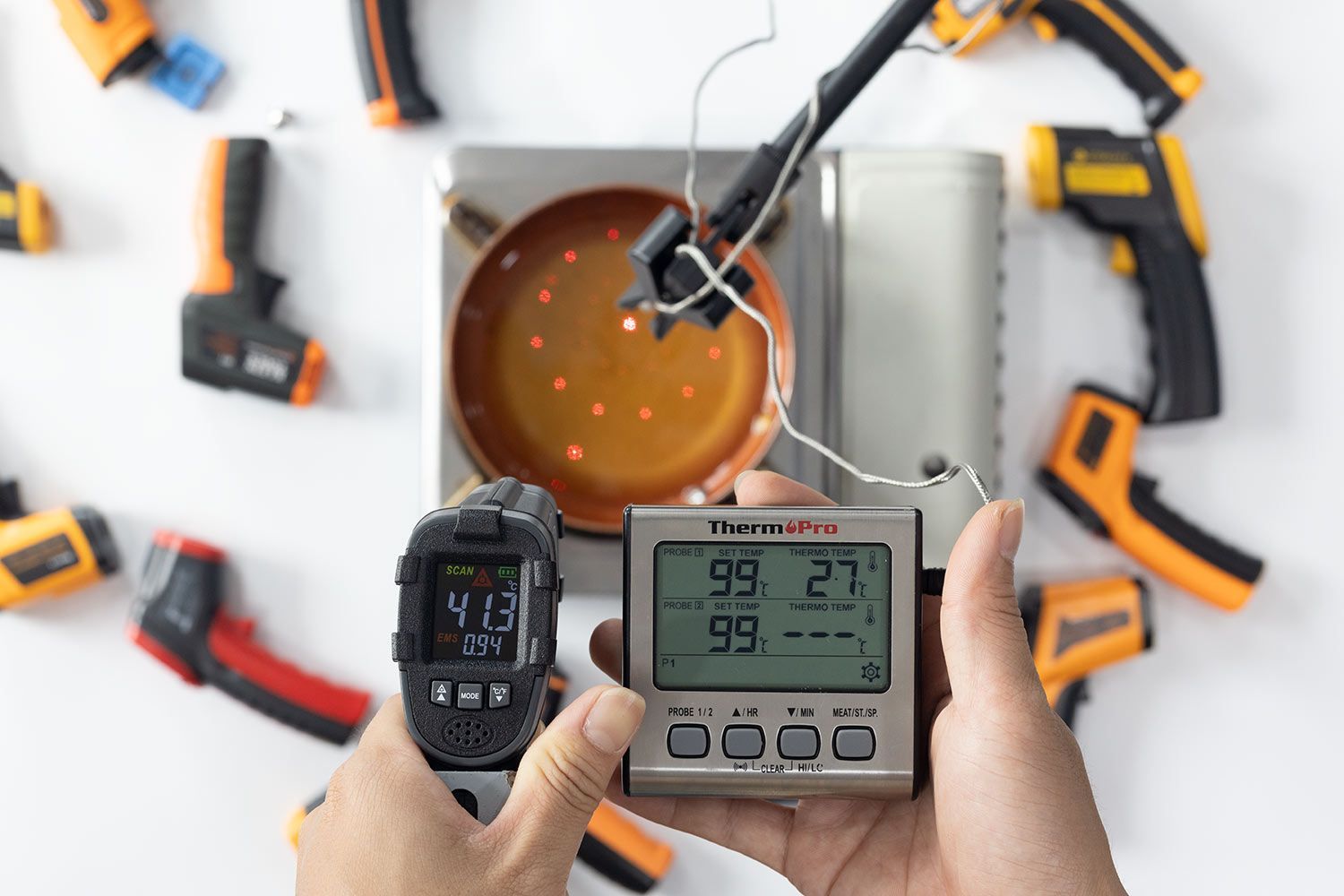
Ice-Bath Test for Infrared Thermometers
In the ice bath test, we attempt to measure the thermometer's ability to accurately read the temperature of ice water, which remains at a constant 32°F. The closer the readings are to 32°F, the better its score in this section would be.
This test is part of How Shouldit Tests Infrared Thermometers v1.1
IR thermometers work by recording the thermal energy radiating from an object. To determine an IR thermometer's accuracy, we must compare its reading with an object with a known, stable temperature. That object is ice water, which has a steady temperature of 32°F (0°C).
As such, pitching IR thermometers against an ice bath in our laboratory is one of the tests we perform at Shouldit to ascertain their accuracy for our reviews.
We’ll show you the steps we take at the lab to obtain the results and scores you see in the final review article in this guide. You can follow the same steps and replicate the results at home if you choose!
How We Prepare an Ice-Bath for Testing
We use an insulative foam box to contain the smashed ice cubes and water. The inside of the box is covered in black tape to ensure that the original white interior of the box won’t interfere with the test and introduce inaccuracies.
Crushed ice is first poured into the box, covering roughly 75% of the box’s internal volume. After that, purified water — tap water processed using a filter pitcher — is poured into the container. Water is poured until it meets the top of the ice without making the top layer of ice float.
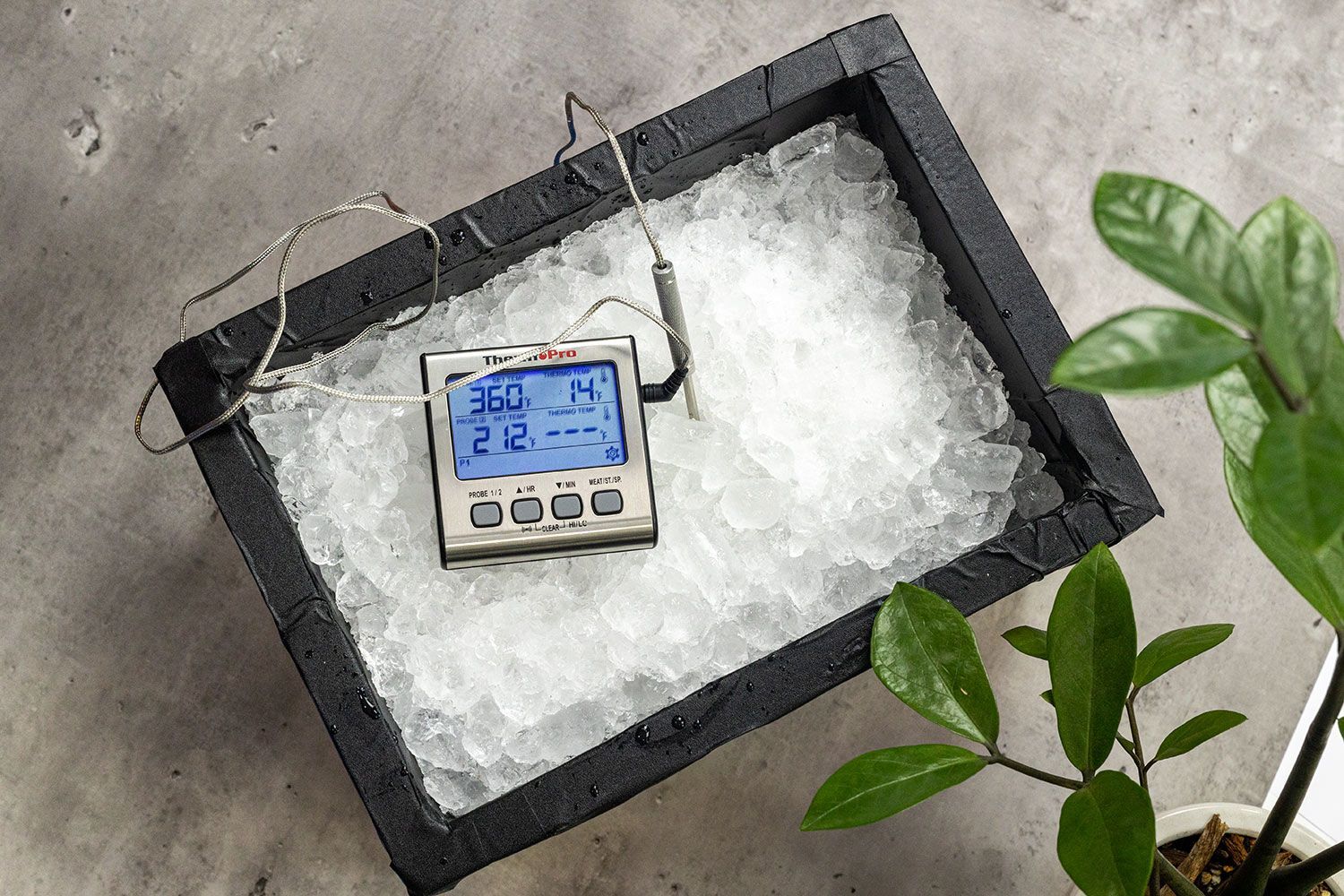
The box's top cover is box's top cover set a timer for 5 minutes to let the ice and water chill down to the ideal 32°F point and stabilize.
As the water in the ice box chills, we set the EMS settings for all IR thermometers that have the ability to 0.97, which coincides with the emissivity of ice. We also ensure that the temperature is air-conditioned to a temperature of 73.4°F (23°C).
After 2 minutes, we used a temperature probe to ensure that the icy water had reached and stabilized at 32°F. Once all conditions have been verified as ideal by our testing lead (Lap Vo), the test can proceed.
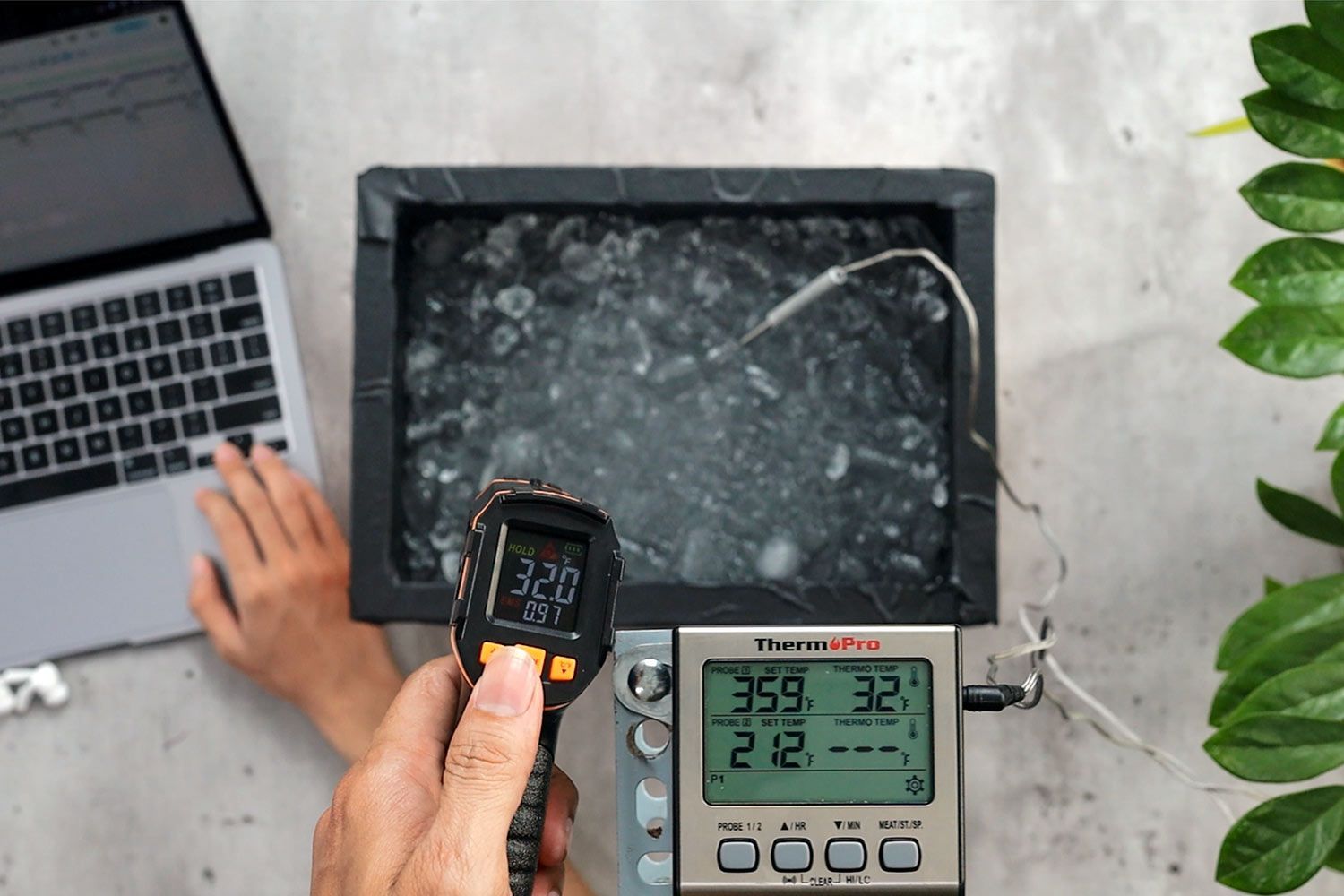
We brace each IR thermometer against two metal bars that have been pre-measured to have a distance of 12 inches and 16 inches from the ice box.
A temperature recording is taken once at each distance and recorded accordingly into our database.
How We Collect, Analyze, and Score the Test Results
The data will have already been entered into our database during the test. Specifically, the temperature readings of each thermometer under different conditions (surface type and distance.)
From there, the review team will sit down in a meeting to analyze and score the performance of each model.
For the ice-bath test, the ideal temperature reading that the thermometer should give is 32°F (0°C) — the constant temperature of icy water.
The scoring of the ice-bath test takes up 40% of the total performance score.
How We Score
We use two main figures to calculate the overall scores for this test. The formula is as follows:
Overall Score = Average - Stability Variable
Average Score
To highlight the accuracy of the devices, the temperature readings (at 12 and 16 inches) are averaged out and compared to the reference temperature of 32°F. The closer the average reading is to the reference point, the better the score would be.
At exactly 32°F, a unit scores a perfect 10. For every 2°F deviation, 1 point is taken out (0.5 points for every 1°F.)
Stability Variable
Stability Variable highlights how temperature readings may be affected by a change in distance. Ideally, thermometers should mitigate such an effect entirely.
To evaluate this, we first subtract the readings at 12 inches and 16 inches from one another to calculate the difference. Then, with an error tolerance of 0.5°F, it is scored as follows:
Stability Variable = (difference - 0.5) x 1
In relation to the overall score, this means for every 1°F in difference after the first 0.5 degrees, 1 point is subtracted from the total.
Note: The surface area is well within the D:S (Distance to Spot) ratio of all the IR thermometers in our database.
Case Sample
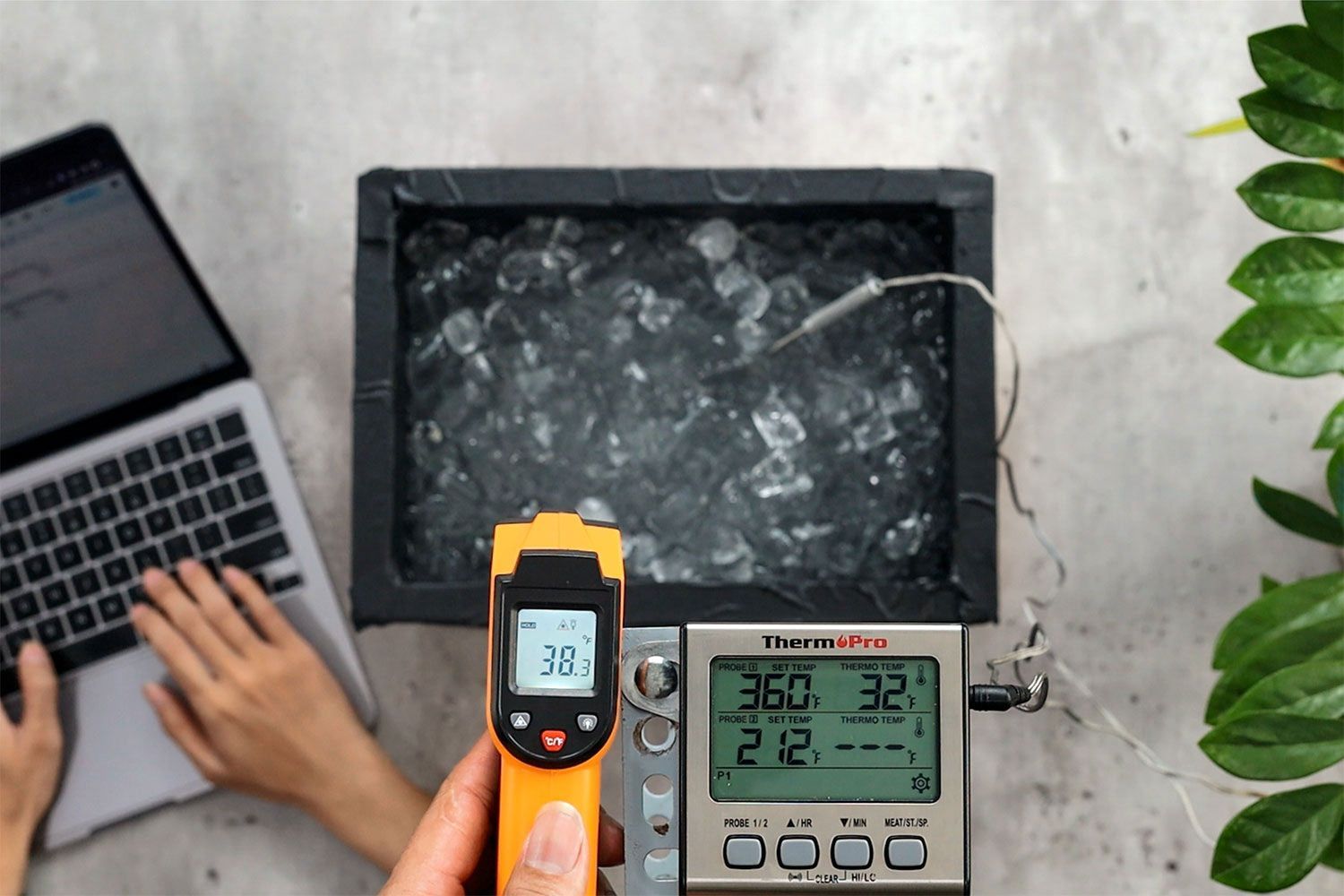
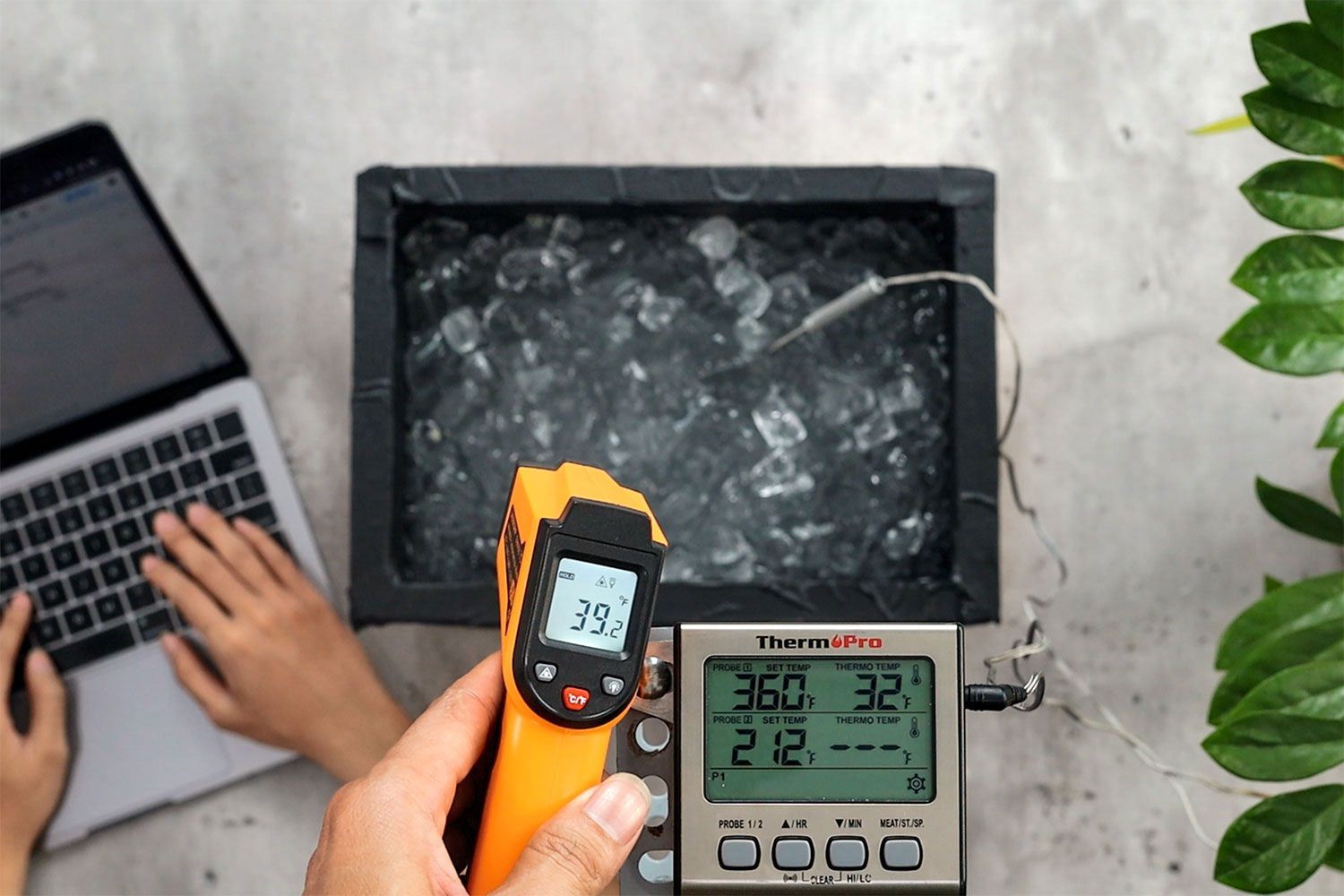
For example, the Lasergrip GM400 returned a reading of 38.4°F at 12 inches and 39.2°F at 16 inches in its turn.
First, averaging the readings, we have 38.8°F, which is higher than the reference temperature (32°F) by 6.8 degrees.
So, the Average Score is as follows:
Average = 10 - (6.8 x 0.5) = 6.6
Next, the difference between the two readings is a factor of 0.8 degrees, which is larger than the 0.5°F error tolerance. The Stability Variable Scores is calculated as follows:
Stability Variable = (0.8 - 0.5) x 1 = 0.3
As a result, the thermometer’s total score for this test equates to:
Overall Score = Average - Stability = 6.6 - 0.3 = 6.3