Panasonic Flashxpress Digital Small Toaster Oven In-depth Review
Overall Verdict
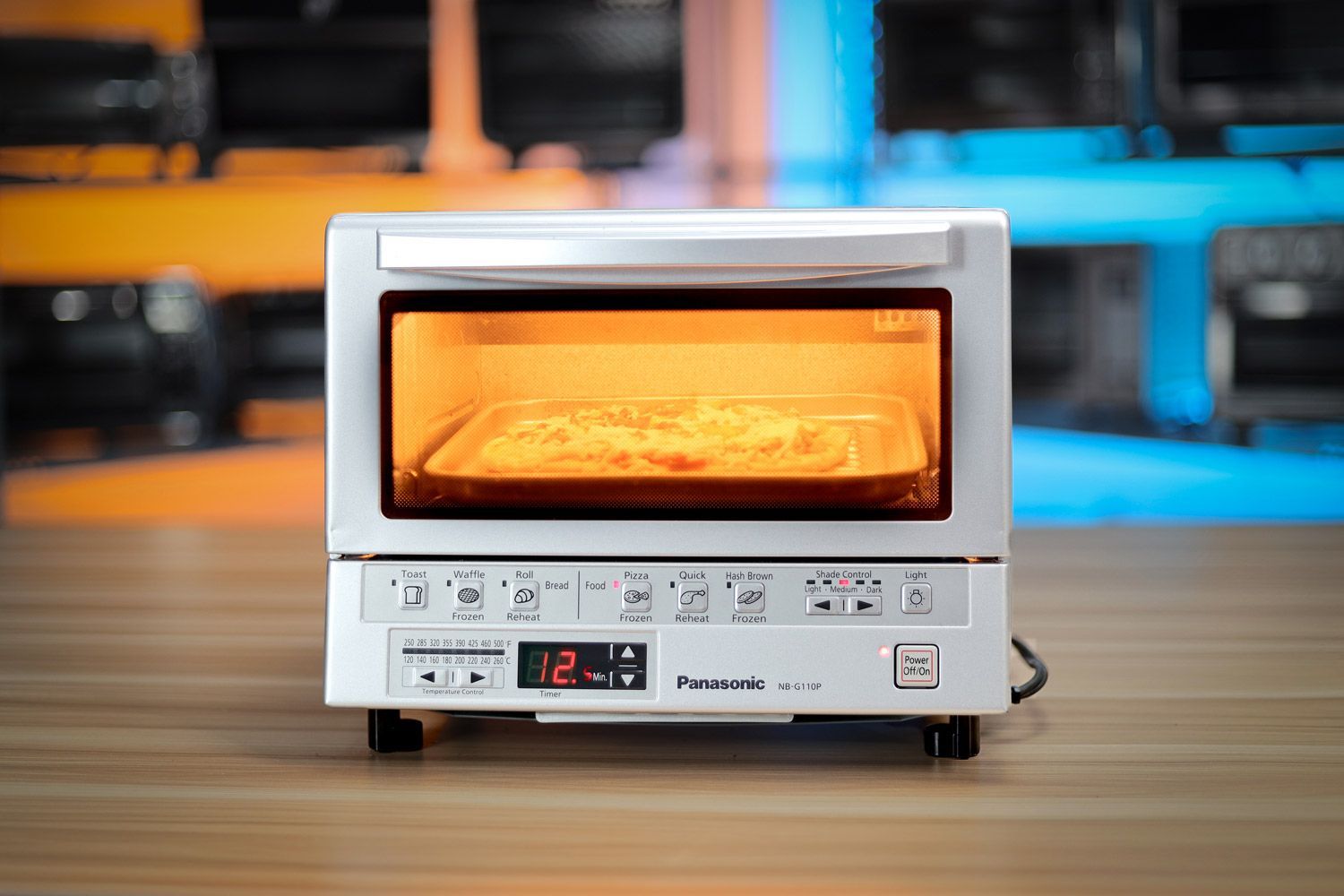
The Panasonic NB-G110P FlashXpress Small Toaster Oven stands out to us with its fast heating speed on top of an eye-catching design that looks like an old fashioned television. Moreover, its signature cooking presets allow you to simply press it once, forget about it, and come back to some quick tasty dish.
Not only does having powerful heating elements reduce cooking times, but having a low power draw also decreases energy consumption. These features made the oven suitable for people who want a small unit that can cook food fast and well while using minimal electricity.
Our performance tests revealed a weakness of uneven heat distribution but it’s to be expected of quartz infrared heating elements. Its auto-pull rack is convenient, but we’d like the ability to freely and precisely adjust settings often seen in competitively-priced units.
Things We Like
- Energy-efficient quartz and ceramic heating elements
- High-contrast digital display
- Internal lighting available
- Sturdy construction
- Easy-to-clean stainless steel exterior
- Cool-touch door handle
- Convenient slide-out crumb tray
Things We Don’t Like
- No safety mechanism for the door
- Having only one tray level
- Not particularly budget-friendly
The silver stainless steel Panasonic FlashXpress Toaster Oven has a unique design. Besides the preset cooking functions which are common for Japanese kitchen gadgets, this oven has a distinct auto-pull rack. However, one may wonder if this oven is really worth its price, especially compared to our best small toaster ovens.
7.1 Performance: Fast Cooking
The Panasonic NB-G110P has very powerful heating elements so it could reduce the cooking time. However, the oven had a shortcoming that kept it from being a top contender: uneven heat distribution. Nonetheless, it was able to bake pizzas and roast a chicken wings well.
6.0 Toast

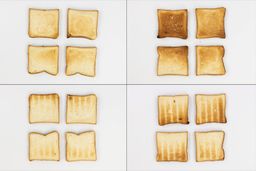
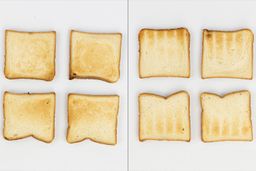
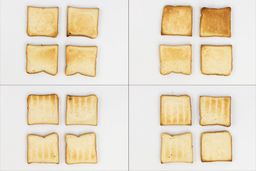
There were a few interesting things, though not necessarily good, about our Toast test for the NB-G110P. We first tried the middle toasting level—level 3—and the results were all burnt. Then, we decreased the setting to level 2 and the toast was no longer burnt. However, it was still dark for our standard.
Finally, we cranked it down all the way to level 1—around 2 minutes 20 seconds on the timer. This setting allowed us to achieve an acceptable outcome scoring a 6.1/10 in total. Of course, this meant that we only had a reference for the darker setting and not the lighter one.
On the toasting level 1, the four pieces of toast had a nice golden brown color around the center of the oven. However, the color got significantly lighter as it got to the edges. This unevenness was all the more apparent on the bottom side of the toast, so we gave it a 7/10 for even surface color.
Unfortunately, such a short cooking time wasn’t able to crisp up the toast, even the golden brown areas. Our head chef Tuyet Pham deemed the toast, at best, passable to go with sandwiches, omelets, and eggs benedict and awarded it a 6/10 for taste.
All the existing problems of the first batch became slightly worse in the second batch. The cooking time for the second batch at toasting level 1 was automatically adjusted to be slightly shorter—2 minutes 11 seconds.
For some reason, the color was less even on top—one piece of toast was only lightly toasted, one was golden, one was golden brown, and one was brown. Nonetheless, the bottom of the second batch was similar to the first.
While the golden brown and brown pieces were a bit crispier than the first four, they weren’t enough to get the consecutive usability score to higher than 5.5/10.
7.6 Pizza
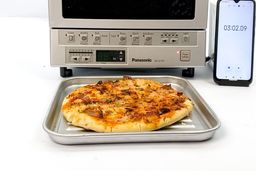



Through our Pizza test, we noticed how powerful the heating elements of the Panasonic were. However, it wasn’t coupled with the most even heat distribution, which resulted in a 7.6/10 pizza score.
The temperature range of the oven didn’t allow us to choose 450°F like other ovens but 460°F. And that baked a 9-inch thick-crust meat pizza in only 3 minutes. This was one of our fastest recorded cooking times, even faster than the powerful medium-sized Cuisinart TOA-60, and deserving a whopping 10/10.
However, such a short cooking time was only enough to cook the crust while giving it very little color. The crust wasn’t dry though, so it got a 7/10.
The toppings would have been quite appetizing if not for the slightly burnt onions, bell peppers, and meat tips. Luckily, the high heat meant that the cheese was melty which garnered the toppings a 8/10.
Unfortunately, the burnt parts affected the taste quite badly with their bitterness. Thus, our chef could only give the pizza a 6/10 after tasting it. When you’re trying to bake a pizza with the Panasonic, maybe lower it to around 425°F.
8.7 Roasted Chicken Wings
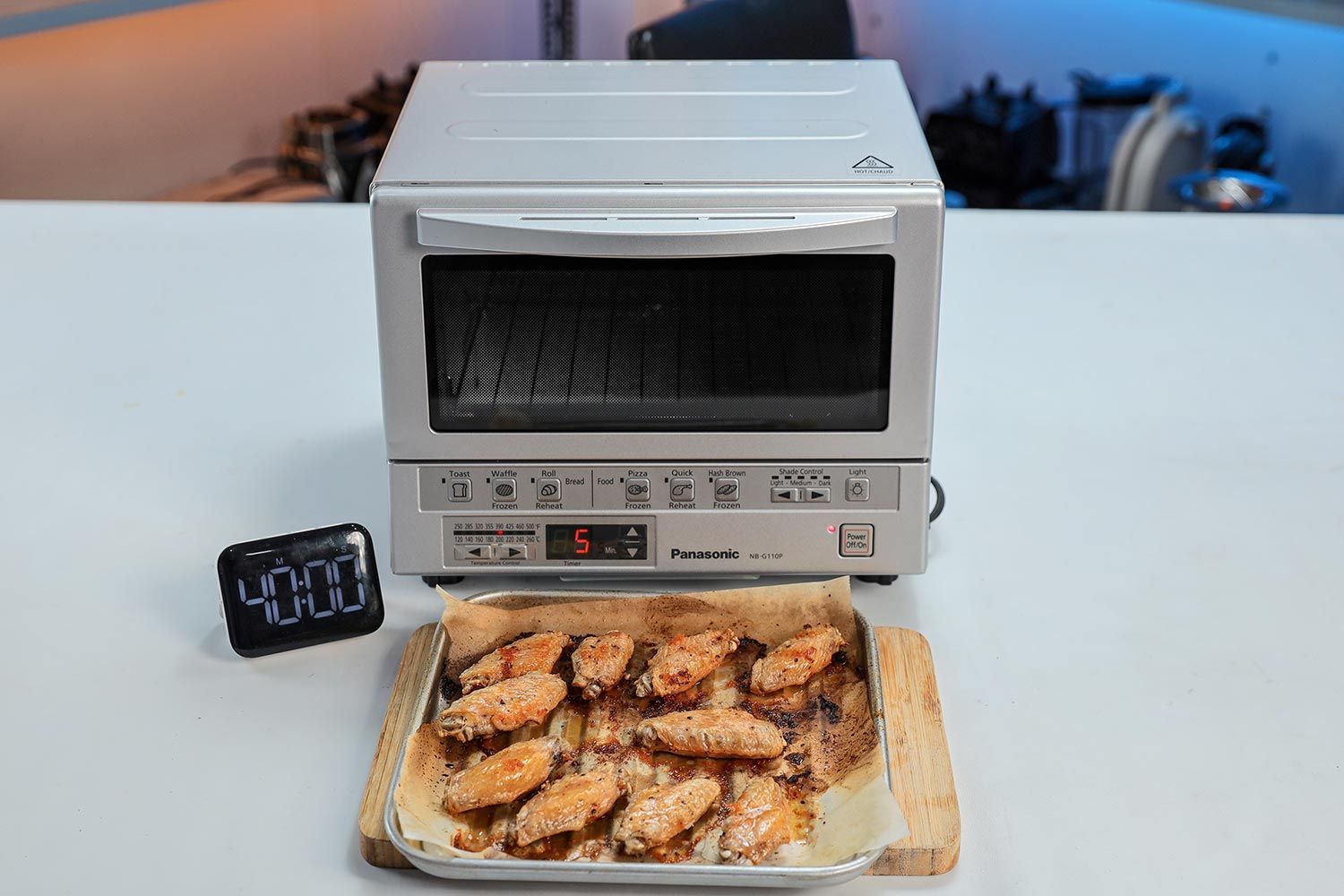
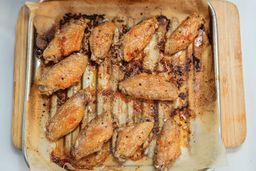


The Panasonic’s strong heat proved to be very beneficial when it came to roasting 10 middle-joint chicken wings for our test, scoring 8.7/10.
Because of the oven’s temperature range, we had to choose between 390°F and 425°F. We decided to go with the latter which took just 40 minutes, one of our fastest times alongside the Breville Mini, earning a 9/10. The skin achieved a beautiful caramelized color and crispiness, meriting a 9/10 rating.
The internal temperature of the wings was about 203°F, aligning with the USDA recommendation. This preserved the meat's juiciness, though smaller wings may be slightly dry due to the high heat, evident from the dried meat juice on the tray. Therefore, we rated doneness at 8.7/10.
Taking both the skin and meat into account, the wings were delicious, justifying another 8.5/10 for taste.
6.5 Baked French Fries
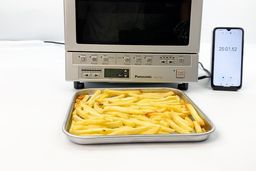



The problem of powerful heating elements and uneven heat distribution in baking pizza repeated here in our Baked French Fries test. However, the score for the Panasonic’s baked french fries was lower, at 6.5/10.
We tried to give the oven the benefit of the doubt and stop the cooking at 25 minutes to stop the score from going lower than a 7/10. Our chef decided that prolonging the process wouldn't improve the results anyway.
Even after baking for 25 minutes, only the smaller fries had a light golden color. The bigger and longer ones were only golden at the tips while the rest of them was basically white. Thus, we gave the fries a 6/10 for color.
The smaller fries had a bit of crispiness to them while the bigger and longer ones were just plain soft. Nonetheless, they weren’t dry, so we could still give them a 6.5/10 for texture.
With such subpar colors and textures, our chef could only give the fries a 6.5/10 for taste. If we were to cook this for ourselves, we’d go with the highest possible temperature.
8.3 Design: High Build Quality
The Panasonic NB-G110P has a high build quality and some rare features including an interior light and an auto-pull rack which justifies its price. However, we’d love more additional design features compared to other less expensive small toaster ovens—including the Mueller MT-175.
In the Box
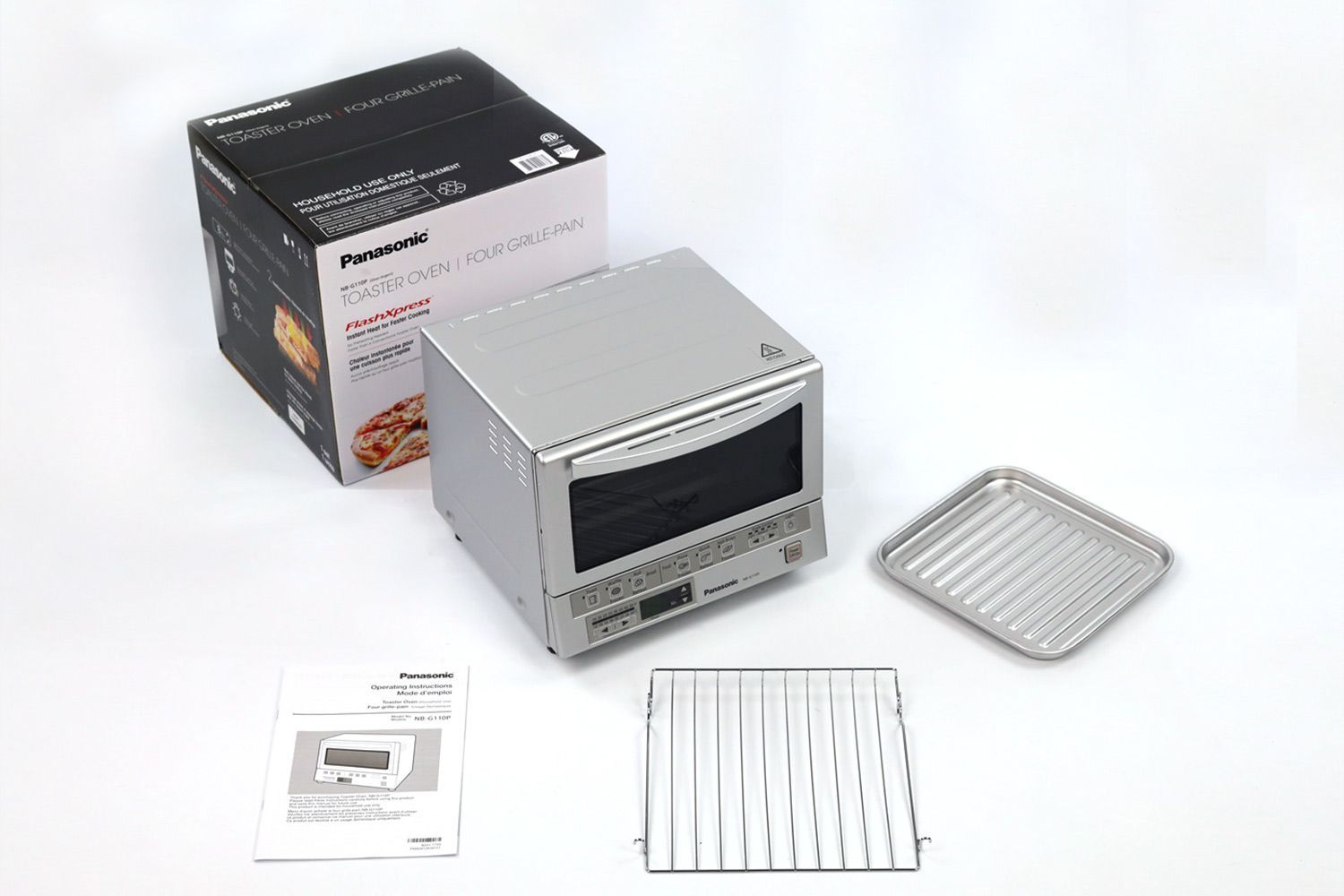
- Model: NB-G110P
- Warranty: 1 year (US, Puerto Rico, and Canada only)
- User Manual
- Baking Rack
- Baking Pan
The Panasonic was positioned firmly inside its box with four foam pads upon delivery. The baking rack and baking pan are wrapped in carton sheets and taped to the oven. Besides some basic information on the box, the oven also came with a user manual.
7.0 Exterior
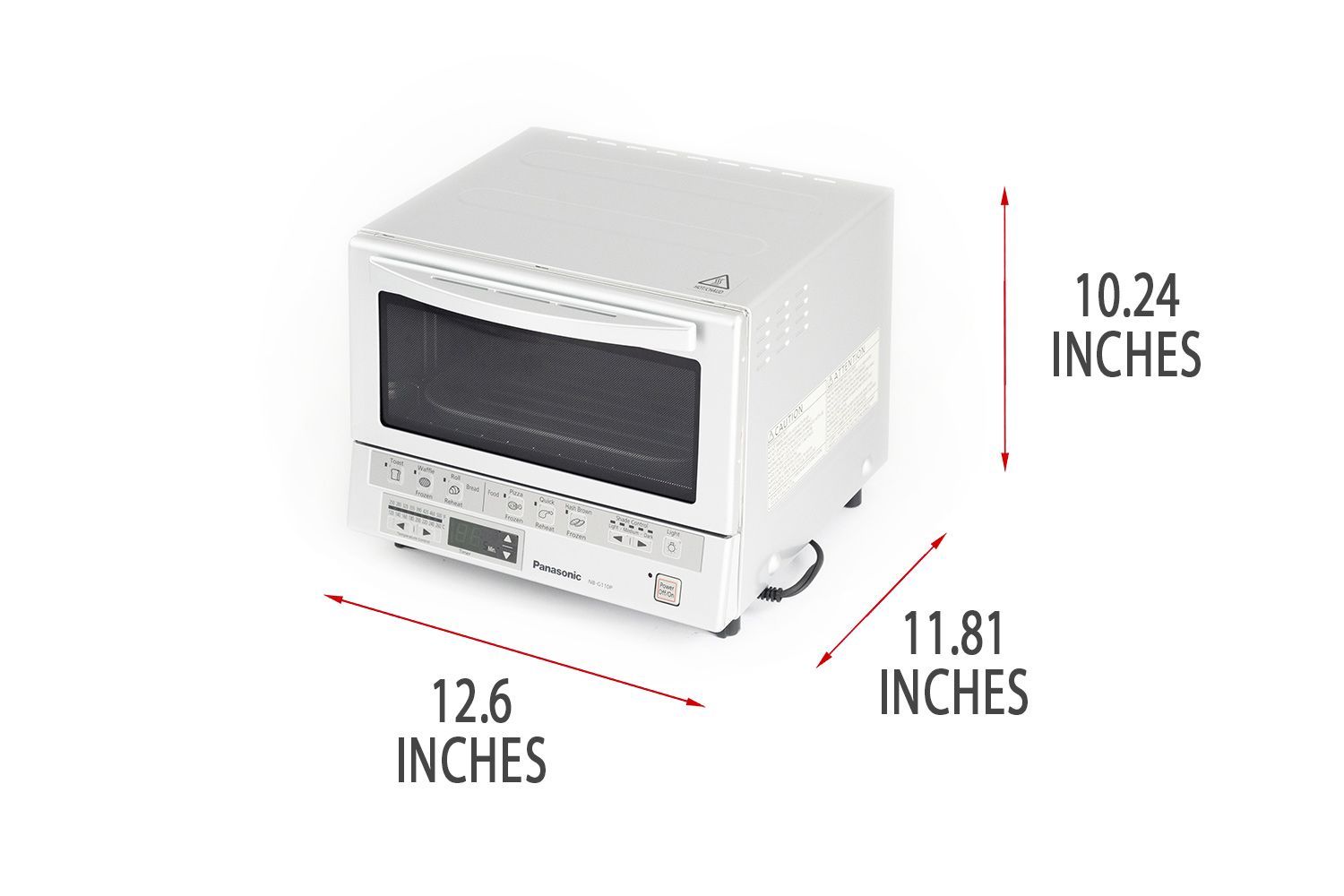
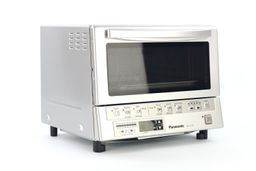
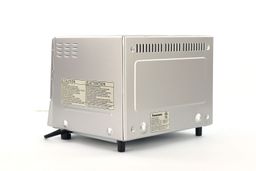
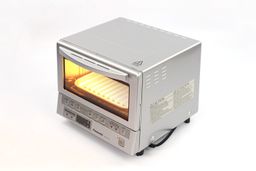

Our measurements of 12.6" x 11.81" x 10.24" were marginally different from the manufacturer’s 13" x 12" x 10.25".
Standing out from its already eye-catching exterior is the slide-out crumb tray on the bottom to help with cleaning (+3). Keep in mind to push the crumb tray all the way in or there’ll be gaps.
The oven has two bumps on the back which act as back buffers but we think they could be longer (+2). The shape of the cool-touch door handle makes it easy to grab (+2).
Control Panel
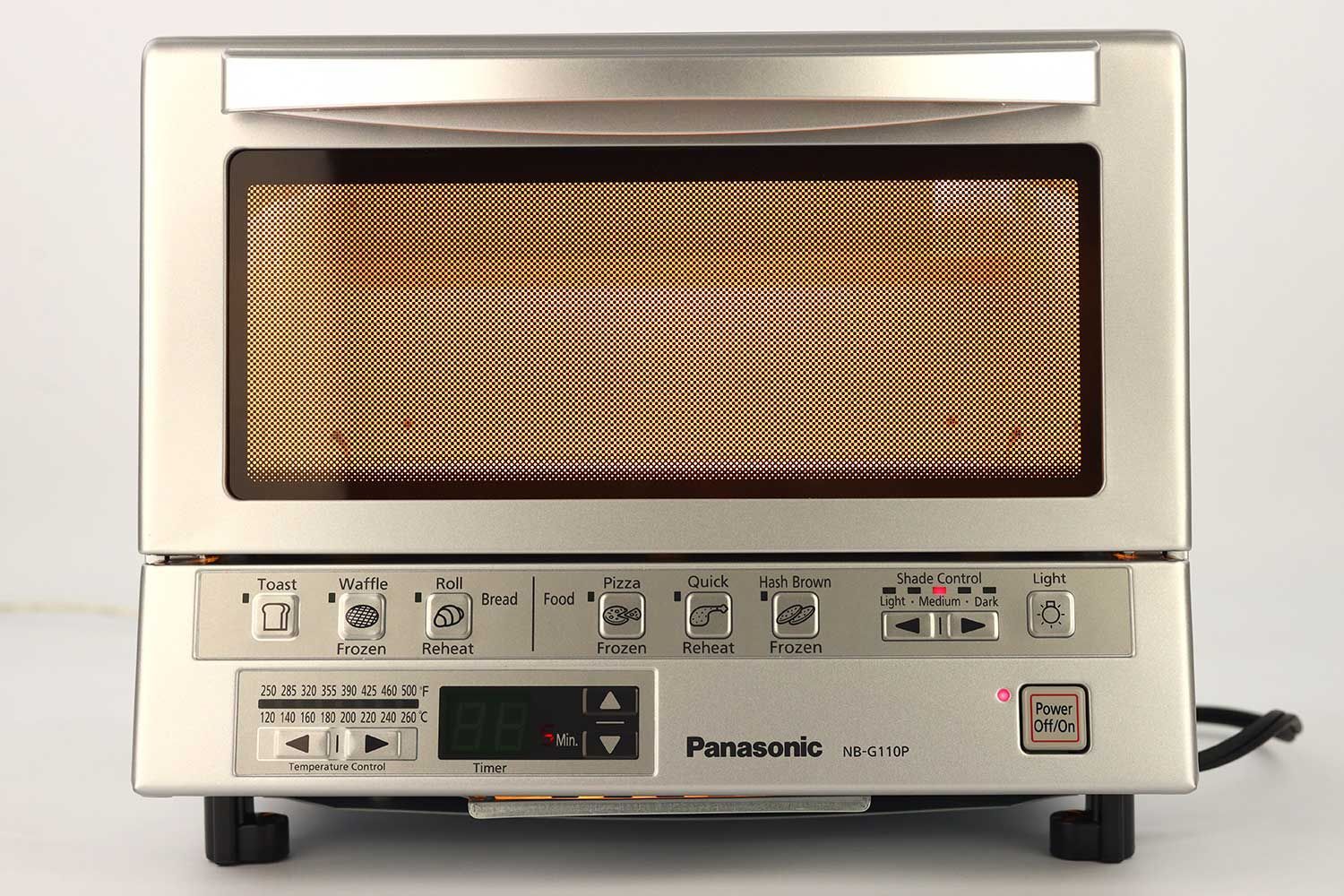
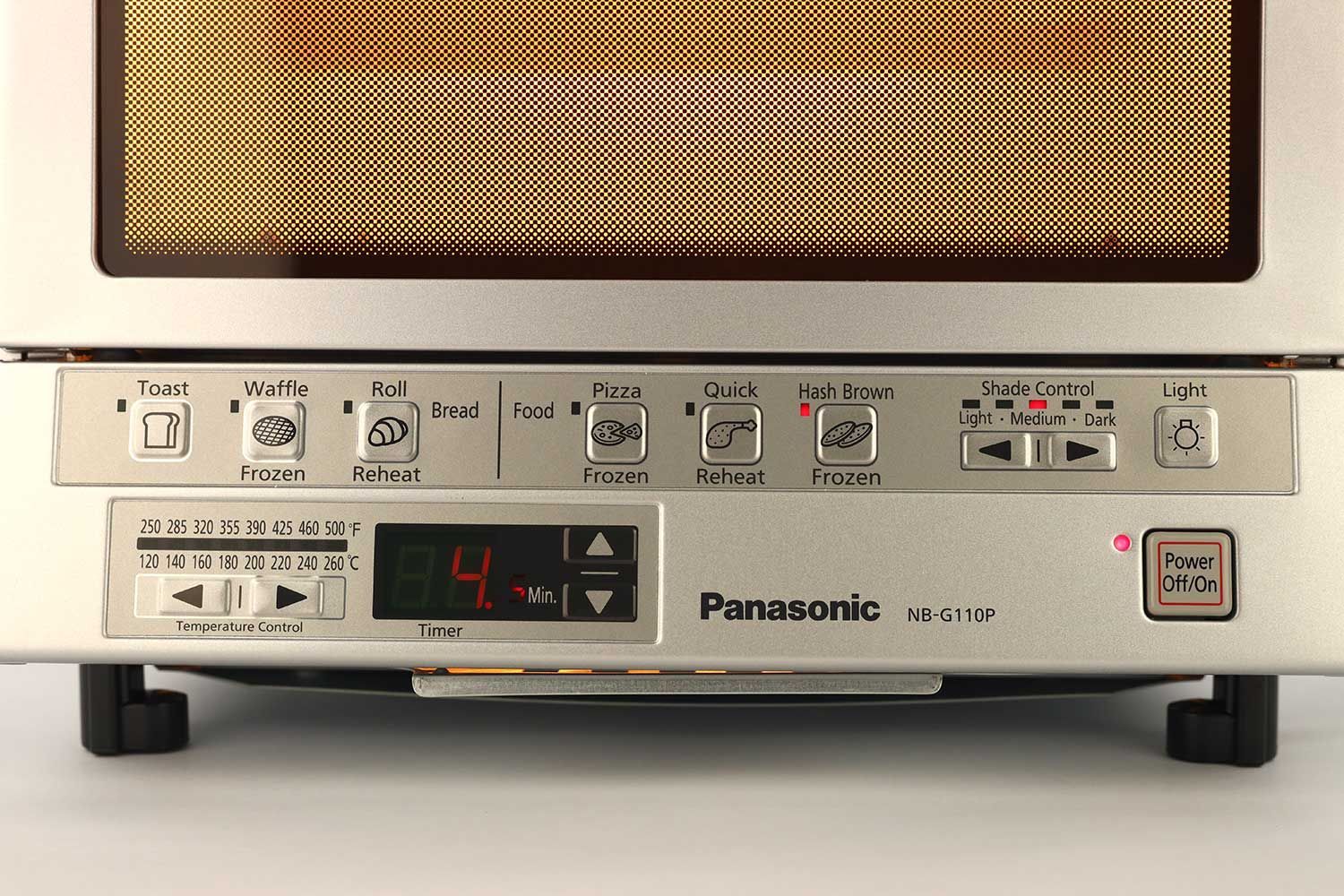
The Panasonic has an old-school LCD and 14 control buttons in total. We have the standard buttons which are the power button, light toggle, two buttons to adjust the temperature, and two more to adjust the timer.
Then, we have six buttons for the six preset cooking functions and their two shade control buttons which are unique to this model. When you turn the oven on by pushing the power button, the indicator light will glow red.
Cooking Functions
- Toast
- Frozen Waffle
- Reheat Rolls
- Frozen Pizza
- Quick Reheat
- Frozen Hash Brown
You can simply operate the oven by selecting a temperature and adjusting the timer which was what we did with our performance tests. Also, you can choose one of the six preset cooking functions including Toast, Frozen Waffle, Reheat Roll, Frozen Pizza, Quick Reheat, and Frozen Hash Brown.
The Shade Control includes five levels that are applicable to all the preset cooking functions. It’s quite common for Japanese models to have very specific cooking functions like these. How useful they are, however, is up to the user to decide.
8.0 Interior
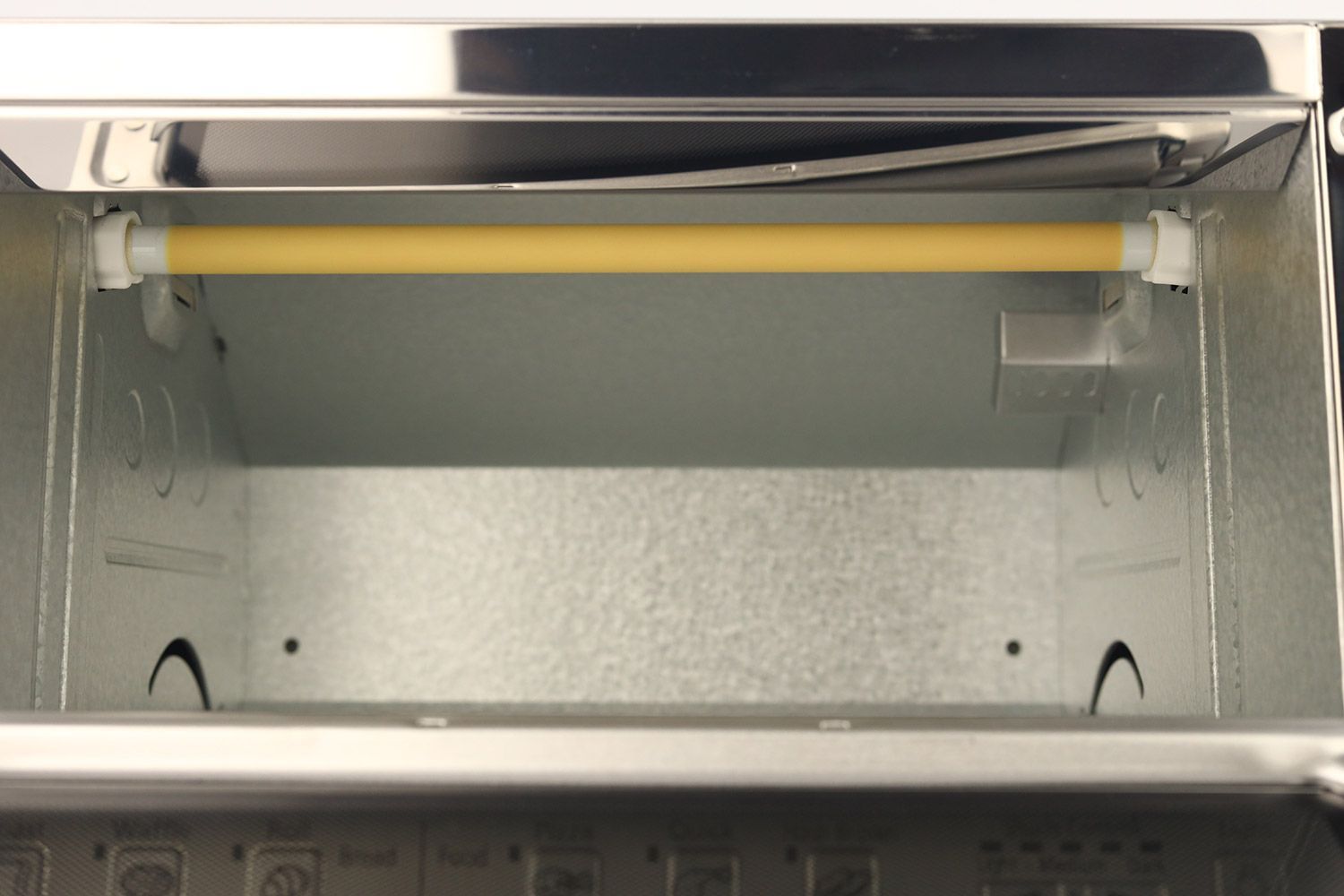
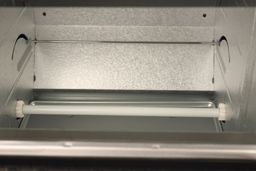
The oven has two quartz and ceramic heating elements (+2). The upper heating element is closer to the front of the cooking chamber while the interior light is closer to the back.
They use infrared light to cook which makes the process faster and more energy-efficient. Nonetheless, two heating elements may not distribute heat as evenly as four or more will do.
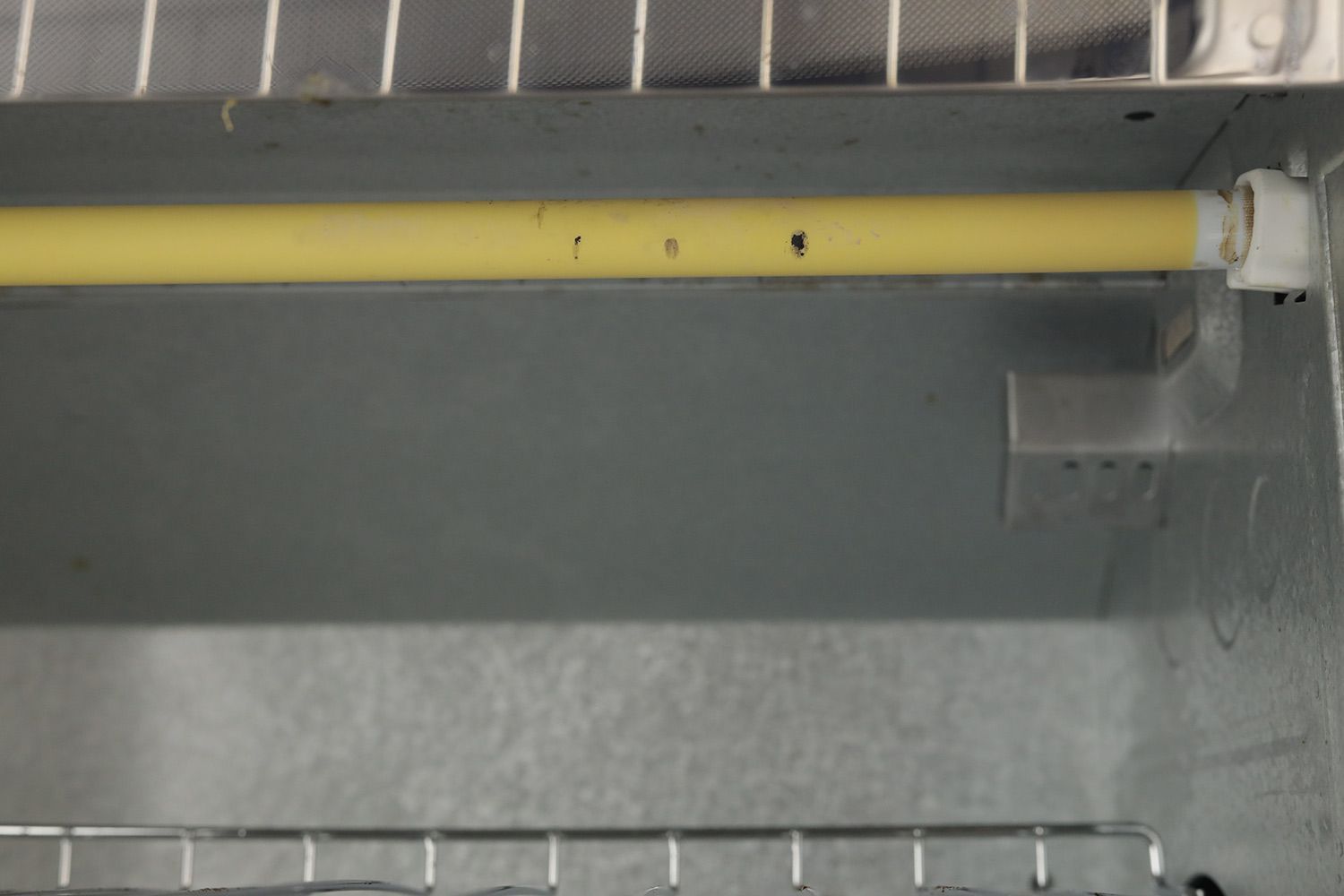
While not as durable, they cool down faster and are easier to clean. However, if grease splashes onto the heating elements while cooking, it’ll leave permanent stains.
Having an interior light is already quite rare for a small toaster oven (+3). More peculiar is how during cooking, the light automatically cycles on and off in sync with the heating elements which means you can manually turn it on but not off.
The oven has a mechanism to smoothly pull the rack halfway toward you as the door is opened (+1). However, this design choice meant that the cooking chamber only has one tray level instead of two which is more common in small toaster ovens (+1).
The cooking chamber has a coating for easy cleaning but it’s not 100% non-stick (+1). The oven doesn’t have a convection system to help with heat distribution, similar to many other small units.
Capacity
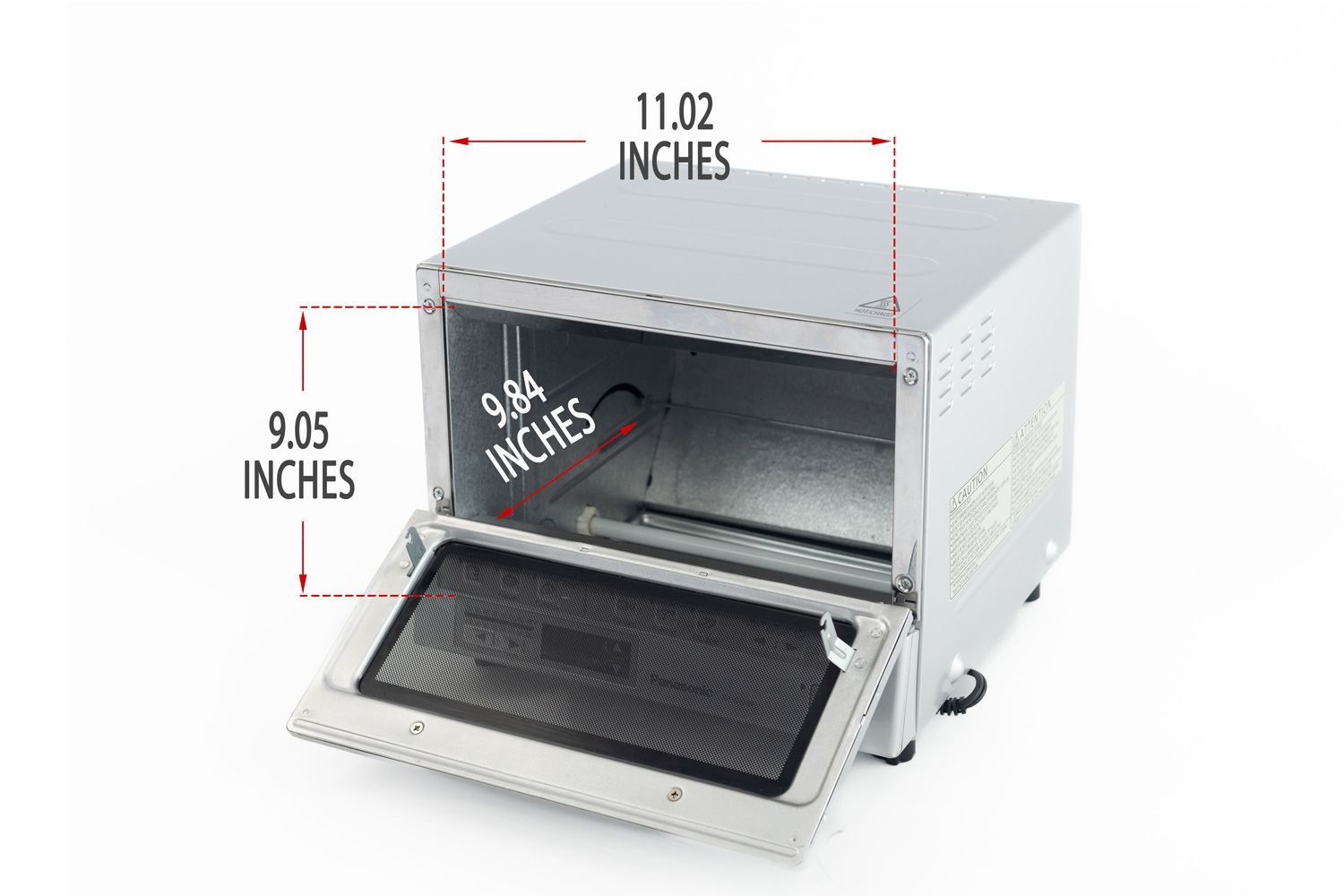
We could fit 4 slices of toast, a 9-inch pizza but we could barely fit a 3 lb chicken inside the Panasonic. We measured the cooking chamber volume to be around 16.08 liters, slightly different from the manufacturer’s provided capacity of 15.52 liters.
Looking at our measurements of 11.2" x 9.84" x 9.05" compared to the manufacturer’s 10.2" x 9.8" x 4.1", we speculated they measured the height only from the baking rack to the upper heating element.
9.0 Build Quality
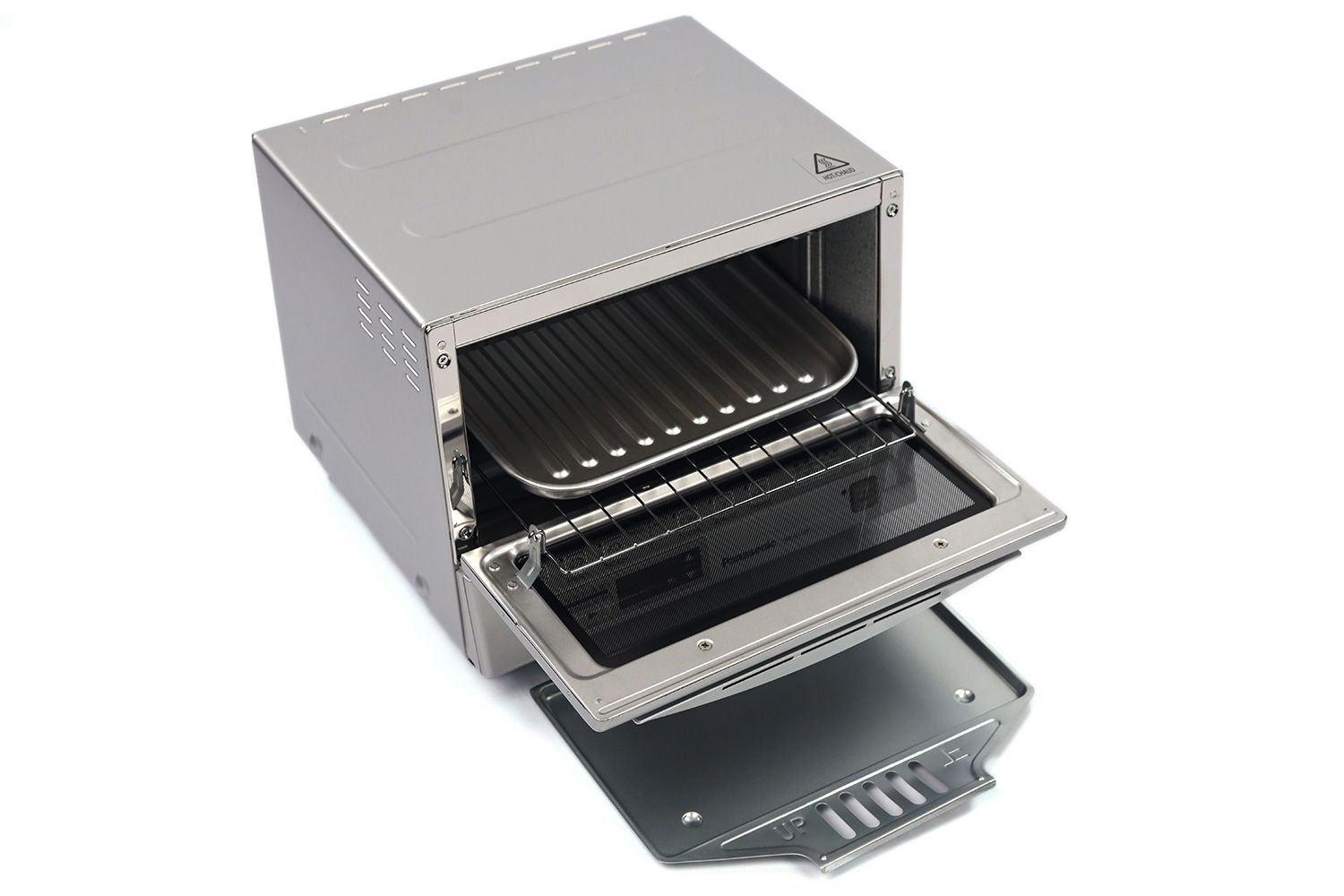
A small footprint doesn’t stop the Panasonic from having a sturdy construction (+2). Its casing is made from thick durable stainless steel so the oven only gets hot to the touch after a long cooking time at a high temperature (>400°F) (+2).
With the way the control panel is positioned, the NB-G110P has less length and more height than most toaster ovens of the same size category. The entire oven is shaped like a square which could be beneficial for some kitchen space (+2).
The LCD is black and glows red creating good color contrast and the analog buttons are responsive and can last a long time (+3). One thing to be nitpicky about is that you need to pay attention to push the crumb tray all the way in or else the oven won’t be tightly sealed.
Power Cord
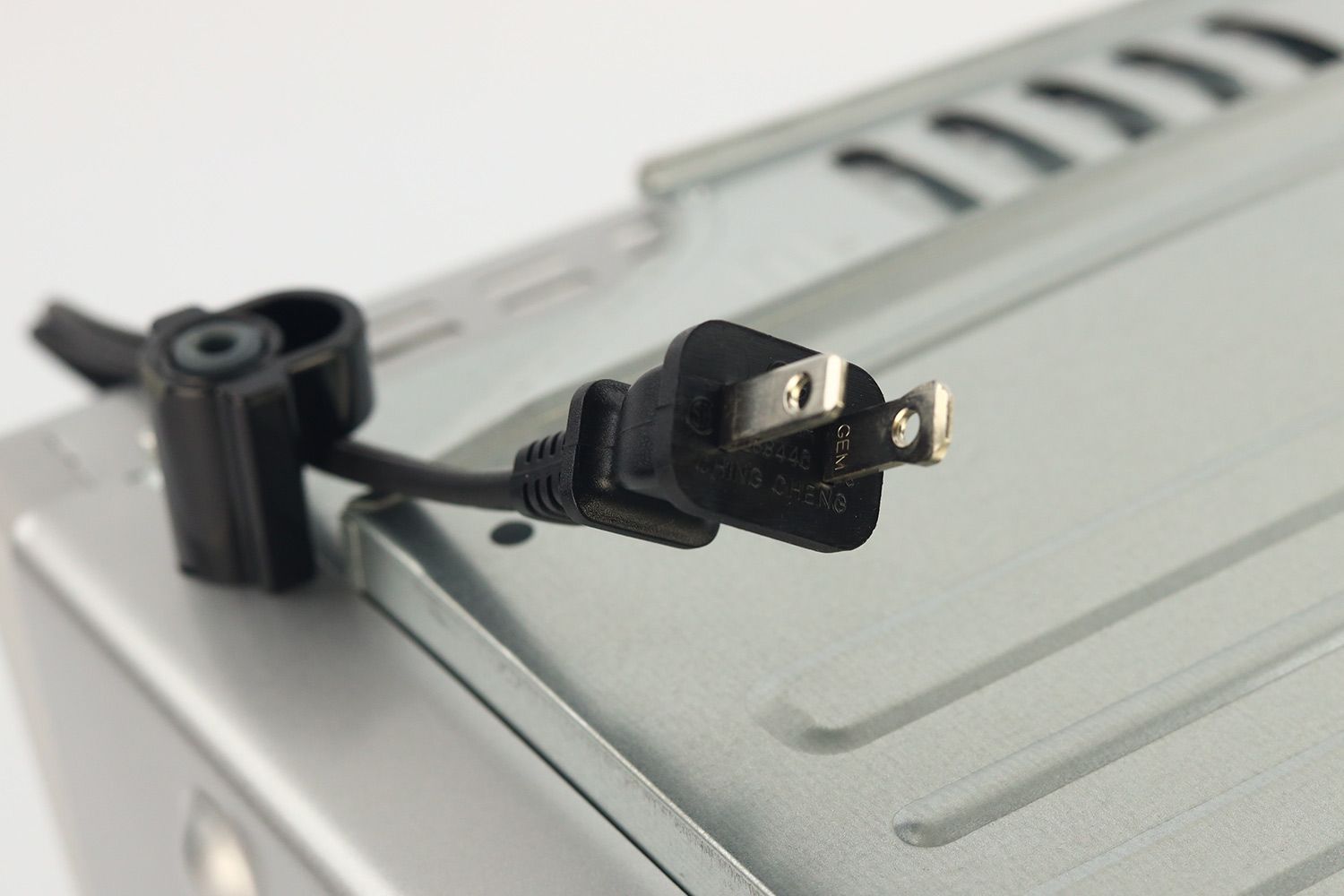
The power cord is 37.6 inches long, suitable for household use. However, the oven doesn’t have any storage space for it.
Accessories: Baking Rack
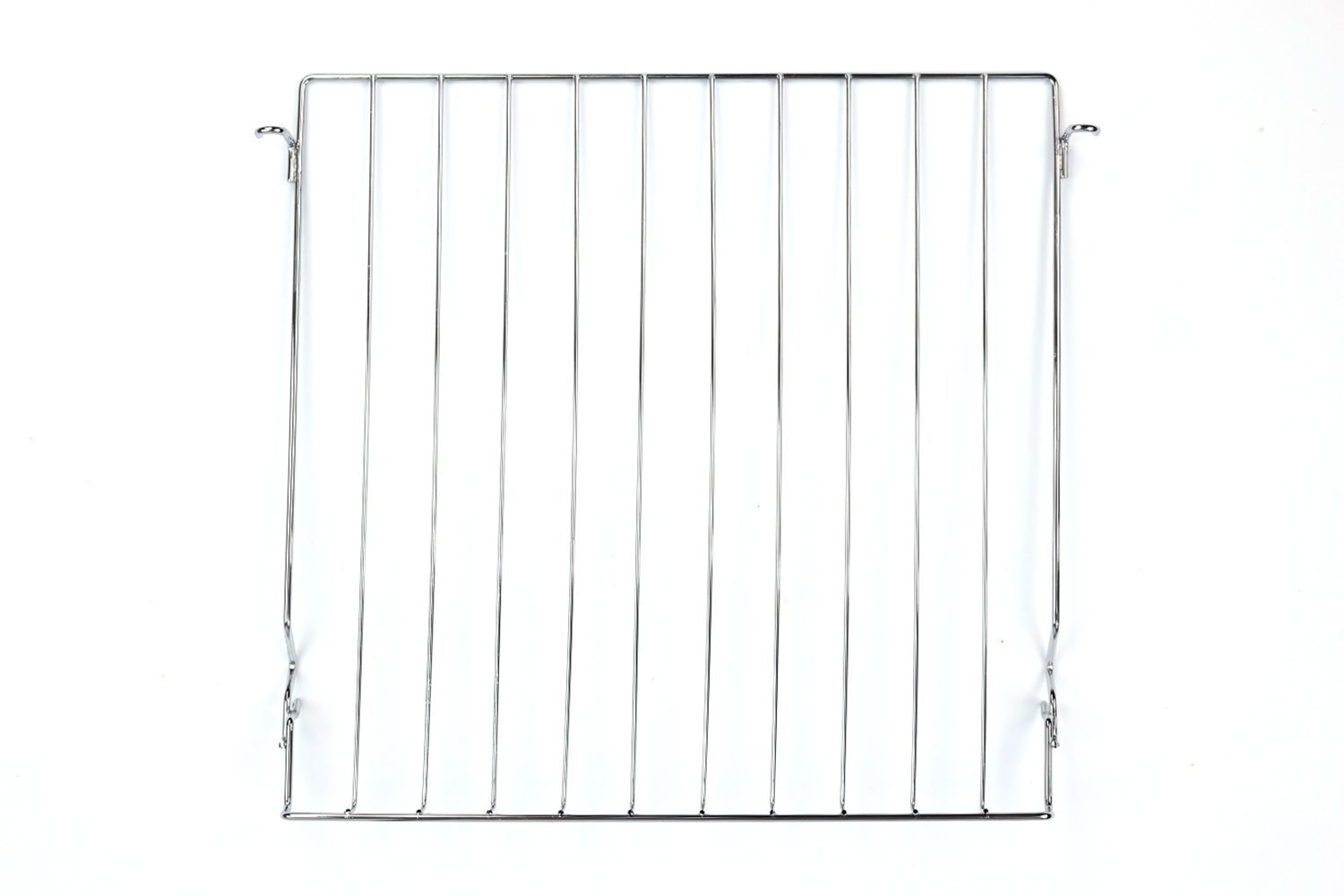
The baking rack has two hooks in the back to latch onto a horizontal rod in the middle of the cooking chamber and two hooks in the front to connect to the door. Opening the door will pull the baking rack and the baking pan on top of it halfway toward you to help keep your hands and fingers safe from the heat. Keep in mind that when the rack is removed, the door won’t be able to close tightly.
Accessories: Baking Pan
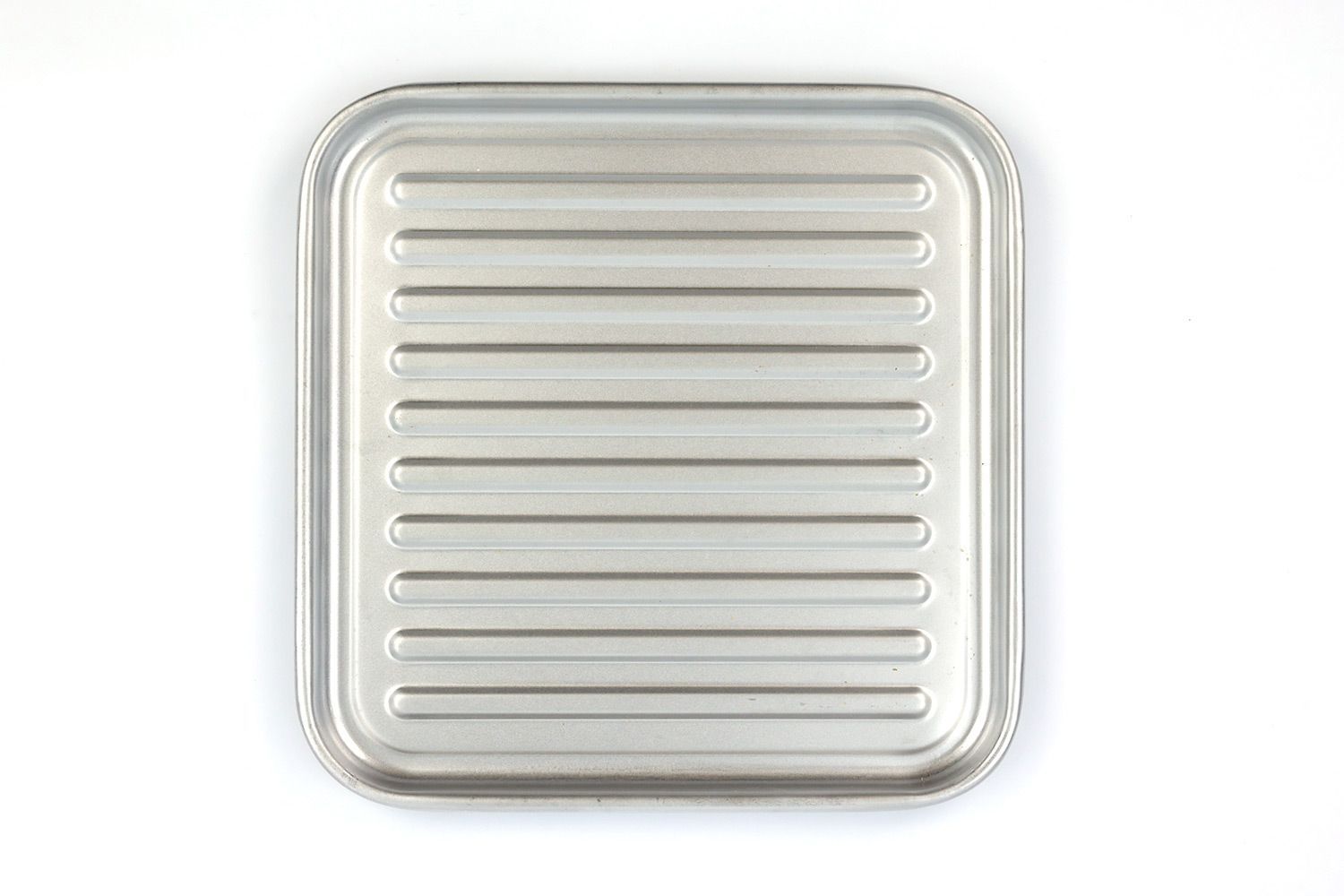
The baking pan fits nicely on top of the baking rack to prevent accidents. It has a grooved surface which can give your food attractive roasting marks and catch the dripping better. It also has a coating but it’s not completely non-stick so you may need to watch out for some stubborn stains after a heavy roasting session.
7.2 Usability: Could Be More
For what it’s worth, the Panasonic Flashxpress had respectable scores in terms of user control, ease of use, and cleanability. However, it lacks premium features of ease of use which can commonly be seen in units of this price range.
8.0 User Control
The control panel of the Panasonic wasn’t the easiest to use but it also didn’t cause any problems. The current setting on the LCD is indicated by a red light which makes it easy to see (+2). Thanks to the light toggle, you can turn on the light for a short while even when the oven is not running (+2).
The preset cooking functions seem to be designed for worry-free cooking (+2). However, because they don’t allow for the adjustment of time and temperature, they weren’t applicable to our test.
Moreover, we couldn’t find the exact preset temperature and cooking time in the manual. Thus, we simply chose to operate the oven by adjusting the temperature and timer on the control panel (+2).
The temperature is displayed in both °F and °C. It can be adjusted in increments of 35°F/20°C from 250°F to 500°F / from 120°C to 260°C, which is quite uncommon.
The timer can be adjusted in 0.5-minute increments below 10 minutes and 1-minute increments after 10 minutes, not by the minute and second like most other toaster ovens. In addition to not having a stay-on feature, the timer only lasts from one to 25 minutes which is very short.
The cooking starts as soon as a timer adjustment key is pressed which makes it a bit tricky to get right. In addition, if you want to switch cooking functions, you’ll need to turn the oven off and on again.
7.0 Ease of Use
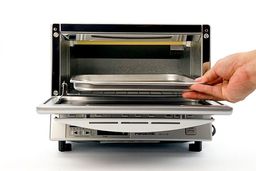
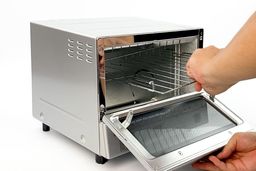
In addition to the cool-touch door handle (+2), the auto-pull rack minimizes the risk of burning due to contact (+2). The oven rack can be a little awkward to remove but it’ll be no problem with a bit of practice. However, the auto-pull mechanism means that the oven door can only open or close all the way and not open partially to let food cool inside (-1).
The manufacturer claims that this oven has a smart sensor that turns the heat on and off automatically to maintain the perfect temperature and prevent burning. And our tests show some increases in terms of cooking performance compared to other small units (+2).
It’s also advertised that this oven requires no preheating due to its efficiency. While we didn’t agree with this, we were able to confirm that the NB-G110P could reach a high internal temperature very quickly—4 minutes 50 seconds to reach 450°F (+2).
The interior light makes it easier to make our way around the oven (+2). Keep in mind that opening the door doesn’t stop the oven or the interior light (-1). Be careful as the oven’s casing can get very hot after a long cooking time at a high temperature (-1).
When the cooking cycle finishes, the oven will beep once and then turn off. Nonetheless, we advise you to unplug the oven after use because, according to the manufacturer, the oven still consumes about 0.4 W when plugged in and not turned on.
6.5 Cleanability
The Panasonic has a stainless steel exterior and a non-stick interior, making it easy to clean (+4). The cooking chamber has no tricky nooks and crannies to make cleaning any more difficult than it needs to be (+2).
Thanks to the slide-out crumb tray, we could easily remove most of the falling debris after cooking. For the remaining crumbs on the cooking chamber’s floor, we could simply tilt the oven and get all of them out (+1).
Unfortunately, the upper heating elements had permanent black stains from being grazed with meat when we were trying a bunch of different tests (-1.5). The baking tray also suffered some stubborn stains but we were able to brush them off with a paste of baking soda and water (+1).