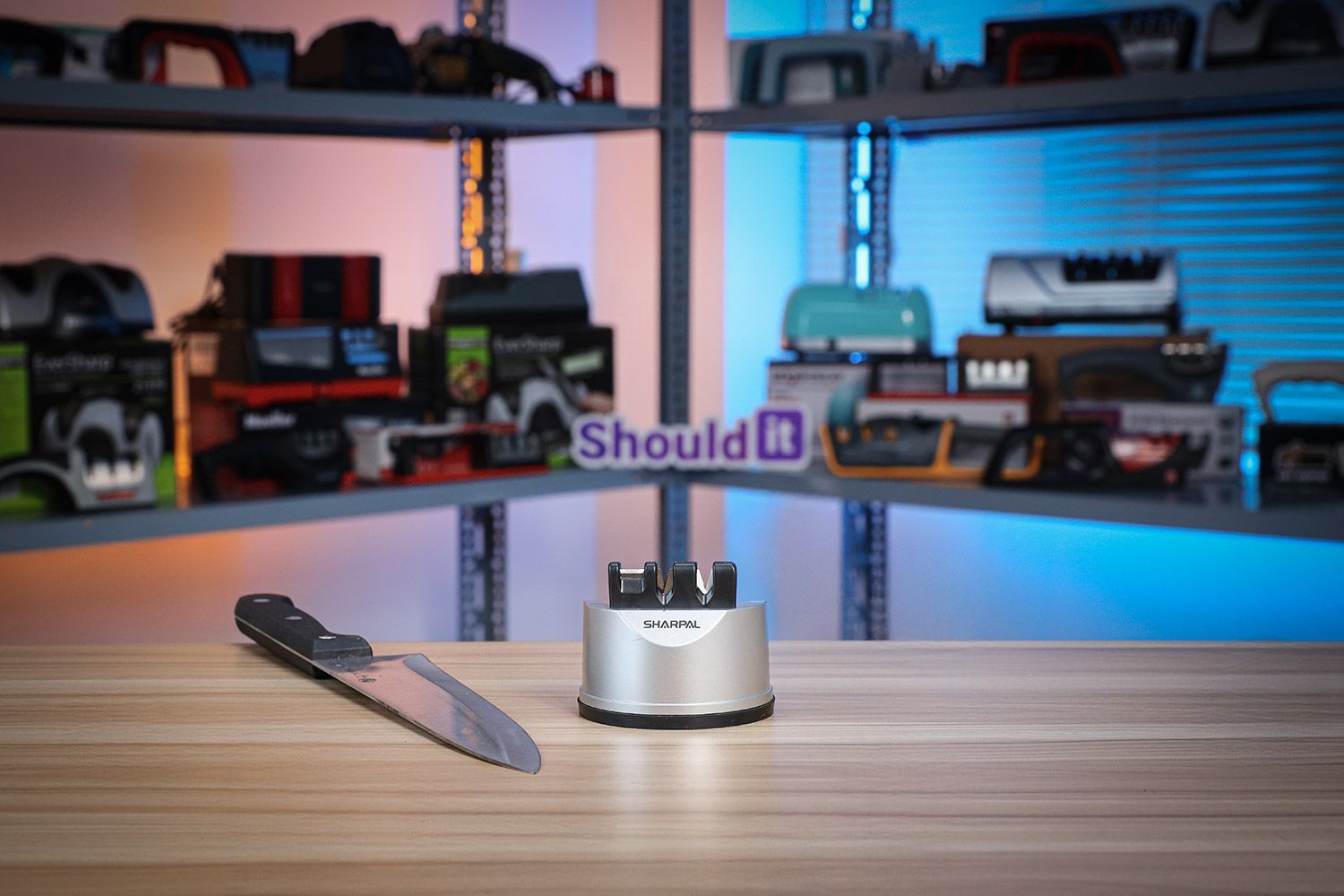
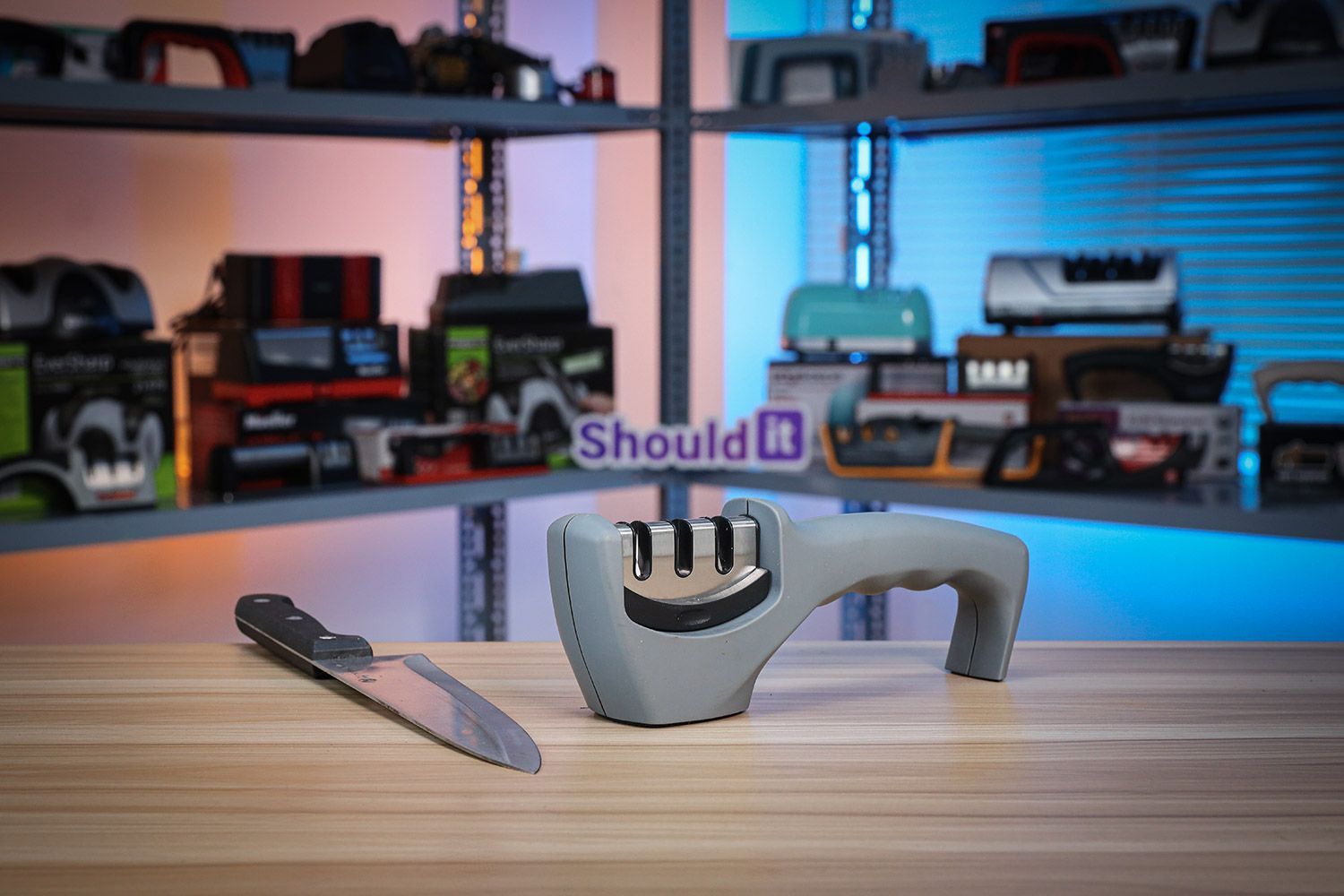
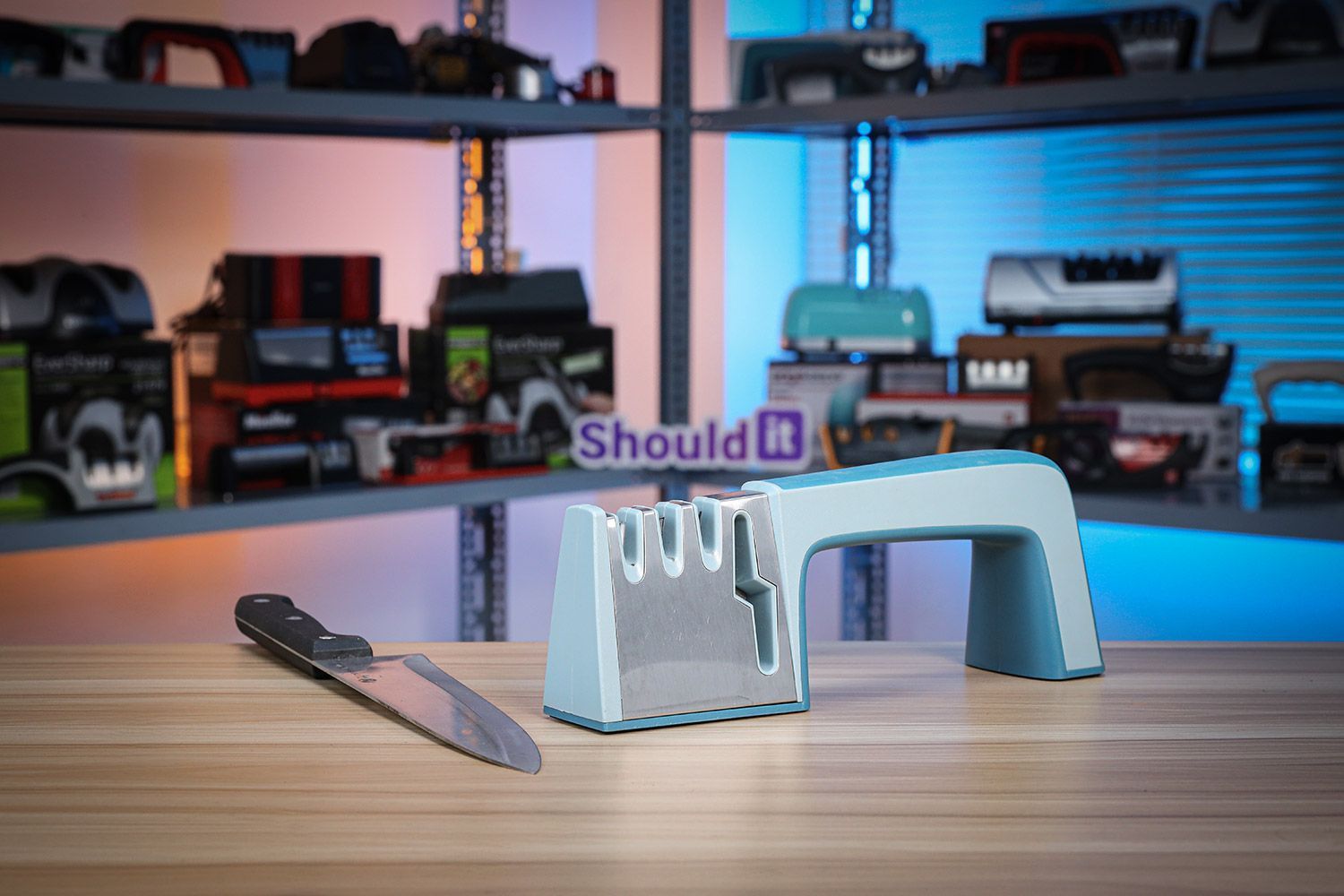
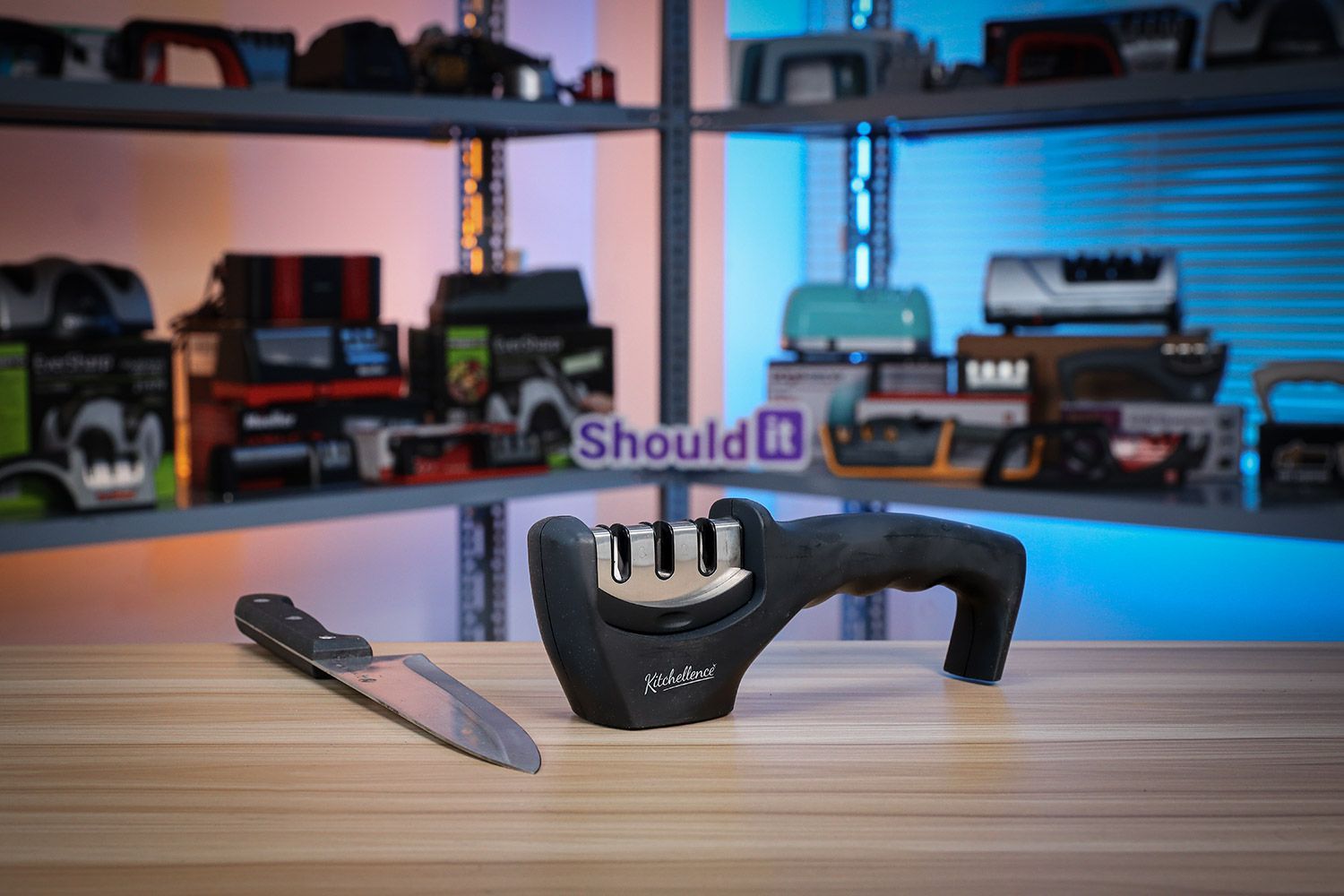
The Best Knife Sharpeners Tested & Reviewed
If there’s something that’s underrated, we’d say it’s the feels when cutting with a sharp knife. The way it makes a clean, sleek cut on the food with one single slide, not leaving traces of food on the cutting board, can give any cook a high.
Obviously, the easiest and fastest way to achieve that level of sharpness is to use a brand-new knife. But the more sustainable way is to sharpen your knives. The trick is to find a sharpener that really does the job, and learn how to use it properly.
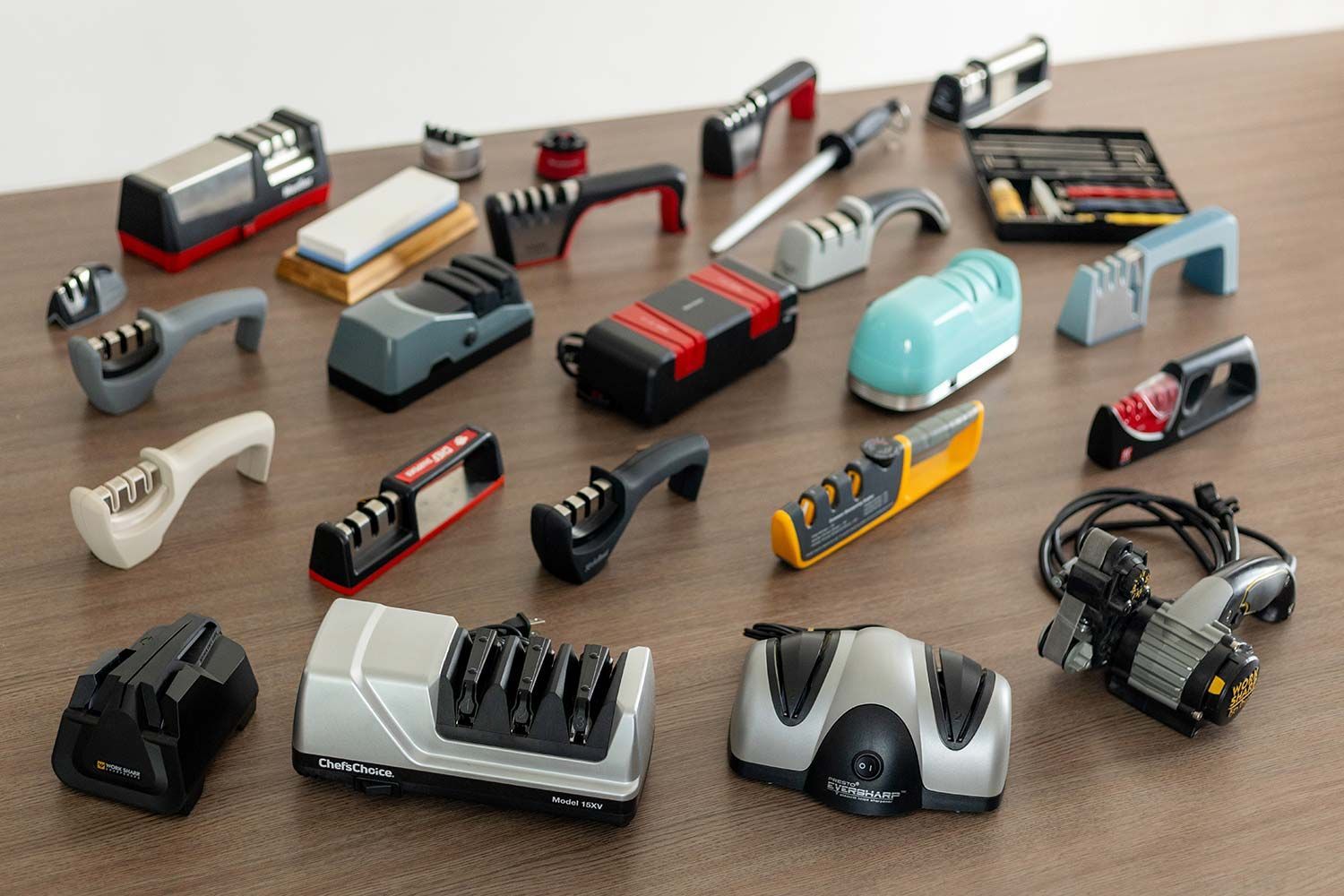
For that, we spent months checking out the most popular sharpening devices on the market, and put more than a dozen of them, the most promising ones, through the test. The Chef’s Choice Trizor XV electric sharpener stands out as the most sensible choice, taking only a few minutes to give you that tendon-cutting edge. For those on a budget, the Cubikook CS-T01 is a no-brainer: This affordable manual sharpener consistently restored a sharp edge while preserving the most knife material in our tests.
Everything We Recommend
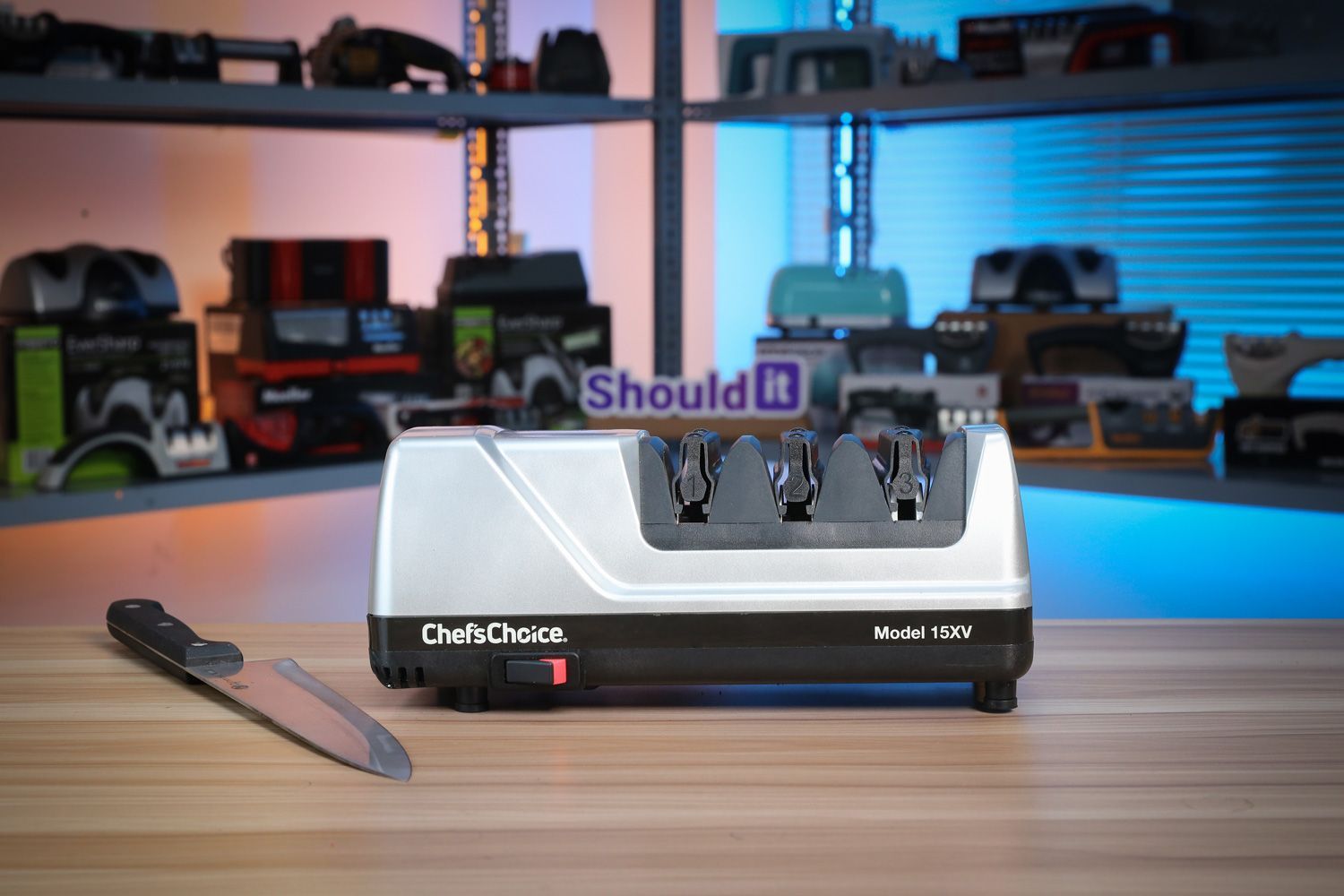
The Chef’s Choice Trizor XV gained our vote for a no-fuss sharpener that does the job. It’s reliable, consistently gives a sharp edge, and the strong build but simple design means you don’t have to sweat to use it.
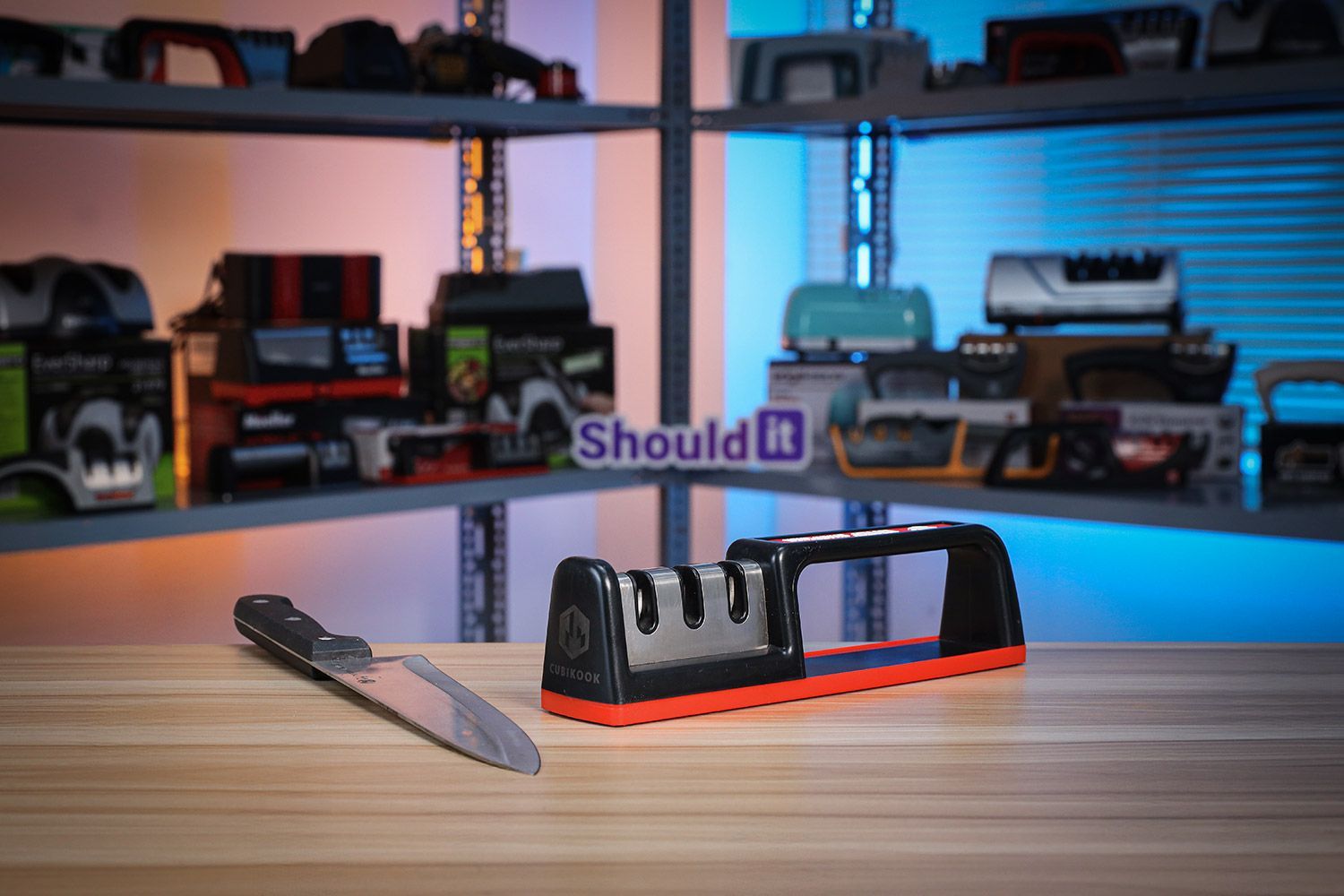
We’ve repeatedly tested a bunch of manual knife sharpeners and the Cubikook CS-T01 has maintained its place at the top without fail. We recommend it for home cooks who are looking for an affordable sharpener that’s also safe and effective.
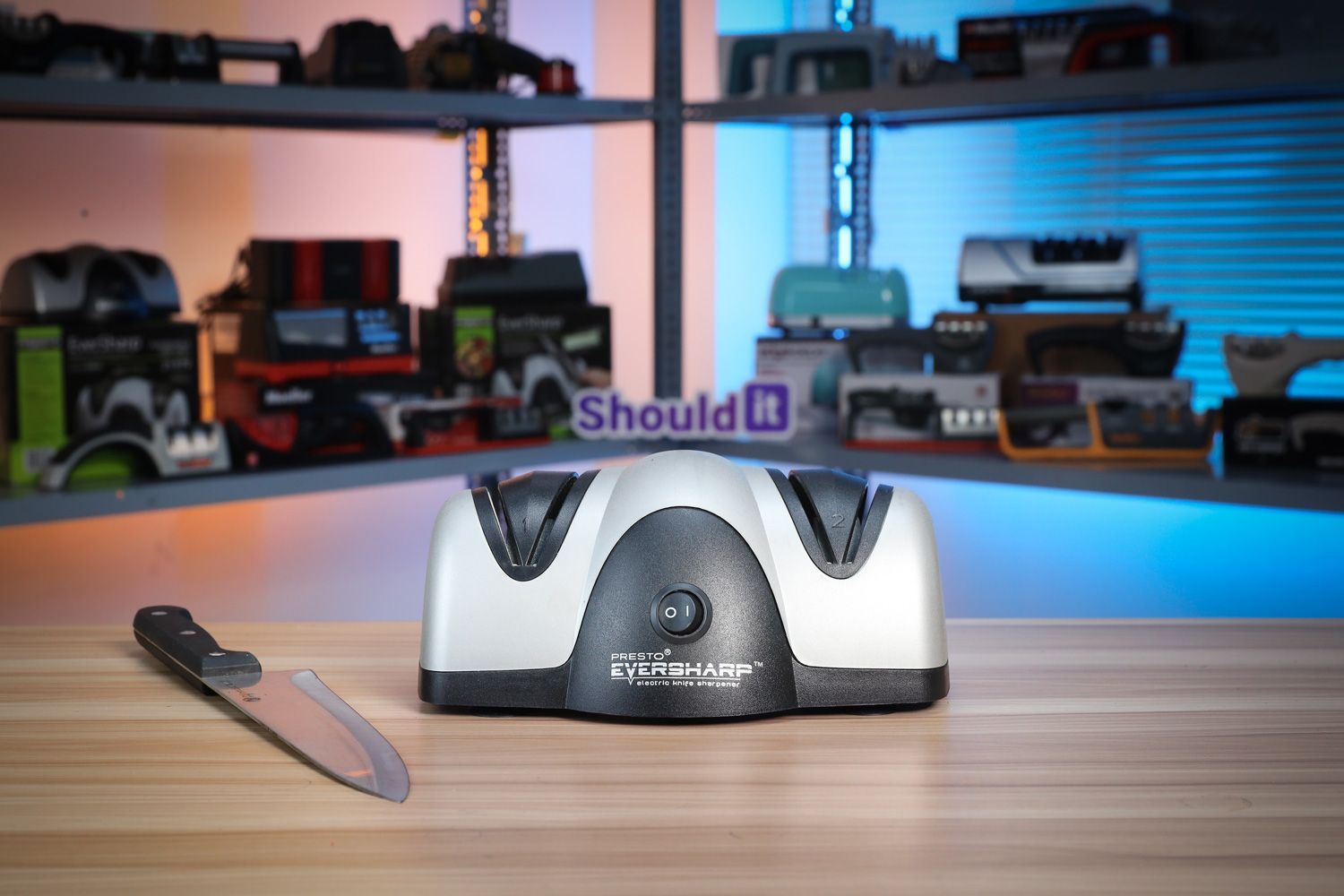
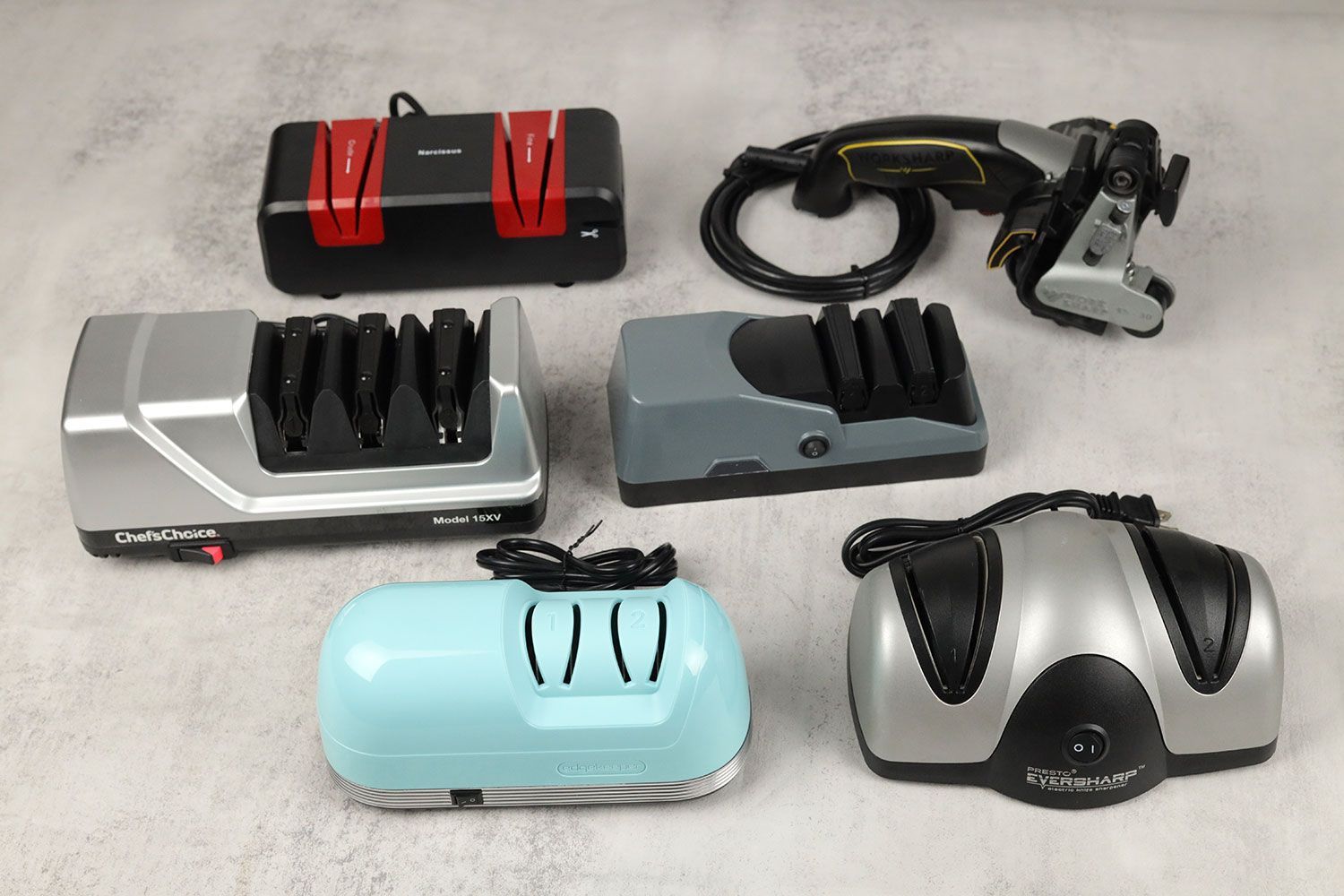
The Presto Eversharp 08800 is a workhorse that gets the job done quickly while only costing a third the price of the Chef’s Choice. It’s a great option for those valuing the speed and effectiveness of an electric sharpener, but like to stay on a budget.
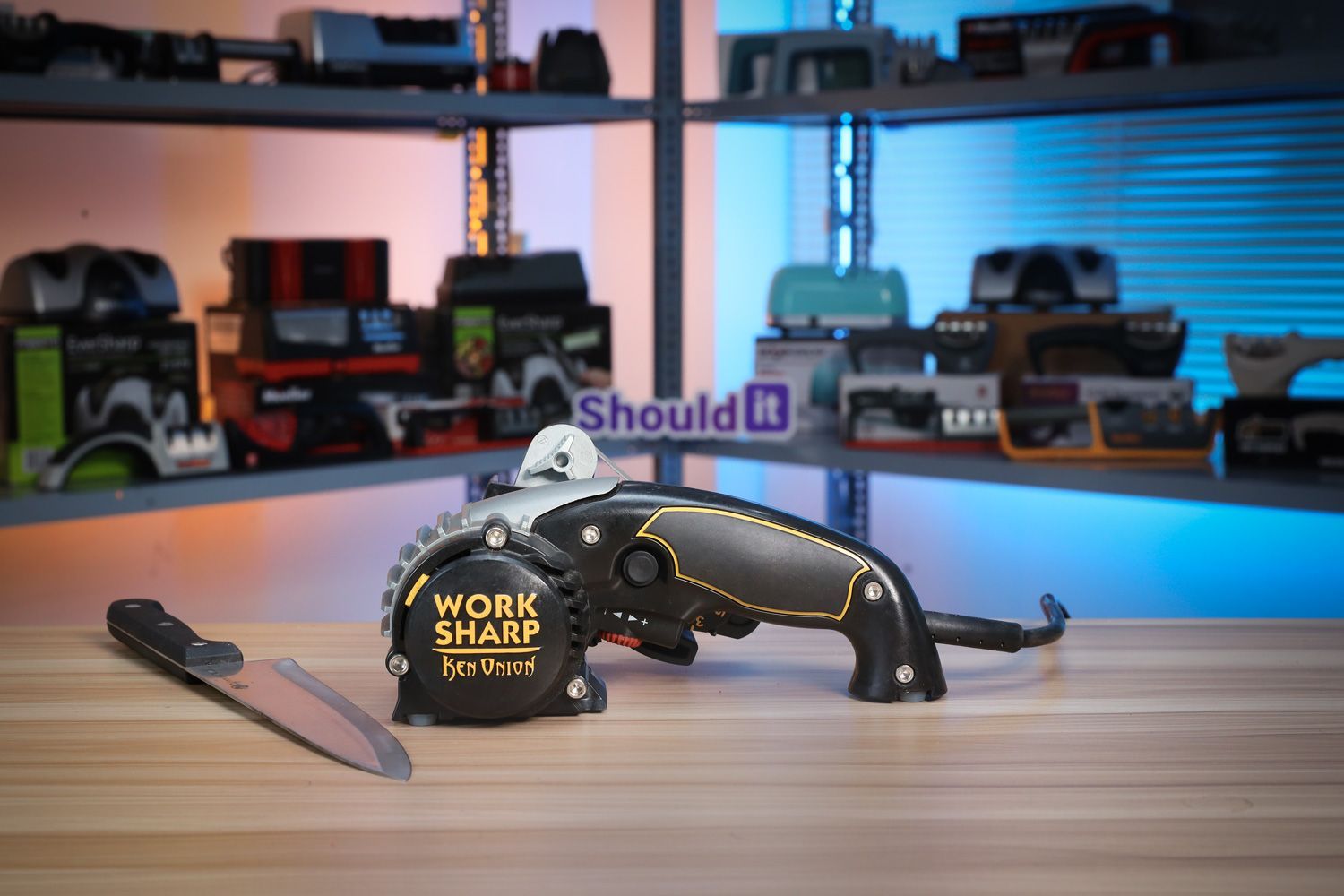
Using a series of abrasive belts to rejuvenate your blades, the WorkSharp Ken Onion created mirror-like edges that glided through food like it was butter. It works on all knives of knives, and can sharpen several in a row without overheating.
Every review on this site is ad-free and never sponsored by any manufacturer. If you found this helpful and decide to buy, using the links in this article costs you nothing extra — but it gives us a small commission that helps us keep buying products, testing them hands-on, and publishing honest reviews for you.
❤️ Thank you for your support — it means the world to our team.
How We Test Knife Sharpeners
We judge our products on two aspects: how it’s built, and how it works. For sharpeners, it’s the design, build quality of the devices themselves, how easy it is to use them, and the edges that they produce.
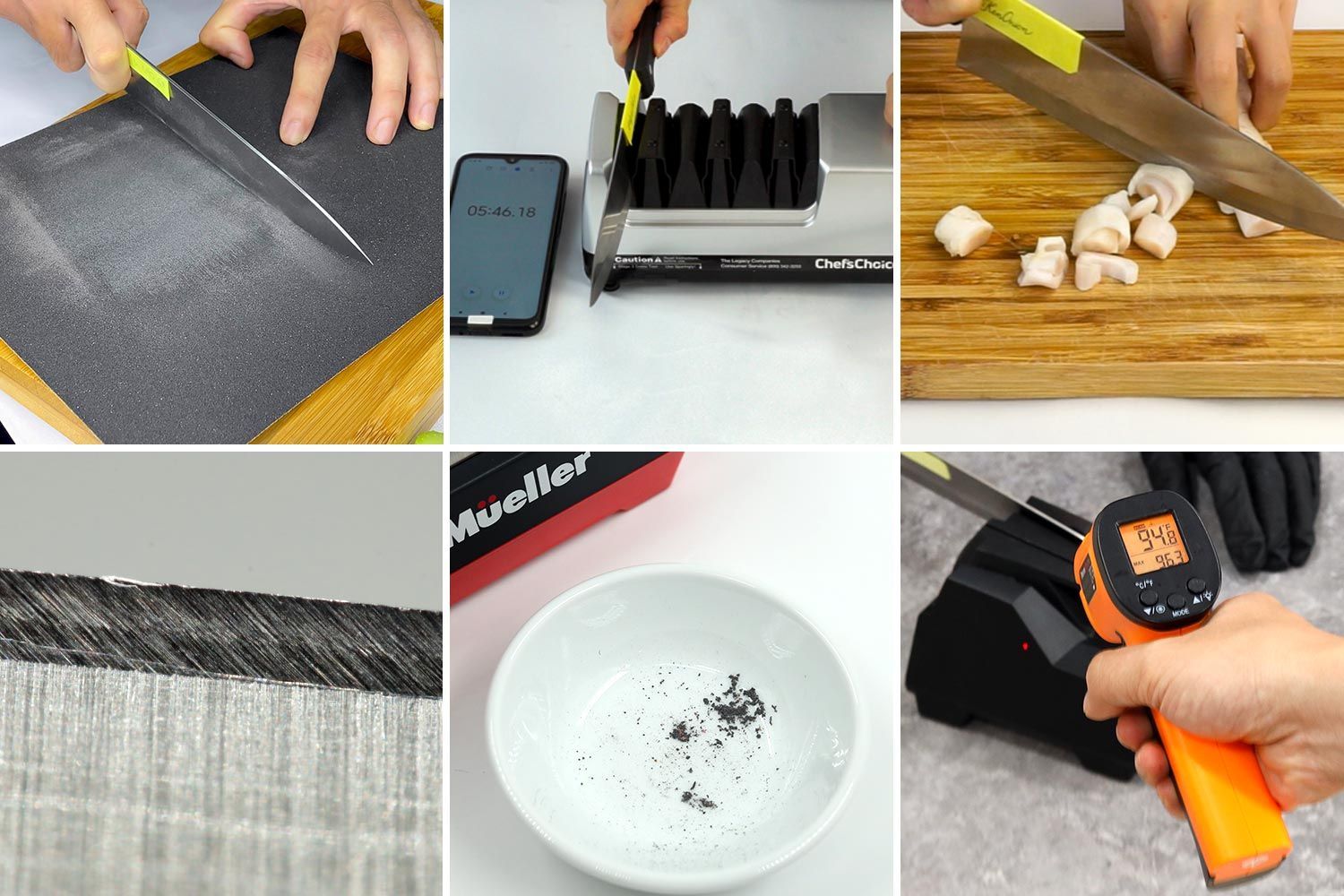
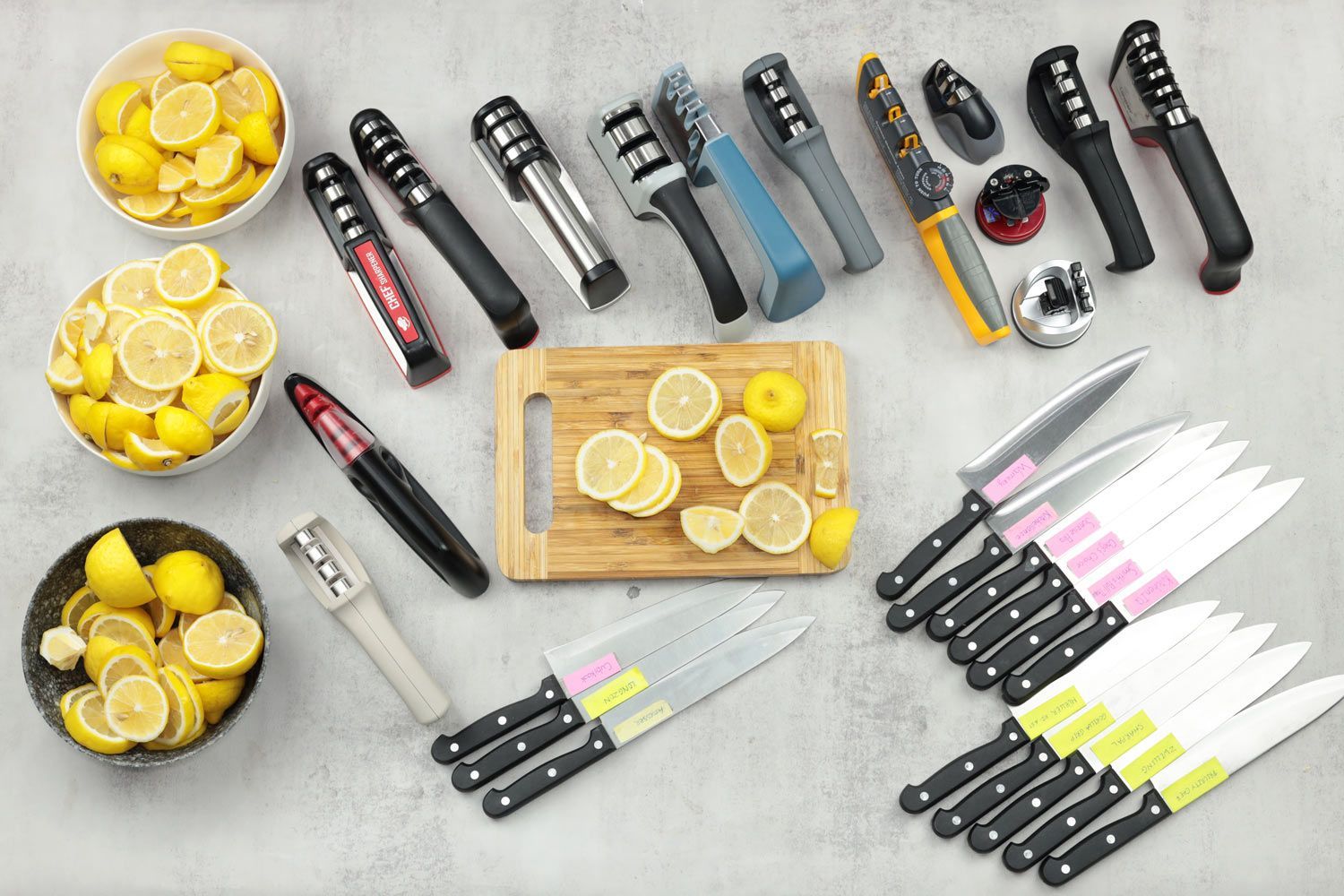
For the performance tests, we buy a bunch of the same knives and run each of them for about 2 minutes on sandpaper, then test on print paper to make sure they’re all equally dull. We then label the knives, assigning one to each sharpener.
Now the tests really start. We sharpen the knives and see how long it takes each one to reach a serviceable or sharp level on the Practical Sharpness Scale. The devices that can sharpen to a high level within the shortest time obviously have an advantage. However, we also take into account other factors, such as how much steel it removes and whether it creates a smooth, even edge.
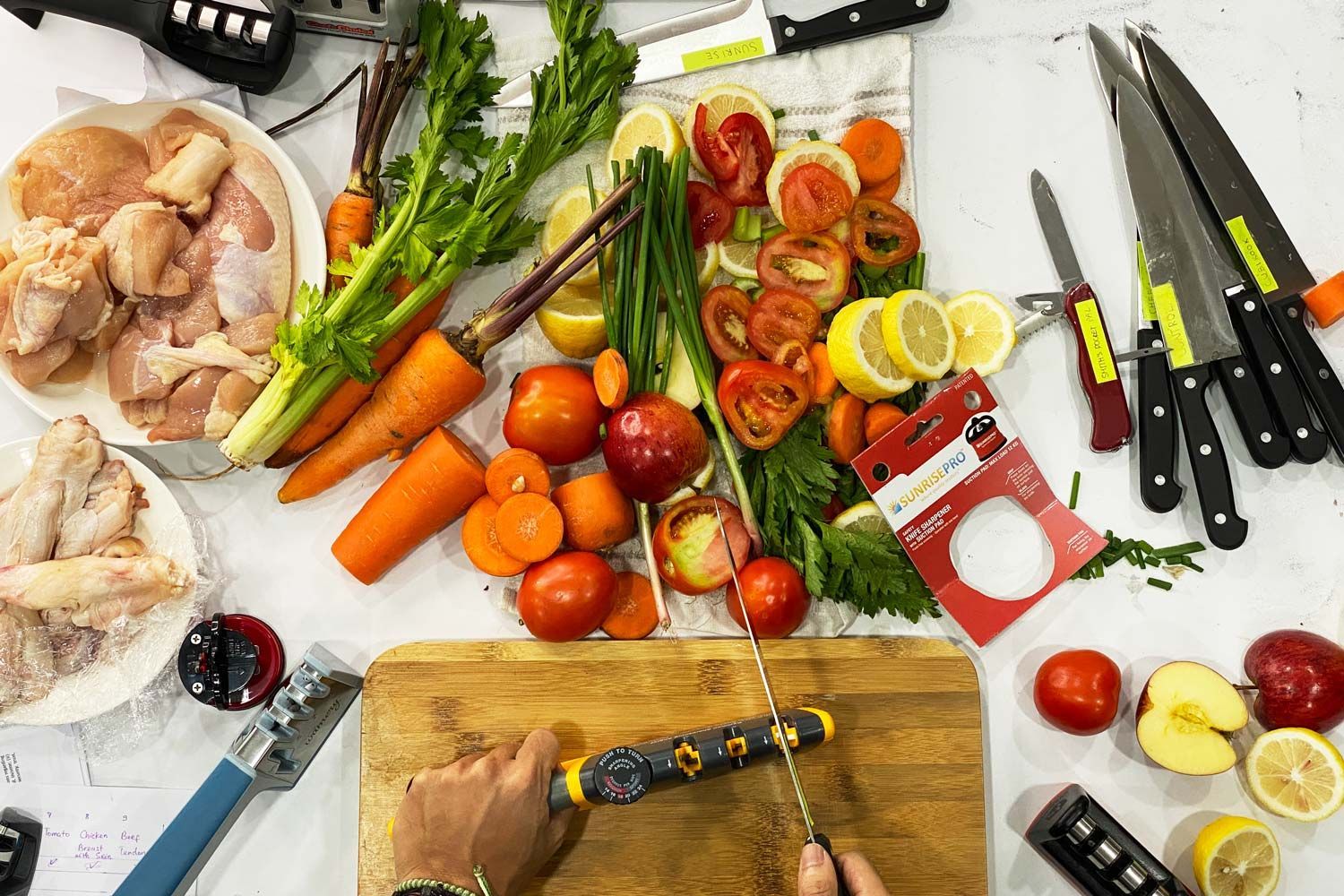
For build quality, we check to see if the device is tough enough to handle frequent use in a home kitchen — the last thing you want is to invest in a sharpener only to throw it away after a couple uses. Sharpeners that can handle different blade sizes and types are also at an advantage, obviously because a cook typically has more than one knife in their kitchen.
For ease of use, safety is the most important factor, as we’re working with knives. We also consider how loud and how hot the device can get. Other scoring factors include the amount of effort it takes to insert and sharpen the knife, and to maintain the device itself.
Check out How Shouldit Tests and Scores Knife Sharpeners for more information.
How We Picked
Our pick is typically the one with the highest rating across all product types. Following that, the devices that got the highest ratings in each category are chosen to represent their respective categories.
Chef’s Choice Trizor XV Knife Sharpener
Best to Buy
The Chef’s Choice Trizor XV gained our vote for a no-fuss sharpener that does the job. It’s reliable, consistently gives a sharp edge, and the strong build but simple design means you don’t have to sweat to use it.
Things We Like
- Strong, solid build, great stability
- Excellent sharpness
- Long operation time without overheating
- Sleek design
- Easy setup and cleanup
- Long warranty (3 years)
Things We Don’t Like
- No grind angle options
- Shaves off a lot of knife material
The Trizor XV brought the knife to the sharpest level (tendon-cutting) within 5 minutes on its three stages of sharpening in our tests. It produced a high edge, which can stay sharp for longer between sharpenings. Remember that the test knife started out uselessly blunt, so if you maintain your knives regularly, 2-3 minutes on this sharpener would do the trick. And unlike with a stone, all you have to do is swipe your knife through the openings to reach that result—there’s literally no learning curve.
The Trizor sharpens at 15 degrees, which is accommodative to the new Western-Japanese hybrid style of knives that we see on the market these days. This angle makes the edge sharp enough for most food prep tasks, but also not so thin that it would easily chip. If you’re particular about your knives, Chef’s Choice also offers other versions that can handle both 15 and 20 degrees knives, though that would mean one less stage of honing. If the goal is having a sharp knife to cut food, our tests proved that the Trizor is more than sufficient.
Of all the electric sharpeners we’ve had, the Trizor is the one we felt most comfortable having on a kitchen counter. It’s better at containing the steel dust than any other, ensuring food safety and simplifying cleanup. The sleek paint is not only easy on the eye, but also means any dust, oil, or food stains can be wiped off easily. It’s cool to the touch too if you’re in the habit of stabilizing it with your hand, though the stable base already makes that unnecessary.
All in all, if you’re looking for a sharpener that can give you a sharp edge quickly and minimize your efforts in the kitchen, you won’t regret going for the Chef’s Choice Trizor XV.
Read our Chef’s Choice Trizor XV Knife Sharpener in-depth review
Cubikook CS-T01 Manual Sharpener
Best Manual
We’ve repeatedly tested a bunch of manual knife sharpeners and the Cubikook CS-T01 has maintained its place at the top without fail. We recommend it for home cooks who are looking for an affordable sharpener that’s also safe and effective.
Things We Like
- Strong, solid build, great stability
- Excellent sharpness
- Long operation time without overheating
- Sleek design
- Easy setup and cleanup
- Long warranty (3 years)
Things We Don’t Like
- No grind angle options
- Shaves off a lot of knife material
The Cubikook CS-T01 struck a fine balance between sharpness and edge integrity. It received some of the highest ratings in our edge smoothness and material retention tests, and was also among the top tier among manual sharpeners in both speed and effectiveness. It took only 1.5 minutes to restore sharpness on a useless dull knife. In normal conditions, the sharpener will prep your knife for most cutting tasks in less than 30 seconds.
With wide sharpening slots placed in a natural progressive order, the sharpener is intuitive to use. Its working section is tightly fastened to a wide, flat, and solid base. This design lowers the center of gravity and effectively eliminates the risk of flipping during sharpening. For those worried about accidents when using these pull-through sharpeners, the Cubikook is the safest choice among those we’ve tested.
Note, of course, that we judge manual sharpeners using a different set of standards compared to electric ones. While excellent in its own category, the Cubicook CS-T01 doesn’t sharpen to the same level that an electric sharpener can. It’s good for casual use, but if you’re looking for high-level sharpness, you’ll outgrow it quickly.
One final thing to be aware of is that the coarse sharpening stage on manual sharpeners (which often utilizes Tungsten steel) tends to chip sharp edges more easily than that on their electric counterparts, especially with knives made from hard materials.
Read our Cubikook CS-T01 Manual Sharpener in-depth review
Presto EverSharp Knife Sharpener
Best Value
The Presto Eversharp 08800 is a workhorse that gets the job done quickly while only costing a third the price of the Chef’s Choice. It’s a great option for those valuing the speed and effectiveness of an electric sharpener, but like to stay on a budget.
Things We Like
- Quick sharpening without removing too much metal
- Simple design
- Intuitive working section
- Affordable price
Things We Don’t Like
- Slippery grip
- Flimsy base pad
This sharpener is mighty — it brought our blunt test knife to sharpness level 9 (tendon-cutting), taking only more than four minutes to get the job done. It produced even bevels, something even some fancier devices couldn’t. A lack of an extra honing stage means the edge was not as smooth, but the high bevels allow it to stay sharp for a long time.
Despite its affordable price, the Presto 08800 has a sturdy build. Its stones are the kind you usually see on a commercial sharpener, only smaller. Their thickness allows it to serve in your kitchen for years before losing its marbles. Its sharpening slits come without any guides, but it took us only a few uses to get the hang of it. The trick is to relax your wrists and not apply too much force while sharpening. The gentler you are when swiping, the better the edge will come out, and the less material removed. This sharpener doesn’t have a hand-rest, but the suction cups underneath does a great job at stabilizing it.
Read our Presto EverSharp Knife Sharpener in-depth review
Work Sharp Ken Onion Electric Sharpener
Best Electric System
Using a series of abrasive belts to rejuvenate your blades, the WorkSharp Ken Onion created mirror-like edges that glided through food like it was butter. It works on all knives of knives, and can sharpen several in a row without overheating.
Things We Like
- It accommodates different edge angles and blade types
- You’re in control of the speed
- It can produce a mirror-like finish
- It works on various tools other than kitchen knives
Things We Don’t Like
- It throws dust into the air
- There’s a learning curve
- It’s tricky to get even bevels
The Ken Onion is most famous for its flexibilities. It accommodates a wide range of knife angles (15-30 degrees), has adjustable speed, and you can upgrade by adding an attachment (namely the blade grinder). This means you can sharpen most if not all of your blades—Japanese knives, Western knives, scissors, screwdrivers, you name it—with one single device. Even though you pay more for it upfront, the fact that it can handle your whole knife collection eliminates the need for a different device.
With a new set of belts, the Ken Onion took about four minutes and a half to bring a blunt knife to sharpness level 9—the highest level on our Practical Sharpness Scale. This is about the same time as the Chef’s Choice and Presto 08800, but the Ken Onion produced a much smoother, shiner edge. If you prefer a more toothy edge, the finest belt can be skipped, which will save even more time.
Our testers are fans of the solid, “badass” look, which it has a strong build to match. The rugged appearance and lack of dust collector, however, mean it’s not designed to operate near food. There was a learning curve before we felt completely comfortable sharpening with this machine, but for some, that can add a layer of enjoyment to the process.
Pro tip: To preserve your knife’s heat treat, sharpen it using honing oil or at a lower speed.
Read our Work Sharp Ken Onion Electric Sharpener in-depth review
Nearest Competitors
Here are some other decent sharpener options if you're looking for more.
- The Priority Chef manual sharpener proves highly proficient, swiftly honing a sharp edge without excessive material removal from your knife. Its simple design and low base ensure a safe sharpening process. We have doubts over the durability of its base pad, but if you can look past that, it’s an affordable option worth exploring.
- The Work Sharp Culinary E2 electric sharpener is lightweight, compact, and easy to use, despite having some delicate components. It’s great for casual use and can maintain your knives at a sharpness level suitable for most cutting needs, but isn’t a practical option if you’re looking to fix more substantial edge damage or re-bevel the knife.
- If you want to sharpen with whetstones but find it challenging to maintain a specific edge angle, the Lansky Deluxe 5-stone kit is a good starter kit. Featuring five stones of different grits, guide rods, and a knife clamp, it allows sharpening to various angles with satisfying precision. The small stones mean it takes quite some time to bring an edge to a knife. However, if you have the patience, you may grow to enjoy the process.
Our Expertise

Anh Ngo and Luna Regina have been researching and reviewing knives and sharpeners since 2019. They have honed their knife knowledge and skills with numerous visits to knife forums, conversations with professional chefs, sharpening workshops, and most importantly, tons of food.
Along with the Test Lead, Lap Vo, Anh and Luna developed the test methodologies for manual and electric knife sharpeners after a total of 2 months drafting and trial testing the sharpeners. The team spent an additional 30+ hours at the lab destroying 25 knives on sandpaper, then restoring them and testing them out on different food ingredients. They also disassembled and reassembled every of the 20+ sharpeners reviewed on Shouldit, inspecting the devices thoroughly and rating their design and durability. The team has sliced countless pounds of lemons, tomatoes, and beef tendon, among other foods, before they found the top knife sharpeners.
FAQ
The amount of time it takes to sharpen a knife depends on various factors. Per our estimation, here's the time it typically takes to bring a chef's knife to the maximum level of sharpness that the sharpening device allows:
- Sharpening rod (for honing): 30 seconds
- Pull-through knife sharpener: 1 – 3 minutes
- Electric pull-through sharpener: 5 – 7 minutes
- Electric sharpening machine with abrasive belts: 5 – 10 minutes
- Sharpening stones: 10 – 30 minutes
The many teeth on a serrated knife require a tiny device to get in between them. You can use a pull-through sharpener, stone, or sharpening band to remove some burrs from the pointed teeth, but it will only go so far. If the teeth are large enough, you may sharpen them one by one with a diamond-coated tapered rod.
Western/European style knives, designed for dealing with animal-based foods and tough vegetables, typically have a large, strong blade with a 20- or 22-degree edge. Asian/Japanese knives, meanwhile, are intended more for fish and softer vegetables, and have finer angles (13 – 15 degrees). Wider-angle blades are stronger, while finer angles allow for more precision. Some chef's knives are hybrids, with edge angles between 15 and 18 degrees.
Knives come in various shapes and blade grinds. It is impossible for a single sharpener to fix and polish all of the types, but you should aim to find one that can handle the majority of your knives. It’s best to find a machine that allows flexibility in terms of edge grind and angle, or learn how to work a semi-manual or fully-manual tool (think whetstones) to keep your knives sharp and in tip-top shapes.
A new knife usually comes reasonably sharp. The factory has sharpened it to a specific angle and given it bevels that are suitable for the intended tasks. When sharpening the knife by yourself, you potentially change the bevel(s) and alternate the edge angle.
If you have little experience in knife sharpening, it's best to use a new knife until it becomes dull before sharpening it.
The push stroke, aka edge leading stroke, compacts the steel and removes more material. It is the more effective style when you want to fix a damaged edge, but it also causes chipping. The edge-trailing stroke, meanwhile, creates a keener edge, but because it stretches the steel, it tends to create foil burr. We recommend the push stroke for edge rejuvenation. You can finish the sharpening session with the pull stroke, but stop after about 30-40 laps before the foil burr forms.
If you're using a manual or an electric sharpening device, always pull the knife starting at the heel. Never push or you may risk destroying the knife's edge.